
Blog
Lorem ipsum dolor sit amet, consectetur adipiscing elit. Vivamus volutpat placerat finibus.
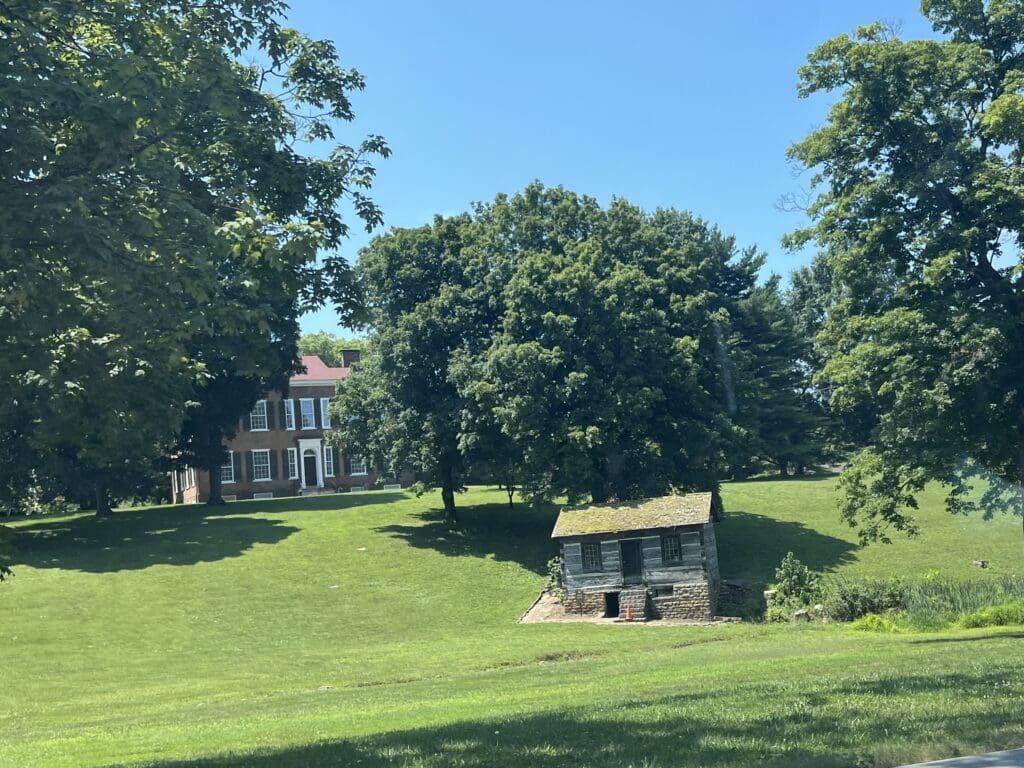
July 4th at the Stephen Foster Story: Stephen Foster’s 200th Birthday and the United States 250th Birthday Celebration Performance
The topic is beauty, truth, and love. What could be more universal to the human condition than those things? Add to that the mix of my personal journey, life experiences, and the reflections and associations that came flooding in when I arrived here today.
Stephen Foster was born on July 4, 1826. The Declaration of Independence was signed on July 4, 1776. I was a member of the cast of the Stephen Foster Story 45 years ago, during the 1981 season. I turned 21 in Bardstown, Kentucky, and was one of three of my colleagues to have a birthday on June 19th that year.
In my recent review of "The Hunchback of Notre Dame," I looked at it through the theatrical lens of being either a comedy or a tragedy. I coined it a tragedy, and in many ways one could categorize The Stephen Foster Story the same way. As much as the musical theater genre tries to put a happy face on rather sad topics, the fact cannot be avoided that the beautiful soul of Stephen Foster was only 34 years old in 1864 when he passed, broke, and thinking he was a failure. However, we have his songs, his music, his words, and the spirit that resonates even today with our modern-day cynicism and reminds us that we are made of more beauty and hope than despair and tawdry reality. The real value in any theatrical piece is the hope that everyone can do great things and show the love of human kindness amidst adversity. So, the happy ending of the legacy is that Stephen Foster lived and strived to bring beauty into the world with his brilliant melodic gift and thoughtful lyrics in the majority of his songs.
The role of Stephen Foster in this musical reminds me somewhat of Calaf in Turandot. Stephen Foster is the man against the world. He constantly pours his heart into everything he does, while everyone else seems intent on putting out his fire. He is the idealistic young dreamer with his head in the clouds, believing that music and art can lift society above its more crude existence. He hears the beautiful spirit of the enslaved people through their songs. He experiences deep love and passion in Jane MacDowell. As Jeannie says, "Like Mozart and Beethoven, who were willing to give up everything for their art." (At that point in history, they had not been gone all that long.)
I'll admit that much of what Stephen goes through in this musical reminds me of my own musical journey and, perhaps, my own nature. When he loses Jeannie, his entire world falls apart-something I can identify with. I found myself thinking, "Oh, stop! Don't let yourself become so dependent on someone that you can't function without them." But alas, this is the Romantic Era, when heightened emotion and grand drama were very much the order of the day.
It may even be that Musiterania was first inspired, at least in part, by this musical. The insecure life of a musician struggling to make it on their own-and trying to support a spouse and family on top of it all-is something musicians understand all too well. Talent isn't rare; making a good living from it is.
Voices that are natural and pleasant to listen to, singing songs that are beautiful to hear.
If minimalism is a virtue, then Stephen Foster would be a saint. His songs are known for effortless melodies that seem to unfold as if they had existed since the beginning of time. The music that supports this rare gift is not complex or fancy; in fact, the simplicity of it may be its best quality. To sing these melodies and words with voices that represent them well is a necessity. You can't play around with this music much, because if you do, it takes away from the profoundness of it. You have to let this music 'sing you'. The task for a singer is to simply sing it as cleanly and simply as possible, and the more you do that, the more impactful it becomes.
Because The Stephen Foster Story is built around singing, every member of the cast is expected to have a strong voice. During my years in the production, virtually everyone came from a classical singing background. I remember feeling intimidated by the sheer quality and power of the ensemble. Even performers in primarily acting roles, such as E. P. Christy, possessed voices with remarkable presence. The key word is projection. Everyone seemed to speak on the breath with solid vocal support, creating a rich, resonant sound that initially struck me as almost over the top.
Today, the production appears to favor a more contemporary style of singer, one that is more compatible with modern amplification in both singing and dialogue. The cast is also noticeably smaller than it was in my day. Even so, the singing remains strong and is rooted in a legitimate musical theater vocal style, preserving the full, warm sound that is essential to the production.
Zachary Ryan Petrie, Stephen Foster, Annie Dauk, and Jane MacDowell convincingly fill their roles with beautiful voices and compelling energy, making them the sympathetic characters the evening requires. The southern socialite Lucy Le Moyne's coloratura passages are the only "operatic" moments in the score, and Heather Heim delivers them beautifully while convincingly playing the overtly flirtatious character. It is always encouraging to hear an audience respond so warmly to classical singing, a reminder that there is still a deep appreciation for the operatic voice. John Sebastian Alloway's baritone voice smoothly rendered the famous "Old Black Joe" with the calm wisdom of his character and is always a high point of the evening.
The changing of The Stephen Foster Story to meet the demands of political correctness
Over the years, the show has adjusted its scene presentation to accommodate the piece's sensitive material. The most glaring difference from my time till now is the "Christy Minstrel Show" scene, where Stephen Foster's famous "Old Folks at Home" provides the high point of the evening. I was impressed by the solutions in several scenes of this summer's production. For all of the political correctness, I do feel like the Minstrel Show scene loses some of its dramatic effect. I don't know how to feel about this issue. But I am not the right person to comment on it, because I don't wear those shoes. I fully support whatever decisions are made because I know everyone's heart is in the right place.
Confrontation with our societal sins
The glaring problem facing the nation during this time in the history of the United States was the issue of slavery. So, the musical does 'go there' and confronts it head-on. Although not yet in full swing, the great American Industrial Revolution is about to get kick-started by a Civil War that we are still dealing with today. Even 'Andrew Carnegie' as a boy is featured in the piece, along with Igoe's industrial business in Pittsburgh or the Honorable John Rowan's selling of Joe, representing the shaky justification, "It was a business decision." The audience is left to deal with their own conscience in reflection of this heavy material.
The question here is, "Why should we revisit these topics?" The answer is "To have a chance to learn from our past societal sins." I was at a conference in Germany where an American presenter was addressing his inner conflict in visiting Germany because of his own Jewish family's history of suffering during the Holocaust of World War II. He said something very profound. "The people here today weren't even alive back then. It isn't your fault. You have been nothing but great towards me during my visit."
No, we weren't alive during the centuries of slavery practiced in America, or the "Trail of Tears" trauma visited upon the Native Americans during, and the abuse of workers during the Industrial Age of America at the beginning of the 20th Century.
Unfortunately, we do inherit history. What we do with that determines our character as a nation. If we forget, we repeat. If we remember, we can build a new history we can be proud of. We are capable of incredible things, but never forget that we are also capable of horrible things. NEVER FORGET.
I love The Stephen Foster Story for the very reason that it confronts us with our history and asks us to live to a higher standard.
Alcoholism, poverty, and self-destruction
The only 'happy' person in the piece seems to be the drunk "Josh". Everyone loves him because he is so much fun to be around. Even dogs love him the most. Stephen self-medicates with alcohol to temper his enflamed heart. It is quite the irony that this topic comes up in the heart of bourbon country. Either it is all you will ever be, or it is the very thing that destroys you and takes everything you hold dear. In the dream sequence, Stephen relives the moments of his life in a nightmare, which causes him to wake up, realizing that he has to recover or die. In the musical, Stephen gets the girl, and they live 'happily ever after'. The truth about his life is not that, but what did you expect from a musical? "A sad ending?"
An Enduring Cultural Classic and Perennial Favorite
One of the things that makes this evening special is that even if you are going for the 50th time, you still love it. It reminds me of the famous "The Magic Flute" (Die Zauberflöte) by Mozart in the German-speaking countries of Europe. It is like seeing old friends again. You wait for moments during the evening. You love seeing how this Papageno reacts, what sort of Tamino or Pamina will appear. You can't wait for the Queen of the Night to do her spell-bounding acrobatics or Sarastro's deep-voiced ponderings. Here your heart is lifted by Gussie, well performed here by Jaden Berry. The interaction between Stephen and Lievy Pise, passionately presented by Gracia Wright, is just heartwarming. The interlude with "Old Dog Tray" has nothing to do with the story, but the evening wouldn't be complete without it. Drake Gillaspie's Josh is lighthearted and sincere, even if he makes generous use of the bottle. There are many such scenes that, when they come, it is difficult not to be moved by them, and the more you see it, the bigger the effect. Since The Stephen Foster Story is produced solely in Bardstown. I think it should be a national pastime to come and see it. It is worth every minute.
Production Values
The production of this musical is just really pleasant to the eye. Often with 'Period Pieces' you get the feeling like everything just came out of the attic and the costumes fit poorly or seem somehow dull. I'm allergic to it. Here, the pre-Civil War "Antebellum" style is represented most markedly by the beautiful hooped dresses that the characters wear. I'll never forget Si Arnold at the sewing machine and how her tireless dedication to making everyone look incredible was appreciated by every actor in this piece. Nothing is more important to an actor than having a costume that helps them portray their characters in a way that makes them feel comfortable, beautiful, and powerful. The set was recently rebuilt from the ground up but is essentially the same as it was 45 years ago. Set in the middle of a Kentucky forest, there is a kind of magic that is produced by this intimate atmosphere.
If I have a critique of the evening, it would have to do with the sound system and amplification of the piece. I know how expensive a sound system can be, and it is difficult to maintain such a system when it is exposed to the hot and humid climate of Kentucky in summer. The sound is unbalanced throughout. The main characters have their individual mikes, but those without them are dependent upon the stage mikes to pick up their dialogue and singing. Choral entrances and smaller ensembles fall outside of the soundscape established by the fully supported scenes. I admire their ability to sing with playback orchestral recordings, but I'm not such a fan of it, especially when the speakers don't carry the quality that such music deserves. So, I would encourage a massive upgrade in this area.
Dear Friends and Gentle Hearts
When I consider my colleagues of 45 years ago, my fondness for them grows in my memory. Many from those days have taken the steamboat to paradise. Looking at the program from my year, I am touched by the comments that were written in my book. I didn't keep in touch with any of them after I left, although I crossed paths again with several later in my career, mostly at Eastman. The folly of youth is that you don't know what you have around you because you are so worried about being good enough to justify your own presence in such a wildly accomplished group of singers. I was completely new to the theater, to singing in such a performance, and to being able to do the tambourine line with those incredible dancers. Just yesterday I finally caught up with one of the promo group members only to find out that she had passed just this past March.
It was great to see Gary Vidito again. He is still strummin' the old banjo and guitar as he did so many years ago as well.
The Fourth of July
The fireworks after the show were almost like being 'inside' them. The brilliant blasts of light exploded right in front and above us. It is the best viewing I have ever had of a fireworks show. The show was accompanied by well-chosen music, and the audience reacted enthusiastically to the various sound bites. Without being 'nationalistic,' the evening was a wholesome form of true patriotism, where we can appreciate the moral values our nation claims to believe in, while acknowledging the sins and sacrifices made throughout our past. Let us build a future worth our admiration.
This print has been hanging in our home for decades
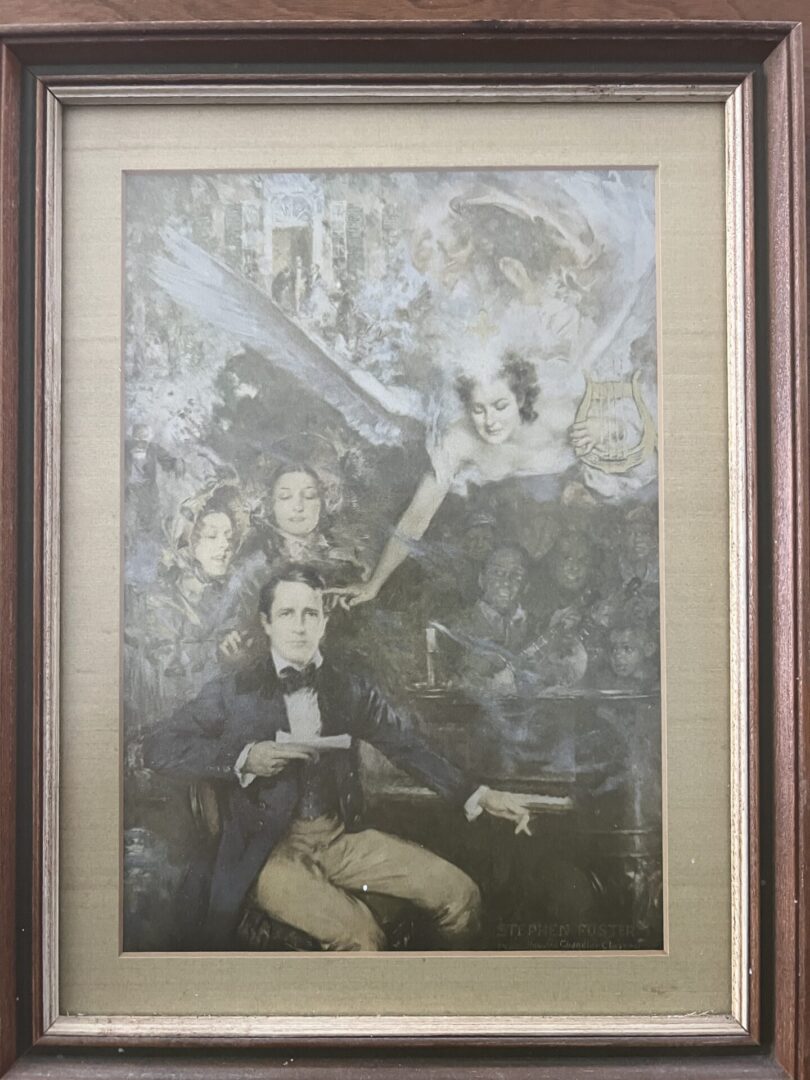
Stephen Foster
By Howard Chandler Christy
Musiterania™
The Stephen Foster Story is more than a summer musical-it is a celebration of Kentucky's musical heritage and a reminder of the hopes, struggles, and dreams that accompany every artist's life. While each generation brings its own style and interpretation, the heart of the production remains unchanged. For those who grew up with it, it is a cherished tradition. For first-time visitors, it offers an opportunity to experience a uniquely American musical story in the very place where it has inspired audiences for generations. Long may the songs continue to be heard from the hills of Bardstown.
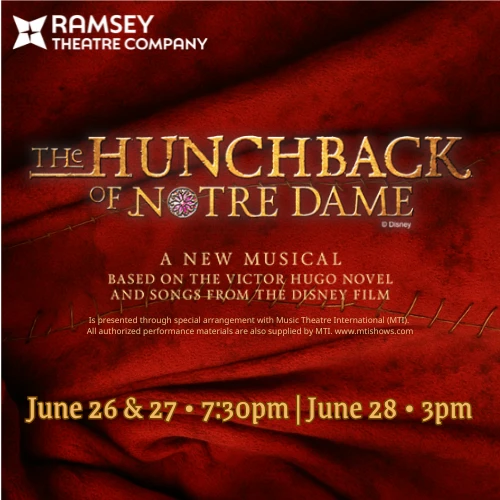
The Hunchback of Notre Dame by the Ramsey Theater Company in Bowling Green, Kentucky
Click on the Link below for the online Program from the production.
https://audienceaccess.co/show/OKY-16381
The Theme of the Evening
The novel by Victor Hugo, "Notre Dame du Paris" or "Our Lady of Notre Dame," was written to create interest in renovating the dilapidated cathedral at the heart of Paris. He made up a story with 'typecast' characters who are general representations of the various classes of post-revolutionary Parisian society of the early Nineteenth Century. You have a Priest, some Gypsies, Soldiers, a King, and a grotesque 'monster' who represents the captive poor souls who do the grunt work of society that nobody sees or wants to see. The moral parallels for today are inescapable, somewhat cliché, but valid, and in those days, very current.
Theatrics
The arts, literature, and the theater are laboratories for the human soul. We create fiction to represent a message. When going to the theater, I try my best to keep this in mind. Because, at the end of the day, it is the meaning that is the very point of it all. The challenge is to interpret that meaning for ourselves, discuss it with others, sift out the elements of truth that confront us, and, by confessing our shortcomings, hope to improve ourselves and our society. The institution of the theater has always been a philosophical playground upon which we can play out various scenarios while falling under the category of "Entertainment". You go for the gag, and return with a deeper understanding of life and yourself. This is why live theater of all kinds is so important for us. We need to examine ourselves and be open to criticism to become better people. Throughout history, theater has been a part of every society and will continue into the future. Why? Because we can and really, we must.
The Challenges of Production
On one hand, the job is to recreate the story so the message comes through. On the other hand, the job is to create a production that demonstrates the highest level of artistry possible with what resources you have at your disposal. No matter who does a production, from grade school to the largest Hollywood films, every production has basically the same challenge: the budget. Regardless of the budget, the job is to create a compelling evening, which usually means to reach people in their souls. As a long-time stage performer, I have done all kinds of productions at all levels. What I have found is that it is easy to get overwhelmed by a great production, but go home with nothing added in your soul. You can also be disappointed with a production for whatever reason, yet come away emotionally touched by something during the evening that makes it worthwhile. There is every variation in between.
Comedy and Tragedy in Musicals, Operas, and all theatrical forms.
In theater, pieces are generally classified either as a comedy or a tragedy. There can be elements of both in each, but generally, the outcome of the story determines whether it is a tragedy or a comedy. But, regardless of which it is, it is all serious theater. Meaning, it takes as much skill to do one as it does the other, and often comedy is even more difficult to execute. For the musical "The Hunchback of Notre Dame," I'd have to classify it as a tragedy because of the deaths that occur at the end. Even though the "monster" survives and becomes a more confident human, it is difficult to feel happy at the end, even when we are happy for him.
The Ramsey Theater Company was ambitious in producing this musical. The bits of mature subject matter represented could make it less appealing to younger audiences. It is a huge show. Bringing everyone together in about a month to put on such a show is daunting. There are many moving parts to such a production, and when promoting yourself as a 'professional' theater company, it raises the bar on expectations. Even so, it is important to recognize that the Ramsey Theater Company and the entire organization are very new, and the population demographics of Bowling Green and the surrounding region are relatively small for such a theater and undertaking. So, it will take time for it to get better and better and better and for the community to actually grasp what it can mean to the region. Creating productions is a tall order at any level; doing Hunchback is not easy.
Mindset of the Audience
For every person that takes a seat in a performance, there is a different mental attitude. We bring our attitude with us, and it colors how we perceive a show. The best way to get the most out of an evening at the theater is to "suspend your disbelief." In other words, accept what you see as being 'just the way it is.' The number one part of the mind that needs to be engaged is the imagination, and to receive the most benefit from a given evening, it is best to allow your imagination to fill in the blanks and not fight what you see and hear with your level of reasoning. Logic has little to do with theater. It is about human nature, what we feel, and gaining a perspective that may challenge our personal views. Actors often have to portray roles that are inconsistent with their own nature. After all, somebody has to play 'the bad guy' for 'the good guy or gal' to be the hero.
Finally: About the Performance:
Producing Artistic Director & Director - Diane DiCroce
Managing Director/Company Manager - Elise Charny
Music Director - Dick Tunney
Assistant Music Director & Rehearsal Pianist - Melissa Bull
Choir Director- Tiffany Harrington
Choreographer - Jake Dukes
Fight Choreographer - Dillon Godolphin
Set Designed and Constructed by Utah Festival Opera and Musical Theatre
Utah Festival Opera and Musical Theatre Technical Director - Kyle Stein
Scenic Design Liaison - Sebastian Tingle
Costumes Provided by - Broadway Costumes, Inc., Chicago, Illinois
St. Aphrodisius Costume Provided by - Tuacahn Costume Rentals
The directors, cast, and crew worked together to build an evening of entertainment that deserves admiration. When you import sets and costumes from other organizations, you have to adapt them to your stage and people. Some things aren't going to fit just right; they may seem a little off-balance, and somehow don't make sense. For example, the long ropes attached to the bells. Ropes on bells don't usually drag the floor. This caused a little bit of a mess onstage, but they managed fine. It was likely designed for a higher proscenium and possibly a deeper stage to give the Rose Window and the Columns in front of the balcony greater depth. It is also possible that the entire balcony with steps could be moved during the show for different scenes, so the dialogue with Quasimodo and the Gargoyles or Storytellers could be more present. Things like this have to be managed, and they did a good job of fitting everything in.
Diane DiCroce, stage director, kept the piece flowing throughout each act. The music is through-composed, so you are forced to move the actors so that they get to their positions in time for the next scene. I found this to be very well managed, and everyone knew what they were doing and did it in character. I found there to be too many downstage center scenes, but this is a matter of taste, not a criticism. Of course, such choices are often made due to the limitations of the circumstances. I'd prefer different positions to be used to reflect the relative intimacy and drama in a scene. I'm still on the fence about having Quasimodo use a character voice in his speech and then use his singing voice for the numbers, but that is also a choice that can be made without being critical of it. I enjoyed the 'Storytellers' as they used the 'stone' faces representing Quasimodo's only companions for his entire life, as well as in the other scenes when they were dressed as other characters.
Dick Tunney, music director, and Orchestra Kentucky contributed something many may not fully appreciate to the show: live music. To have a complete orchestra for a show like this adds to the experience in a big way. Catching the various cues, keeping up with the cast on stage, and helping everyone perform their parts with confidence is a tall job in such a piece that never stops. It is easy to take this for granted, and I had to catch myself not paying attention to the orchestra a couple of times. They played beautifully and had some wonderful moments during the evening. It makes such a difference to have a live ensemble.
Christian Leigh, Quasimodo, didn't shy away from the demands of this tormented character and sang his scenes with full conviction. His fear of Frollo, his shy nature with Esmeralda, and the pain of his shame from the mobbing townspeople were well balanced with his humility and gentle nature. Esmeralda, Astoncia Bhagat, the Gypsy girl whose dances and supernatural talents are used to defend and become a friend to Quasimodo, sings her songs and duets nicely with plenty of warmth and sensitivity, while also projecting a strong image when things get heated. She portrayed the free spirit of a Gypsy while maintaining a higher moral fiber than the self-righteous Frollo. Christopher Hager played the Deacon Frollo of Notre Dame, unashamed of his corrupt character. His baritone voice has a pleasant timbre, and transitions easily from speech to singing, shifting well between the pious Holy Man and the tragically flawed human beneath the robe. Chris Monell played Captain Phoebus de Martin with a sense of duty for his station, but is compelled to side with Quasimodo and Esmeralda when he recognizes the injustice and cruelty. His character is more of a Prince Charming than a heroic warrior returning from the front lines, but it works well within the drama. His pleasant tenor matches nicely with Esmeralda. Max DiSantis portrayed Esmeralda's Gypsy Puppeteer/Showman colleague, presenting a fresh image and clear voice for his important role in the show. His nimble movements were fitting for this witty character.
Bailey Bryant, Florika; Matt Propst, Frederic; Shawn Quinn, Father Dupain; and Gage Carnes, St. Aphrodisius; added to the large cast with accurate characterisations of their roles. The Chorus, Storytellers, and Youth Ensembles filled out the stage with enthusiasm, playing those roles vital to the evening's success. Click Here for the Program.
Reception
The performance was rewarded with enthusiastic applause from the grateful audience. Beyond paying for tickets, donating to the company, or consuming the concessions, the audience is just as important to a performance as anything. Just like the falling tree in the forest makes no sound without someone there to hear it, so is the performance made silent when there is no audience. As much as people may think theater is done for the applause, for the recognition, or even the money, the real purpose is to share a story from the heart to the hearts directly in live performance. There is no post-production editing to be done. It is visceral. It may not always be perfect, but it is always touching.
Reflections
Some things I have been thinking about in reference to the material in this show I'd like to share because whether I am right or wrong about it, it may give you more to think about as well, if you so desire.
What are the 'players' in this piece? Post-revolutionary Paris is the backdrop for this piece. To me, Paris is a lot like London in that it has every class of people in it. From the elegance and wealth of Kings and Queens, to the poverty and suffering of the poor, from the beautiful to the grotesque, from the starving artists and the famous masters, Paris has them all. Victor Hugo is also the author of Les Misérables, which pulls from the same themes. It also reminds me of Charles Dickens' novel "The Tale of Two Cities" or the recently famous "Perfume: The Story of a Murderer" (Das Parfum: Geschichte eines Mörders)by Patrick Süskind. So, the 'feel' of Hunchback is much the same.
The characters of Hunchback aren't real people, but are 'composites' of types of people who populate the society. Quasimodo is the orphan of a murdered mother, whose deformity is probably as much due to the miserable conditions of his birth as anything genetic. His exclusion from society reminds us of those that nobody wants to know exist, doesn't want to see, nor be confronted with. They disturb our 'nice little world'. But they can do the dirty work we need done, like ringing the huge bells in a Gothic cathedral for his entire life. Frollo is the pious 'religious' leader who claims to protect us from infidels who are responsible for our moral decay but is, in reality, also only human and fights it with cruelty. There are the Gypsies, or Roma, who wander the world with their own set of rules. During these times, they were accepted as entertainers and mystics but just for show. They have no rights and were always considered outcasts of society and expendable because they weren't of the faith. It reminds us of the immigrant issues we so elegantly handle these days. The politicians, the King, who conspire with the clergy, Frollo, towards their own ends by supplying the military, Phoebus, to carry out the necessary violence to 'protect' the city, but mostly their authority. The moral authority collapses under their own judgemental nature, and the act of defying orders because it is the right thing to do can be the only moral leadership a nation has to keep from descending into an autocracy. There are the 'people' of the city, otherwise known as the mob. The public can become a mob and be directed to do horrible things to people when they are guided by people of questionable moral character. It is a call to check ourselves as a people and make sure we are actually living the promise of a free society that doesn't do battle in the streets but in the halls of justice and with representative government.
There is plenty to unpack with such subject matter. Whether these conclusions were even meant by the author is not known to me. But, when a story is told, it often has a deeper message than what we originally perceive. I don't claim to be right about anything, but want only to prompt some deeper thinking about this evening that I feel is worth considering.
Musiterania™
Live performance is the very heart and soul of what Musiterania™ is all about. Lifting performances made by aspiring musicians in orchestras and theaters is what it is all about. We want to fill them with enthusiastic audiences by providing previews and reviews of their performances. In today's crazy world of technology, there is a hunger for something real, and nothing is like live performance with real performers in real time to make that possible. Just go!


Songbird: Orchestra Kentucky’s guest presents the music of Barbara Streisand
Orchestra Kentucky presented an evening of musical nostalgia with guest artist Karine Hannah and her "Songbird" Tribute with the music of the legendary singer-actor Barbara Streisand on a perfect summer evening in Bowling Green, Kentucky, at the SKYPAC. Such tribute concerts are valuable because it helps keep the music of the past alive and remind us that our musical memories are a part of who we are as people. This is something I have thought a lot about recently because of my recent exposure to Renee Fleming's book "Music and the Mind" and how we have a sort of musical DNA which, when revived, brings back feelings we've had in the past, in this case, positive feelings.
An evening well spent
It is easy for me to drive and park to go to The SKYPAC. As I stroll a couple of blocks up College Street and see the people walking towards the theater as the sun sets behind "The Hill", it always lifts my spirits. When I walk into the SKYPAC and meet friends, and enter the auditorium, I am simply in awe of it, because never in my wildest dreams did I think Bowling Green could ever have such a wonderful venue. After the concert, I stopped into Lily May's next door to have a nightcap and see who may have come in after the concert. I took a walk through Circus Square Park, snapped a couple of photos, admired the "Home is where the heart is" sculpture, and enjoyed the atmospheric lighting and rolling sound of the fountains at the center of it all. I've never understood the rush to get home after concerts. I always like to enjoy the evening after and let the sights and sounds imprint my soul with beautiful thoughts. It keeps me sane.
The Program
The program listed on the website was basically the concert given, with a couple of exceptions. I tried to keep track of it, and I'm not sure if I got it right, so I'll just let it stand. I think there were some alterations to it, but it really isn't noteworthy.
1. SOMEWHERE2. SING/HAPPY DAYS ARE HERE AGAIN Medley:
3. NO MORE TEARS
4. STONEY END
5. MY HEART BELONGS TO ME
6. WOMAN IN LOVE
7. HE TOUCHED ME Duets (with John James):
8. GUILTY
9. WHAT KIND OF FOOL
10. PAPA, CAN YOU HEAR ME
11. YOU DON'T BRING ME FLOWERS Acoustic section:
12. LOVE COMES FROM THE MOST UNEXPECTED PLACES
13. SONGBIRD
14. EVERGREEN
15. DON'T RAIN ON MY PARADE
16. PEOPLE
There is a thing that I think of when I hear such presentations. I call it "Musical Imitation". I'm not actually sure I know how I feel about it. On one hand, if the goal is to try and 're-live' the experience of hearing a Barbara Streisand concert, then it seems like an interesting thing to do. But, in my experience doing such evenings where I sang the music made popular by such artists, including some of these, I never imitated them; I sang them as I sang them. I've had discussions about this topic with people about bands that cover songs from artists, and there is a discrepancy between doing it just like they did it, or taking the song and doing it as you do it. I also have this issue with classical music. I won't decide for you, but as for me, the way I see it is "I'm not them, so I can't recreate them."
So, this evening was clearly a "Musical Imitation" type of concert done with the highest respect for the original artist, Barbara Streisand. Ms. Hannah's voice and appearance are truly very similar to Barbara Streisand's. I sat in the Mezzanine as usual, so it was quite a distance away. In many ways, I think Ms. Hannah's voice is fuller and richer than Barbara's, although I never heard her in concert. Ms. Hannah uses head voice very well, which gives her the ability to sing freely in the upper part of her range, as well as resonate fully in the mid range. "Belting" isn't really my cup of tea, but it is part of the way that Streisand sang; after all, it is used all of the time in music theater. She sang the entire evening flawlessly and with a huge commitment to the songs.
Ms. Hannah was joined by singer John James on several duets. He also backed some songs from the side of the stage. He has a nice sound and supported Ms. Hannah very well. They sang harmoniously together and shared a nice friendship on stage.
Conductor Jeff Reed directed Orchestra Kentucky by elegantly navigating the back-phrasing that is so common with this style of music. The orchestrations are beautiful, and the orchestra performed them excellently. They are so attentive and react to Maestro Reed's cues with sensitivity and enthusiasm. In these concerts, when you have amplification involved, it is very difficult to get the sound of the amplified singer or electric instruments to balance well with the orchestra, and that part is completely out of the hands of the music director, the singers, or the instrumentalists. I've never heard it done very successfully anywhere, so this isn't a critique of it, just an observation from my point of view. To me, amplification is sort of like a surgeon operating with a hatchet instead of a scalpel, but it can't be helped.
Nostalgic Memories
Art is not a perfect science. Life, definitely isn't. We try, we make mistakes, we succeed, and we fail miserably. That is the nature of reality. That is the passing time of a live musical experience that is created, experienced, and lost all in the same moment. What is left behind is how it made us feel inside. We carry memories throughout our lives with the tags of our sensory markers, which bring up scenes of our past, that sometimes can be so powerful that we start thinking about them and forget to continue to listen to the music. This happens to me all of the time, and I fight to stay with the music and not drift off into 'water-colored memories' of what life was like ... back then. For those who lived when Barbara Streisand was the current sensation, you can't help but attach her music to those times of your past. For those who may have experienced this music in this concert for the first time, I wonder what that would be like. What this all means is that we lived and we are alive now. That is a precious gift.
Thank you to Karine Hannah, Orchestra Kentucky, SKYPAC, and Jeff Reed for delivering a beautiful evening of music to remind us of what life is all about. It takes a lot of courage to do that! It is boundlessly appreciated.
The Way We Were
Alan and Marilyn Bergman, Lyrics: Marvin Hamlisch, Music
Mem'ries light the corners of my mindMisty water-colored memories of the way we were
Scattered pictures of the smiles we left behind
Smiles we gave to one another for the way we were Can it be that it was all so simple then
Or has time rewritten every line?
If we had the chance to do it all again
Tell me, would we? Could we? Mem'ries may be beautiful and yet
What's too painful to remember
We simply choose to forget So it's the laughter we will remember
Whenever we remember the way we were.
Musiterania visits concerts, talks to people, and reviews the experience as a whole as it relates to the lives we lead. We want to encourage people to attend live concerts and theater because it brings us together without an ideological message attached to it. Art doesn't tell you what to think, how to feel, or to educate. It makes it possible for us to process our lives in a beautiful and shared way. Thanks for visiting.
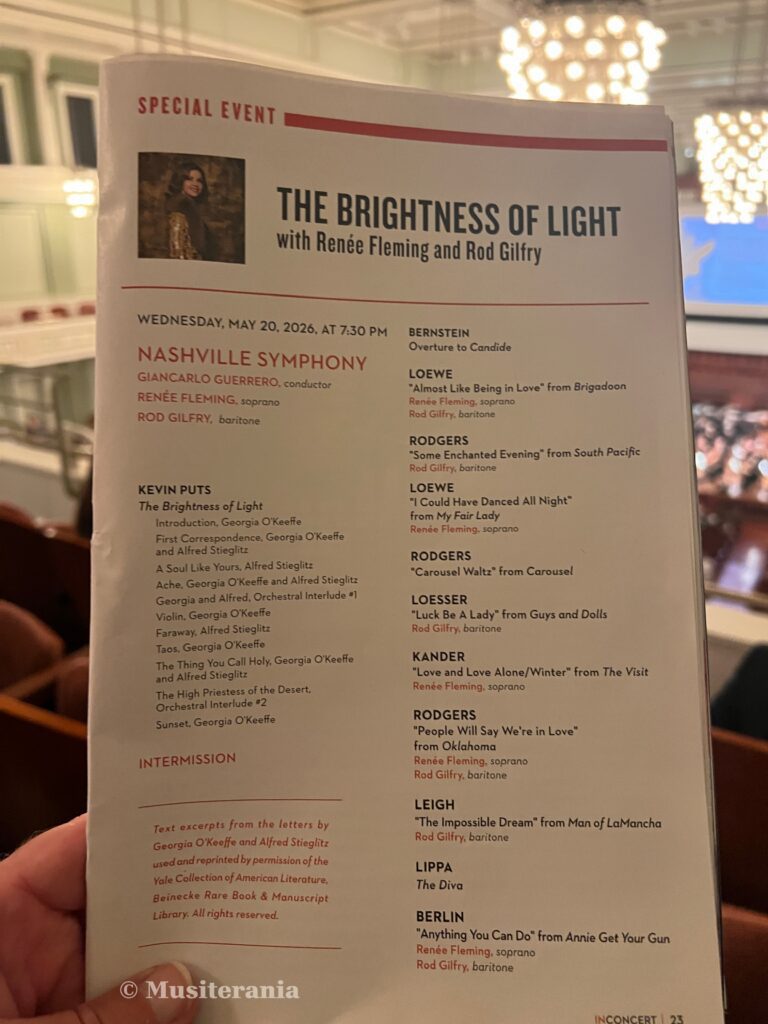
Nashville Symphony with Renee Fleming and Rod Gilfry: An evening of great diction.
The Nashville Symphony's concert "The Brightness of Light" (Kevin Puts: Composer) with Renée Fleming and Rod Gilfry on Wednesday, May 20, 2026 at Schermerhorn Symphony Center, was a testimony for excellent diction. As a former singer, I can tell you that one of the biggest challenges opera singers face is being understood from the stage. It has become one of the rarest found today and I was beginning to lose hope that it was even possible.
My first opera director in Germany was Johannes Felsentstein, son of the "Father of Deutsche Regietheater" Walter Felsenstein. His number one goal in his productions, and I did 12 with him, was that you must be understood. We did everything in German and I was basically just off the boat and while I could sing pretty well enough in German, the intense training in German I got in those first 3 years of my career later became one of my hallmarks. So, this is naturally an area that I am very attuned to.
The first half of the program was the Kevin Puts composition "The Brightness of Light". It is a 12 movement piece that flows together seamlessly throughout featuring texts from letters between Georgia O'Keefe, visual artist, and her husband, Alfred Stieglitz, photographer. The work was commissioned by The Eastman School of Music for a collaboration with Renée Fleming and Kevin Puts, both alumni of the school. They centered their choice to be on an iconic American woman.
The composition "The Brightness of Light" is an orchestral "Ohrenschmaus", a sort of smorgasbord of sound for the ears. There is no denying Puts' skill as an orchestrator and composer. Each movement is a unique and aural kaleidoscopic, describing the texts in intimate detail as accurately sung by Fleming and Gilfry. I must admit that I am not sure whether the mikes present were used to amplify the general sound into the hall or just to make an archive recording. To most this wouldn't matter, and it probably doesn't, but to me the true measure of a voice is in the ability for it to project clearly into the hall. There is little doubt that Fleming and Gilfry have voices which have been ample for large halls the world over, and I witnessed her "Manon" at the Met years ago, and it was beautiful. It sounded natural to me and so I'll refer to it as such. Obviously, the second half of the concert was miked for the Broadway portion.
What most people don't understand about opera is that when you hear an opera live in a theater opera singers should just sound like normal people. The quality of a singer in a hall is what makes an opera singer an opera singer and not that they should sound like what recordings have given us the idea that an opera singer should sound like. There is no way to capture it on a recording of any kind. The only place to hear music is live...everything else is just not anything like it. I appreciated Rod Gilfry's comment about this during the concert, and it was heartily applauded by the audience. PREACH!
The Singers
Renée Fleming has one of the most 'normal' sounds in all of opera. She doesn't gunk it up with a lot of operatic gestures that is often the case used by singers to 'impress' the audience. She is completely honest in her singing and it is absolutely beautiful to hear in all areas of her voice. Her high notes dance with all of the glitter of a soprano and her low notes wisely and effectively cheat in some chest voice to give it adequate presence. The result is a midrange which is balanced and rich with a slightly sultry quality amidst a presentation that is both humble and dramatic at the same time. Above all of this is her dedication to 'text' clarity. I'm not saying you could understand every word, that is almost impossible given that things move by so fast, but I understood darn well near all of it. The parts I didn't understand from both was mostly because they were somewhat covered up by the orchestra behind them at times. Fleming is completely devoid of all "Diva" allure and is as close to an ideal singer as I can imagine.
Rod Gilfry, baritone, has a wide ranged and rich baritone voice. His presentation is somewhat more typical operatic singing but still remains honest and also textually comprehendible for the audience. He possesses a natural charm, and isn't afraid to give it the little extra hambone when necessary. I was impressed by his ability to sing the various ranges in the musical literature so well. For a musical "Baritenor" he is well healed for sure. I'd love to hear him sing Gaston from Disney's Beauty and the Beast. He would be ideal for that. His "Some Enchanted Evening" was beautiful, especially considering it was composed for the bass Ezio Pinza, before musicals were miked.
My reviews are not meant to be critiques as such, but rather to give the reader an idea about the performance. I have been the topic of critiques many times, both good and bad, and don't really think it helps much either way.
The Concert
What lies near and dear to my heart was the character of this concert. I sang in many 'gala' concerts over the years in Germany. One of the abilities I possessed was crossover. I could do all of the opera you'd want, and still be able to turn around and perform operetta, musical and jazz/pop things as well. So, seeing the first half of serious music and the second half of 'show' music, is something that I am completely familiar with.
Starting the second half off with the overture to Candide by Leonard Bernstein is always a great thing to do. It is such a show piece and I have heard it performed many times. Maestro Giancarlo Guerrero whipped up the Nashville Symphony to a furry to the delight of the audience. Usually, that position of the concerts are reserved for such pieces, many from operetta. The traditional American musicals could be compared to operettas as they also possess rich orchestral writing, and really, one would have to give American musicals the nod from a purely orchestral standpoint. The full symphonic sound from the Nashville Symphony with this music is simply stunning. Coordinating the singers with the orchestra with all of the rubato and dynamic variations is no small task.
Generational Memory
Above all I think what came to mind in this concert is something that was discussed during the lecture on Monday about 'generational memory' and how that affects us more than we realize. Granted, much of the audience was my age and older, but still, there were many younger folks there and they were also moved by the familiar sounds of the musicals from an era long past. It is something that needs to happen more often today. We are moved by the deep messages that music from our common past that sort of resonates within us, it almost feels like a heart massage. It is something I also experienced in the Memphis concert a couple of weeks ago and reflected in the Ives' piece in Louisville when the chorus dispersed throughout the audience stood up to sing an old hymn. Music like that aren't just memorable melodies, but even if you didn't even know the music, there is something inherited in it we have that we can't escape. It 'restores' the soul. Well, it restores my soul...
Go to your symphony
As I was contemplating the evening at the side of Schermerhorn Symphony Hall, I overheard a passersby, from the "Super Bowl Announcement Party" that was held just a few blocks away on Broadway, ask his friend, "Have you ever been to a concert here?" and he answered "No". I was talking with the Uber driver on my way back to my hotel and commented about how incredible Nashville had become and he answered, "The people who come here for the first time are all amazed at Nashville. They have in their minds it's just a little town that has some country music going on. They have no idea what it has become." I asked a waiter at a restaurant, "Are you a musician?" He answered, "Most everyone in Nashville is." So, the term Music City USA really holds true. The fact that there is so much classical music going on here can only lift it up even more. I can't believe this town. It is sort of a "Music City Miracle" of its own. That anyone could think that they wouldn't enjoy a symphony concert here is beyond me.
In closing...
Musiterania is all about lifting up the genre of live, unplugged, classical music in the form it was meant to be performed. It is a world unto itself, and a wonderful world to step into in this time of global craziness. The journey continues!
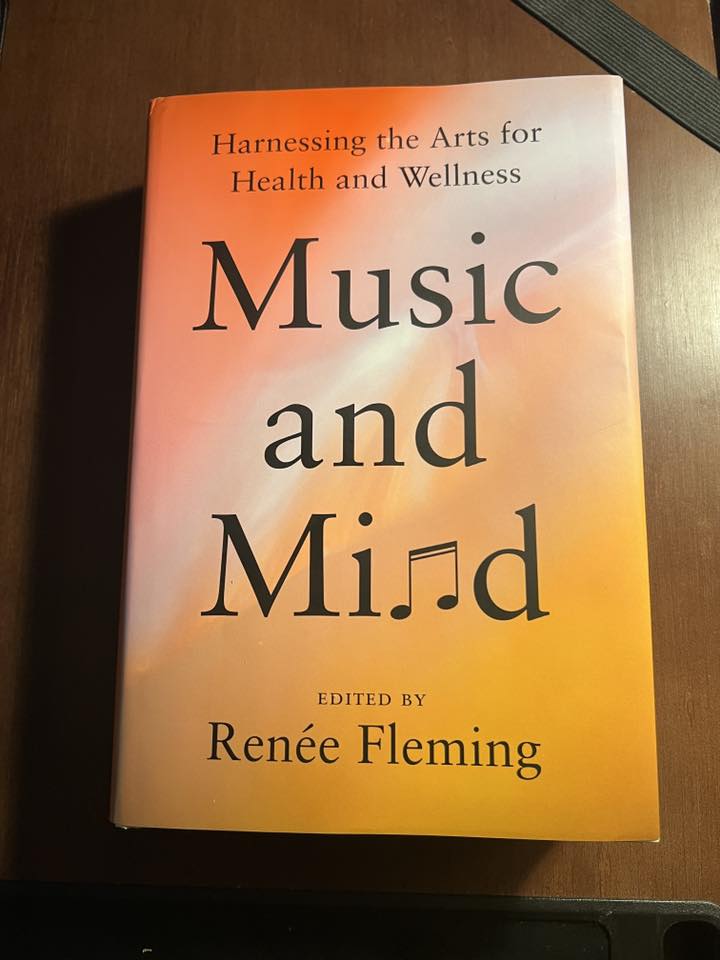
Music and Mind: Renee Fleming presents new music medical breakthroughs.
Nashville Symphony Presentation on 'Neuroarts' with Renee Fleming
Renee Fleming
World renowned operatic soprano Renee Fleming teamed up with a group of therapists, doctors, and musicians in a presentation about a new area of medicine called "Neuroarts" at the Schermerhorn Symphony Center on Monday, May 18, 2026 at 7:00 p.m. It is part of the Nashville Symphony and Vanderbilt Medical Center's focus on mental health and mindfulness.
- Renee Fleming, as speaker.
- The Nashville Symphony
- Rachel Miller, Harp (Vanderbilt Blair School of Music)
- Anthony Parce, Viola
- Vanderbilt Music Cognitive Lab (https://www.vumc.org/music-cognition-lab/welcome)
- Kelly Corcoran, Sociology
- Miriam Lense, PhD: Otolaryngology
- Dr. Andrew Woolridge, MD: Palliative Care (https://medicine.vumc.org/department-directory/Andrew-Wooldridge)
- Kyshona Armstrong, Music Therapy
- Song writing as Journaling: Group Song Writing
Getting There
The drive down to Nashville was about as good as it gets. Slowly but surely they are coming along with the expansion of I-65 but that didn't help the Northbound folks much coming out of Nashville. My recommendation is to take Exit 90A and get on 31E to get to downtown, called the Ellington Parkway. However, on game days at the football stadium all bets are off. This bypasses the confluence of I-65/24/40 and the helter skelter of those interchanges. The gold standard of parking is at 222 2nd Street. When you purchase through the Symphony's Parkwhiz link it saves you some I think. You want to enter by way of 2nd, but exit the parkhouse on the 1st side, take a right, then left at the light on the bridge over the river, connecting you to I-24 West and that sweeps you out of the city, as if you are on a fast flowing river. The great thing about this is that you are right at the river's edge and can take a walk to do a Siddharthian moment of contemplation as the currents of the Cumberland River flow past you.
The "Event"
The evening began with a brief Harp and Violin intro that reminds one of the meditative music associated with India, Hinduism, and Buddhism. The beauty of the music with just those two instruments in that vast, glorious hall is next to impossible to describe. Following this intro, the audience was led through several meditative 'exercises' by the violinist and accompanied by the harpist playing the famous aria "The Song to the Moon" from Antonin Dvorak's opera "Rusalka". The result was a sort of 'palette cleaning' for the mind so that the audience could receive the information that was going to be shared.
It is difficult to not associate Renee Fleming with this aria, which she seems to have sung thousands of times. She acknowledged with appreciation the playing of the piece in her introductory statements.
My Life in the Neoroarts
In writing these reviews I am experiencing a 'mental load' issue because there is so much to know and although I know a lot, I am finding that synthesizing it into coherent writing is a real challenge, especially at a speed that I wished I could produce. I am also involved with 'other' things that increase the problem and on top of all of that the management of life in general gives one enough to do.
However, last night's presentation showed me how lucky I am to be able to have so many things running through my mind. It means I am neurologically healthy, at least for now. I have been processing life through the arts since I first started in music about 50 years ago. Much of my mental health, such as it is, was also due to my childhood environment provided by my loving and caring parents and the people that surrounded my family. Both of my parents played the piano, sang, and were admirers of the arts while not being professionals at them. The churches we attended were full of music as well. So, I was always surrounded by the arts and never really appreciated just what a gift that was for my formative years.
This presentation also showed me that the book I wrote "Boredom to Brilliance" is on the right track. Where the presentation emphasized the value of "Neuroarts" on patients with various mental and physical health issues was the focus, my book focuses on the importance of "Neuroarts" on mentally and physically healthy people who don't realize that doing artistic pursuits are existential to a high quality of life no matter the level of art you may achieve. It is in the doing that it is beneficial, even if it is just attentively listening, looking, tasting, smelling, and feeling the world around them. Nature is our primary teacher and it is the point of departure for a mentally and physically healthy life.
Music and Mind: Harnessing the Arts for Health and Wellness | edited by Renee Fleming
I have not yet flipped through the circ 500 page book that Ms. Fleming put together "Mind and Music". I purchased it and she was kind enough to sign copies for those after the lecture. I'm not one to ask for autographs at all, but this seemed to be a good opportunity to meet her, even if only briefly. It was a complete pleasure to meet her and I am looking forward to her concert on Wednesday with Rodney Gilfry, Baritone and the Nashville Symphony.
Neuroarts: A 'new' branch of the medical field.
90 minutes was a short time to jam the starting points of various areas of work being done in the area of "Neuroarts". My definition of Neuroarts would be: "The science of music and other arts in treating mental and physical illnesses." In the first couple of paragraphs of the book, Ms. Fleming writes that using the arts was considered "Soft science". Today, this has shifted to a concerted effort to explore this 'new' area of medicine.
It is literally mind blowing what this research is revealing and the therapies create amazing results. Stuff like, people who have difficulty walking can dance, people who have difficulty speaking can sing, and people who are under stress can focus on doing something in the arts to alleviate that stress. The arts give us something to do. It is an activity based therapy which develops skill and control over patients minds and bodies.
My father, Dr. Robert E. Simpson wrote his Master's thesis using the emotional reactions to music as a tool to diagnose psychological issues in healthy adults. My book Boredom to Brilliance is about using the artistic method to find your way in life and in the arts. I was thrilled about all of these elements flowing together into one area of study that is well worth doing.
The bottom line about all of this is that the arts aren't a luxury but are as essential to the wellbeing of a human as water, oxygen, nutrition, and exercise. The power of this can be multiplied when plugged into the areas of social involvement and community. I am aware of different programs in the Bowling Green area where the arts are used to help challenged people. These are great things that people are doing. Certainly SKYPAC and the Public Theater of Kentucky are engaged in such activities. I'll admit I don't know a lot about these things here, but I will look into it more in the future.
Take Aways
There are so many aspects of this area that to go into them would take a while. I want to make you aware of some of the topics discussed that were touched on by the members of the panel. This list is in no particular order:
- Stage Fright
- Changing your goal to make your art a mission and not a test.
- Public Speaking
- Neuro-Resonance or Brainwave therapy using sound waves
- Reminiscence Memory Bumps
- The music you learned in your youth
- The music your parents learned in their youth
- The music your grandparents learned in their youth.
- Create your own playlist
- Write down or record somehow a playlist of the music that you loved growing up so that if your mind starts to fade as you age, this music can be played to reconnect your memory.
- Song Writing as Journaling
- Self "Talk Therapy"
- The "Third Mind" created through writing songs with others.
- Rhythmic Diagnostics
- Identifying brain disorders through rhythms played by patients.
Captioning for the Hard of Hearing
One thing that was brought up during the Q and A period was the topic of 'captioning'. It is something I hadn't thought of before in this way. An audience member was saying that it would have helped him to have "Captions" or as we say in the opera "Surtitles" (Sur means above, Sub means below: so Above the Stage) to help deaf people understand what is being said. In opera they use surtitles to translate the opera being sung on stage into the language that the audience speaks. In Germany they use Surtitles even for German operas like Der Rosenkavalier or Lohengrin etc, because at best it is difficult to understand the language being used, even if you are fluent. What this reminds me of is that surtitles can make going to the theater for deaf people also a thing to be able to participate in.
The Inspiration to Live
My personal motivation to go into music was out of a visceral desire to impact others to 'feel something' of high value. To me, music was a transfer of energy from me to the audience through the direct signaling of sound waves created by my voice to the listener's ears. I always felt like it was my heart singing and I wanted to share my heart with others so they can know how much I care. Impacting people from the stage is what a performing artist does. But, now those things no longer seem lofty but rather essential for a happy life. Not everyone is a performer, I get that. But, everyone has a beating heart surging with feelings and those must be handled. Knowing now that this amazing world of "Neuroarts" exists gives me new inspiration to keep pushing on for the cause of great music performed live.
Musiterania is about manifesting the promise of music, and all arts, to create a sort of "Paradise" in cities and towns everywhere. Musiterania is like an explorer mapping the landscape of Classical music all across the country. The idea is to 'Discover' America in a way that has never been done before and to notice the incredible work being done. I feel it is very important to get people to the concert halls to hear untampered music created by great musicians all over the country. Why? Because it is what makes us human.
P.S. No AI editing used here. To get the thing done it is as written. This is a huge topic and well worth looking into. Pardon any mistakes I made.

1st Quarter Reflections of Musiterania’s New Direction
The New Direction Evaluation
On February 13, 2026, I posted a Blog about "Musiterania's New Direction. I knew then and still know that such a bold mission would take consistent action over a long period of time to achieve. After having traveled thousands of miles, experienced new halls and orchestras, spoken with many people, and heard various comments from those who have gone to the trouble of reading some of my posts, I have to ask myself whether this new direction is doable and worth doing. Without regular re-evaluation, I think it is possible to lose track of what you are doing. On top of that, it helps me tweak it a bit.
I consider my trip to Cincinnati to be the first of these concerts. That is when I realized that there are so many amazing musicians, incredible venues, and vital organizations in the United States that I feel are underrepresented by the media because it isn't "Mass Media". I have reviewed 13 concerts of various kinds over that period so far, and if a month is 4 weeks on average, then I have created a full quarter of a year's worth of concerts.
Has it been 'worth it'?
Absolutely! Someone asked me if I had any concerts that weren't 'good'. My answer was, "No", they have all been excellent. Now, when I said that, I am talking about fully professional orchestras that do serious repertoire and interesting programming to lure in those who aren't usually classical concert goers. The thing that I'd like to point out is that folks seem to be missing out on profound experiences that are happening right in their own city. This just doesn't happen here in the United States; everywhere, it is as if the classical music scene, and related areas like Jazz and Opera, aren't promoted like Pop music, well, because it's not 'popular'. So I feel there is a real need in the world for Musiterania's mission to be a champion for this and related genres.
The Main Challenge
The United States is a huge country. Even cities that are 'close' together are far apart when you drive it. The trip to Memphis is an excellent example. I thought I would never get there. The road just kept going, and it seemed like it was just getting longer the more I drove. So, energy is a huge factor. It isn't only energy for the vehicle, but my energy is vital to do a good job. I take frequent breaks, take naps, and try to take healthy food with me so I don't depend on gas station fare. Plus, when the destination is far from home, staying overnight is an added expense, even though part of the mission is to talk about the environment surrounding the concerts. Taking into account that Memphis is on the Mississippi River, you have to factor in that everything West of it is farther apart and less frequent.
The Inspiration that Gives me Energy
Musiterania's mission is to create the sense of a "Music Paradise" in the United States and worldwide. What does that mean? It means that we live in a world full of great musicians, great venues, and great works of art that are recreated in real time and space. The world is in search of a way to remain 'human' while it seems that everything is being taken over by computers, AI, and all sorts of technical schnick-schnak. Musiterania is an 'imaginary' world based on 'reality'. The reality is real people, playing real instruments, in front of live audiences, in real time, in a real space created for that purpose. Ideally, it is meant to be all unplugged, no mixing mikes, no synthesized sounds, only real sound created by real musicians who have spent their lives for this exact purpose.
My inspiration lies in lifting up the musicians and organizations that provide this service, and by acknowledging the generosity of the donors who make it all financially possible. It includes the inspiration that regular folks like you and me can become a vital part of the Musiterania experience of existing, even if only for a couple of hours in a musical reverie.
Pure or Absolute Music
I spent my career as an opera singer learning and memorizing text. As an opera singer, you are expected to sing in English, French, German, Italian, Russian, Latin, and every other language as the opportunity arises. 90% of the time, the music of a piece was the easy part. The hard part was the text. Plus, text gives the music 'meaning,' and you always have to figure out what it means. This too becomes a real-time drag in understanding a piece.
With Pure or Absolute Music, you don't really have that. These pieces have titles like Symphony #4, Concerto #5, or Piano Sonata No. 4 Opus 12. The notes are like the letters on a page of a book, but they don't transmit a definitive meaning; rather, musical ideas that are put together in a composition, much the way an architect designs a building. So the task at hand isn't listening to understand meaning but rather to solely hear music. In a live orchestral concert, you get these compositions presented to you as an unfolding drama of notes. You hear how a flute comes in over the string section or how the horns' glowing tones envelop the hall with their surround sound quality. The sea of violins, violas, cellos, and basses bowing like a well-coordinated rowing team that play with acute accuracy and is full of all the passion they can muster. To listen to this it takes full concentration, and it pulls you into a different level of consciousness.
Going Forward
I am trying to sharpen my skills in creating the calendar, writing posts, and incorporating video and audio into my work, as well as expand the social media landscape, uff! Planning the rest of the year will be a challenge, I hope to get around more. Things are keeping me close to home at the moment, which adds to the difficulty of fulfilling the mission of attending as many venues and orchestras across the United States as possible. I won't get everywhere in a year, but I can try!
I love sharing this with you and hope that you come along for the ride. My greatest hope is that you start attending some concerts in your area! I would love to hear about it!
Reflection
I'm not sure when I attended a Nashville Symphony concert in the Schermerhorn Symphony Center in Nashville, and I don't remember anything about the concert. All I remember was the utter disbelief that it existed at all. Not only did it exist, but it was actually tremendous. It reminded me of the first time I walked into the Eastman Theater or Kilbourne Hall as a graduate student. It is a miracle that it exists and I want to be a part of it. What a great place to be and there are many such experiences to be had all across the country.
Musiterania is creating a place for live music in the world that brings people together and lifts up our spirits with the inspiration of the great masters and new artists alike.

Review: Memphis Symphony’s “America’s 250th Birthday Celebration”
Performers
Memphis Symphony OrchestraMemphis Symphony Chorus (conducted by Joseph Powell)
Jeffrey Biegel, Piano
Robert Moody, Conductor
Event Details
Cannon Center for the Performing Arts255 North Main Street, Memphis
Saturday, May 2, 2026, at 7:30 PM Scheidt Family Performing Arts Center (University of Memphis)
3800 Central Avenue, Memphis
Sunday, May 3, 2026, 2:30 PM
Program
Ives: Variations on AmericaPeter Boyer: Rhapsody in Red, White, and Blue (featuring Jeffrey Biegel, Piano)
Intermission
Howard Hanson: The Star Spangled BannerHoward Hanson: Song of Democracy
Arr. Roland Carter: Lift Every Voice and Sing
Leonard Bernstein: Suite from Candide
The Trip to Memphis
After I visited the Nashville Symphony on Saturday evening, I drove about 40 minutes and stayed overnight before driving to pick up my brother in Martin, Tennessee, on Sunday morning. We decided to 'grab a bite' at Red Lobster, which took way too long and put us way behind schedule, causing us to arrive at the venue only 10 minutes before the start time. Luckily, we weren't the only people getting there at the last minute. The weather was glorious all day, and the parking at the Scheidt Family PAC is free, easy, and close. We made it to our seats, and the concert began almost immediately. We drove back to Martin after the concert, so there isn't much more to add about the experience other than it is a nice hall, well-attended, and enthusiastically received.
A Personal Reflection on America
Sometimes it is good to be reminded of who we are as Americans. It is good to be honest about our collective history. Driving six hours across some of the most beautiful farmland and forests in the country, I was reminded how fortunate we are to live in such an environment.
This concert, celebrating the 250th anniversary of the signing of the world-altering Declaration of Independence, also points toward the enduring vision of the Constitution-a nation built on the premise that people of different backgrounds, beliefs, and ways of life can coexist under laws that are equal to all.
And yet, I'll be honest: I am not feeling very patriotic these days.
Our country feels deeply divided. It is difficult to reconcile what we are seeing with what we believe ourselves to be. I've felt this tension since returning to America in 2016, hoping each day that we might come back to a sense of unity and shared purpose.
Why This Concert Mattered
In spite of all that, I was deeply moved by this performance from the Memphis Symphony Orchestra.
The program celebrated America while acknowledging its complexities-its history, its struggles, and the hope that we might still return to our better selves. In the post-concert Q&A, conductor Robert Moody noted (paraphrased), "Some have questioned whether this concert is appropriate for the current state of our country, but now is the most important time to do it."
I couldn't agree more.
Emotional Impact
I'm not entirely sure what I was feeling throughout the evening.
Was it mourning for ideals that may be fading?Was it a reflection on past injustices, particularly in a city so closely tied to the legacy of Dr. Martin Luther King Jr.?
Or was it a deeper sense of patriotism-still present beneath everything else?
Perhaps it was all of these at once.
What I do know is that Bernstein's Candide Suite, particularly "Make Our Garden Grow," brought back powerful personal memories from my own performing career. That closing message framed the entire evening beautifully:
Life is not promised to be fair or easy-but we do our best to make something meaningful out of it.
Program Highlights
Ives: Variations on America
Charles Ives is always an experience. Composed when he was just 17 (originally for organ and later orchestrated by William Schuman), this piece captures Ives's unconventional and imaginative voice.
Listening to Ives is less about understanding and more about experiencing. Variations on America unfolds like a musical journey-unexpected, playful, and at times chaotic, but always engaging.
Boyer: Rhapsody in Red, White, and Blue
Pianist Jeffrey Biegel delivered a commanding performance of Peter Boyer's Rhapsody in Red, White, and Blue, a work inspired by the centennial of Gershwin's Rhapsody in Blue.
The piece is energetic, virtuosic, and highly accessible. Biegel and the orchestra connected seamlessly, bringing out the color and clarity of Boyer's orchestration. It was a highlight of the evening and a joy to hear performed live.
Encore: Reflection of Equality
Before intermission, Biegel performed his own composition, Reflection of Equality: An Ode to Martin Luther King Jr.
He explained how the piece was constructed using the musical spelling of MLK, and subtly incorporated Amazing Grace. The result was thoughtful, restrained, and deeply meaningful-earning a strong and appreciative response from the audience.
Hanson: Song of Democracy
Following intermission, the Memphis Symphony Chorus joined the orchestra.
Hanson's Song of Democracy benefited from the full, rich string sound and the committed presence of the chorus. The scale of the work matched the ambition of the program, and the ensemble rose to the occasion.
Lift Every Voice and Sing
Arranged by Roland Carter, this piece carries deep historical and cultural significance.
I'll admit-I was not previously aware of its role as the "Black National Anthem." Seeing members of the audience stand was initially surprising, but the program notes provided important context.
Moments like this are reminders that learning is ongoing. I appreciated the inclusion of this work and the opportunity to better understand its place in American history.
Bernstein: Suite from Candide
The concert concluded with Bernstein's Candide Suite, from its famous overture to the powerful closing number, "Make Our Garden Grow."
Bernstein's brilliance as a composer and orchestrator was on full display. The final movement, in particular, provided a fitting emotional and philosophical conclusion to the evening.
The Conductor and Orchestra
Robert Moody led the orchestra with authority, clarity, and expressive depth. His connection with the audience-both in performance and in conversation-created a strong sense of rapport.
The orchestra itself impressed with both size and sensitivity. The balance across sections and the richness of the overall sound made for a compelling listening experience.
Final Thoughts
I left the concert both surprised and inspired.
The level of musicianship, the thoughtfulness of the programming, and the emotional resonance of the performance all made a lasting impression. Experiences like this remind us why live music matters-why it continues to bring people together in meaningful ways.
As long as we continue to support artists-and those who make their work possible-we will continue to benefit from these shared cultural experiences.
About Musiterania™
Musiterania™ is on a mission to visit orchestras across America-large and small-exploring their venues and promoting their work.
By creating a central place where audiences can discover these performances, we aim to increase awareness, support attendance, and contribute to a more connected and inspired national cultural landscape.

Review: WKU Orchestra and Choral Spring Concert: People make music possible.
Program:
- Montagues and Capulets from Romeo and Juliet Ballet (1935-1936)
- Sergei Prokofiev (1891-1953)
- Combined WKU Symphony and Bowling Green Youth Orchestra
- Dr. Brian St. John, Conductor
- Combined WKU Symphony and Bowling Green Youth Orchestra
- Sergei Prokofiev (1891-1953)
- La Mer (1903-1905)
- From Dawn to Noon on the Sea
- Play of the Waves
- Dialogue of the Wind and the Sea
- Claude Debussy (1863-1918)
- WKU Symphony
- Dr. Brian St. John, Conductor
Intermission
Dedicated in Memory of Sylvia Kersenbaum, former Piano Faculty member and international concert pianist, and David McKillup, WKU Bowling Green Community Chorus staff and member.
- Requiem, op. 48 (1900 Revision)
- Introit and Kyrie
- Offertorium
- Sanctus
- Pie Jesu
- Agnus Dei
- Libera me
- In paradisum
- Gabriel Fauré (1845-1924)
- WKU Choirs and Symphony
- Dr. Paul Hondorp, Conductor
- Soloists
- Kiris Ray, Soprano (Student at WKU)
- Dr. Jeremy Kelly, Baritone (Assistant Professor of Voice at WKU)
As I walked up "The Hill" on College Street towards Henry Hardin Cherry Hall on this pleasantly cool and breezy Friday evening, there were students in elegant evening attire walking around, the cars were chasing around in search of a parking spot, as I had been, and the recollections of the times I spent in some of the houses along that street during my college days, are always going through my mind. What used to be family houses are today student rentals, some in pretty good shape and some approaching "Animal House" status, reminiscent of that hilarious if off-color film with John Belushi. I had gotten there a bit late, so I was in a hurry to get up "The Hill", which isn't brilliant for someone approaching "Over the hill" status. I finally made it to Van Meter, walked in the tunnel under the stairs to the 'secret' handicapped entrance, where you can push the button, the door opens, and you can get on the elevator to the 2nd floor and the balcony. The ushers gave me a program and scanned the ticket I had printed out at home. The hall was already rather full when I arrived, because the chorus was already seated, so I grabbed a seat in the back row, which I don't mind doing.
The Bowling Green Youth Symphony joined the WKU Symphony for the Prokofiev "Montegut and Capulet" movement of the incredible ballet, a piece that is in the top 5 of my favorite all-time compositions. The orchestra filled the stage, and the large force gathered created the necessary power to produce the sounds that Prokofiev had composed. I had heard the Bowling Green Youth Symphony play the piece by itself on the previous Monday. It is a good selection to start a concert with because of its recognizable quality of the masculine dance. When I think of live classical music, one thing I'm reminded of is the saying "In live classical music, everything should be fortissimo (loud)...most of all the piano (quiet) parts", and to do that requires a full orchestra. The larger and fuller the orchestral sound, the quieter and more atmospheric they can play. It is a mysterious phenomenon.
The choice of La Mer by Debussy, is a real challenge for a college ensemble. Van Meter's acoustic is very alive, which is good, but it is a bit direct. This means there is nowhere to hide for the players. You hear everything. There are many soloistic parts and the students did a good job handling these exposed sections. The 'Lecture' by Dr. Brian St. John before playing La Mer was interesting to hear and was appreciated by the audience. It reminded me of the Bernstein videos where he uses orchestral excerpts to point out certain things about the piece. His comments were good because he instructed the audience how to listen and use their imagination to picture the sea during different times of day and weather. I think it was my first time hearing it live so I am grateful to have done so. It's true, you can't fully appreciate the orchestration and beauty of how such pieces sound in real space and time from a recording or on TV.
As a singer I have to begin my review of the Faure "Requiem" by bringing forward Soprano Kiris Ray, a student at WKU. There isn't a lot to sing for the soloists in this piece, but her performance is truly promising. She has a full lyric Soprano sound, bright, round, and above all "present" in the hall. She sang with ease and poise through all registers and was dressed in a beautiful, flowing gown.
It is always a pleasure to hear WKU Assistant Professor Jeremy Kelly sing. His Heroic Baritone voice is expressive and expansive. Above all, it is a beautiful sound and gives a welcomed strength to the sensitive passages for which Faure is famous.
Professor Dr. Paul Hondorp, Director of Choral Activities at WKU and the Southern Kentucky Choral Society, had his forces well prepared for the Requiem. Again, the sheer numbers aided in providing a gorgeous texture to Faure's elegant choral writing. The orchestra accompanied the choristers with sensitivity. Dr. Hondorp effectively leads with an elegant understatement.
Having heard and performed in a lot of 'church music' settings in European cathedrals during my career, I am reminded how pieces like this are accessible for ensembles like this one. The acoustic difference between a cathedral and a concert hall is vast. The cathedral mixes the sounds into a sort of ethereal soup unless you are very deliberate with it. In the concert hall, the details are much more exposed, and therefore more delicate. Great music, that is performable, moving, and beautiful, celebrating the "Requiem aeternam" (Rest in Eternity) optimistically promised by faith.
When you sing masses you learn Latin. Over time, you begin to find comfort in these otherwise never spoken words. You know the texts because you have done them so often, and even if you can't remember all of them, you recognize them, and it is like visiting an old friend. One movement I find particularly fitting for the current world situation that offers us hope through the shared frailty of the human condition.
- "Agnus Dei"
- The Lamb of God.
- "Qui tollis peccata mundi"
- Who takes away the sins of the world.
- "Miserere nobis"
- Have mercy on us.
- "Dona nobis pacem"
- Give us peace.
This is what going to great musical concerts offer us time to do. To think, to reflect, to listen, to enjoy, to associate, and to be part of the good things about being a human. Dr. Brian St. John said in his 'lecture' that along with the commonly stated attributes of students participating in music, that the ability to have the ability to wait while others get better, that the improvement of others improves us as well. I would add something to that which I learned from the legendary Vincent La Selva, Director of the New York Grand Opera, when he said in a community music class he taught at Julliard,
"When we learn, study, and play this music we are given the opportunity to have that genius inhabit our minds and our meager abilities are enhanced with the great minds of the past."
We may not ourselves create these great works of art, but we get to reproduce them every time as if it is being done for the first time.
To play an instrument well enough to perform these pieces it takes years of practice. Ideally, you should start at an early age, take lessons and practice for years, and play in ensembles as much as possible. It is parents willing to support their kids in this pursuit. But, my hat goes off to all of the Educators who give themselves to instructing the future musicians and audience members of the world. We need and love them. They are doing the most important work there is, taking care of our dearest resource, our children, and the future.
Musiterania
We are on a quest to form a musical world where musicians and audience members can come together and gain life perspectives from the vast classical music literature and other acoustic live music experiences in which we can take part. Lifting up the intrepid souls who journey into the world as musical ambassadors of peace and goodwill is an important part of Musiterania's mission.
Carousel in Concert: Full orchestral concert of a historic broadway musical with the Ramsey Theater Company and Orchestra Kentucky at the SKYPAC in Bowling Green, Kentucky
 The Southern Kentucky Performing Arts Center
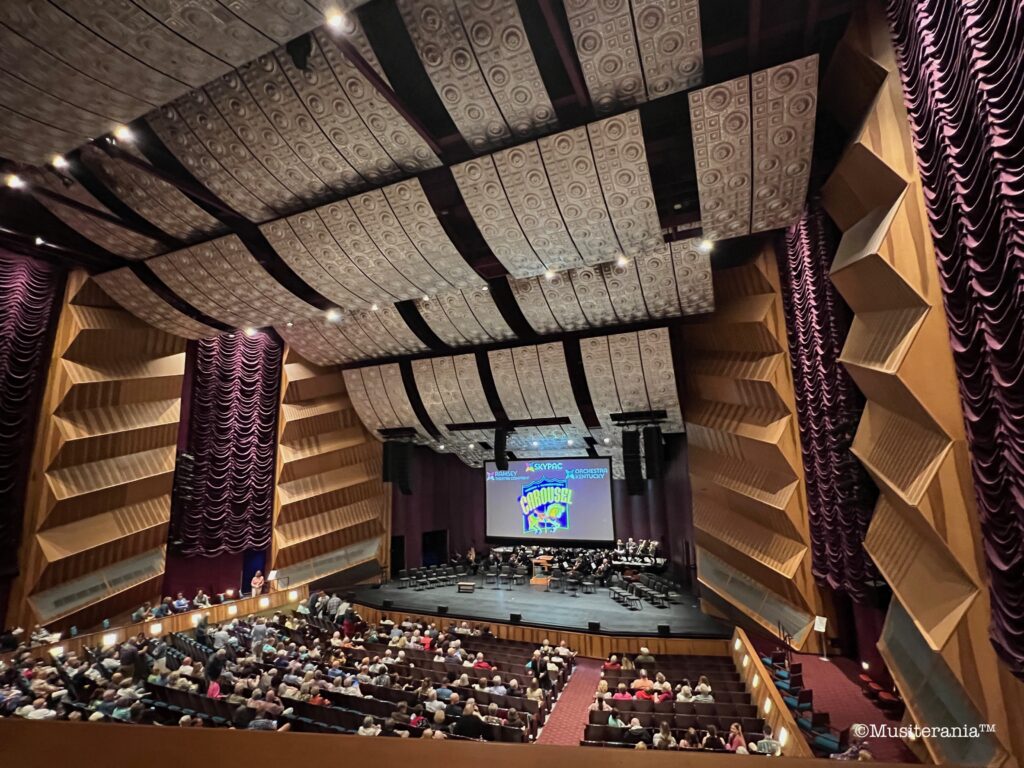 The SKYPAC Hall Carousel
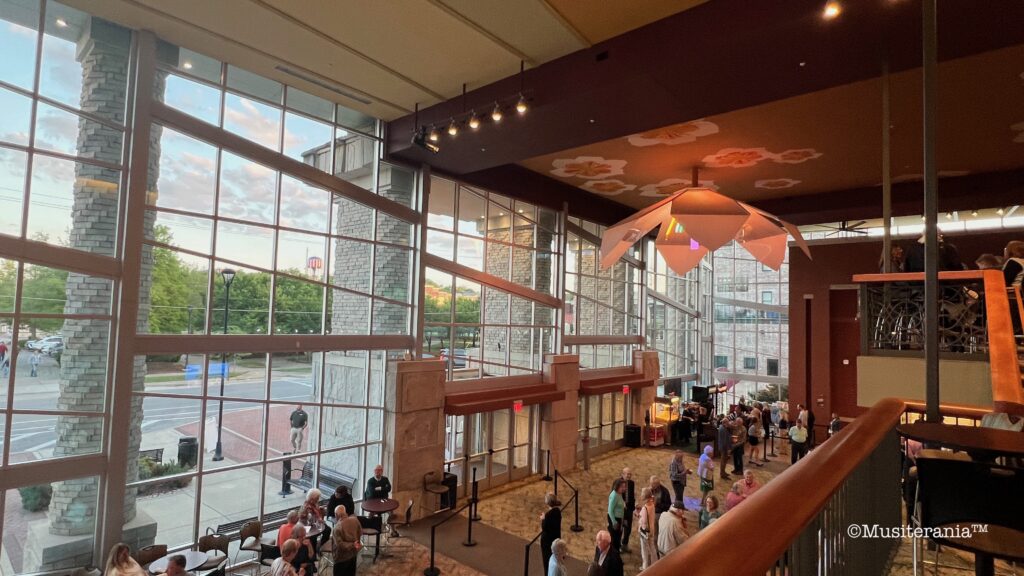
The SKYPAC Foyer
The SKYPAC Hall Carousel
The SKYPAC Foyer
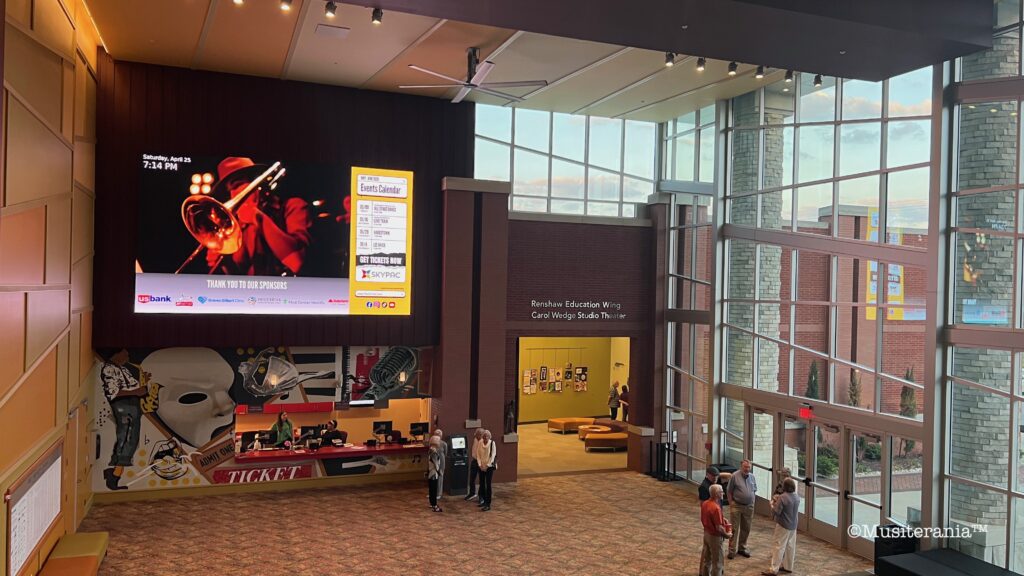 The SKYPAC Foyer Tickets
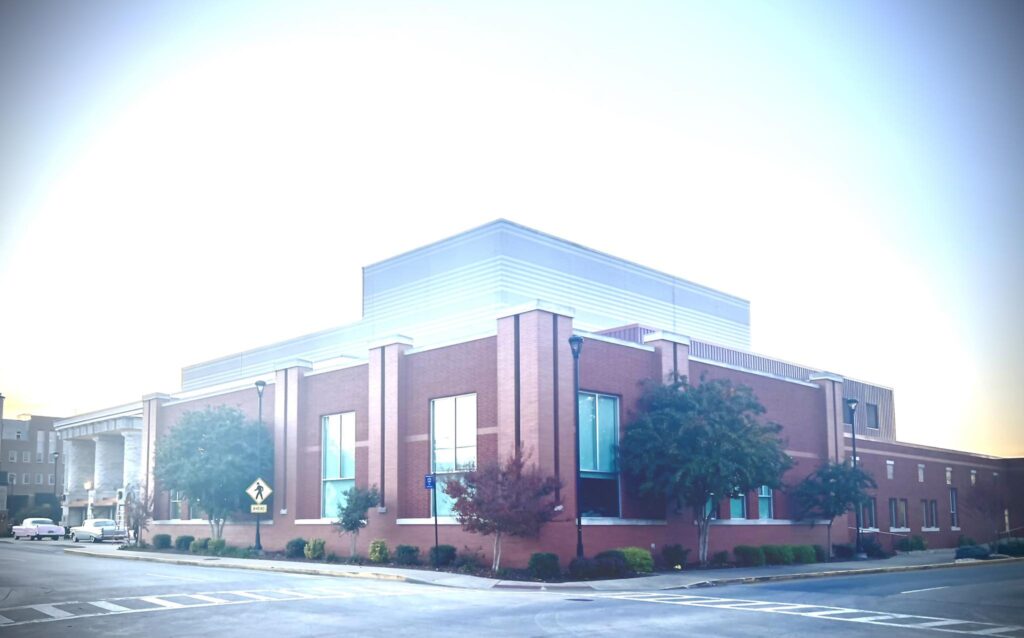 The Southern Kentucky Performing Arts Center
Carousel in Concert - Cast List (SKYPAC)
Guest Conductor - Joseph Trafton
Role - Actor
Billy Bigelow - Jeremy StolleJulie Jordan - Elizabeth Welch
Narrator/Starkeeper - Andy Stahl
Carrie Pipperidge - Grace Trenouth
Enoch Snow - Elijah Milburn
Nettie Fowler - Dr. Tiffany Bostic Brown
Dr. Seldon - Ron Trenouth
Jigger Craigin - Jesse McFarland
Mr. Bascombe - Jonathan Vanderpool
Mrs. Mullen - Hannah Vanderpool
Ensemble / Youth Ensemble:
Louise - Kasey TaylorEnoch Snow Jr. - Xavier Gravil
Young Girl - Amberlin Burgett Chorus:
Orchestra Kentucky Chorale
As I was walking up College Street to SKYPAC-the Southern Kentucky Performing Arts Center in Bowling Green, Kentucky-I enjoyed the beautiful spring Saturday afternoon, the trees now full, and the people walking toward the theater. It was a common, everyday experience I had in German towns, large and small, for well over 20 years, and I never thought it possible in Bowling Green. It is a scene now happening all across the United States in communities that are supporting the arts in a way that is transforming culture in their towns, so people no longer have to travel hundreds of miles for quality programs. Orchestra Kentucky, and now the Ramsey Theater Company, are engaged in building a solid professional organization that can grow into something truly special as Bowling Green and South Central Kentucky continue to grow. It is an exciting and audacious project, but one well worth doing. This past Saturday, one of the major Broadway hits of the mid-1940s was presented in concert form. Carousel, a musical by the famed duo Rodgers and Hammerstein, was performed with a full orchestra-as it was originally done-featuring Broadway soloists alongside wonderful local talent. The guest conductor for the evening, Maestro Joseph Trafton, born and raised in Bowling Green and a longtime professional conductor in Europe, led the forces with an encouraging and firm hand. Usually, conductors stand in front of all performers, but on this evening, the soloists and chorus were positioned in front, with the conductor behind them, facing the orchestra at the back of the stage. This arrangement enhanced the chorus's presence and allowed the soloists to open more directly to the audience. For the conductor, it can be tricky to hold everything together, but on this evening, it worked very well. The orchestra responded to Trafton's direction with both musicality and attentiveness as the actors presented the piece in front. Trafton's mastery showed through as he formed the music that led to sensitivity in intimate scenes and the necessary drive and momentum for the big musical numbers that are famous on Broadway. It is a rare and special treat to hear this music with full orchestral accompaniment. This setup requires the performers to be especially precise in their singing without direct visual contact with the conductor. Having performed in this arrangement many times, I can say it is tricky business-but it works well when everyone knows what they are doing. The orchestra was not miked, while the soloists were, and everything could be heard clearly. Elizabeth Welch, Julie Jordan, sang with a beautiful soprano voice and convincingly portrayed the sweet and vulnerable young woman in search of a husband, even though she claims she isn't. Her partner, Billy Bigelow, sung by Jeremy Stolle, was a strong presence with his pleasant baritone and characteristic machismo for the ruffian. I was thinking the whole time he would make an ideal Gaston in Beauty and the Beast. From the beginning, it was clear that this union would become problematic. The major theme of the evening is the famous "If I loved you" duet, which created one of the highlights of the evening. The young pair Carrie Pipperidge and Enoch Snow, sung by Grace Trenouth and Elijah Milburn, created a sympathetic and believable young couple. Grace Trenouth sang with a full, even lyric sound. Elijah Milburn's tenor has a nice timbre and handles the piece with ease. They make for a believable and happy couple in contrast to the troubled relationship of Julie and Billy. "You'll never walk alone", was beautifully sung by Dr. Tiffany Bostic-Brown in the role of Nettie Fowler. Nettie sings this famous song of encouragement to help Julie through the coming difficulties of her life as a single mother in a judgmental society.
Mrs. Mullin, Hannah Vanderpool, played the Carousel owner as one would envision it to be. A strict business person who protects her realm the best way she knows how. Mr. Bascombe, Jonathan Vanderpool, presented the business owner who employed Julie and Grace, with a balance of compassion and principle. Dr. Seldon, Ron Trenouth, was an effective voice of reason that brings a strong message of hope to the scene. The Narrator/Star Keeper, Bowling Green native Andy Stahl, brought understanding to Billy's unfortunate plight by allowing him to make a visit from the afterlife to reconcile with Julie and their daughter.
Kasey Taylor, Louise, was convincing in her passionate portrayal of Julie and Billy's daughter later in life. Xavier Gravil and Amberlin Burgett, Enoch Snow Jr., and a young girl filled their roles nicely.
I was happy to see the choir on the front of the stage, the women's section on the left side of the stage, and the men on the right. This made their contribution much more effective and their participation and great singing were highlights of the evening.
In today's cynical world, it seems almost foreign to present a piece like Carousel. Simple but powerful feelings are stirred when you experience a duet like "If I Loved You" or the bracing song of hope, "You'll Never Walk Alone." It comes from a time when World War II was ending, when the world was trying to find its way back to humanity and to fill the heart with positive emotions. The tragedy within the story gives it drama, and the hope that keeps us alive and moving forward-with a balance of comedy and innocence-is the message of this story. We all experience heartache and joy, and they often exist in the same space and time. "Life is not all beer and skittles" is a famous quote by Mrs. Mullin in her warning to Julie about marrying a man like Billy. But life is also not all "doom and gloom," and so it is acceptable to laugh and have joy in times of trouble, because it is a way to retain one's sanity.
In my experience with music of many ages, I know how important it is to present theater from all eras of history. Each work of art, every time period, every genre, has as its backdrop the society of its creation. We travel through time to study the societies of the past, to glean lessons for our lives today, and to experience the qualities of those times. We ask ourselves, "What would I have been like if I had lived then?" What would I have done? What would I have believed in? Who am I today? What do I truly believe in? Are we too jaded to open our hearts to such optimistic feelings? Does the fear of getting hurt prevent us from showing love and experiencing warmth on a human level today? These are the questions that call us to continue performing such great works from the past. They are also what calls us to create new works for the future, so that our world today leaves behind a positive message for generations to come. The hours, days, and years move us relentlessly forward toward a future we are incapable of fully comprehending. To move into that future, we should bring with us all the good there is. We are going to need that positive force much more than we realize today.
After the concert, I stopped by the Lily May Bourbon Company restaurant, right next door on the corner, to check it out as a possible place for socializing after concerts and events at SKYPAC. Speaking with the owner, he said he encourages people to come in after shows and events downtown. One of the things I enjoy most after performances is going out afterward, sitting with friends, talking about the show, and meeting members of the audience. I would like to start a tradition with Musiterania™ to meet after events and create good times together. Music brings people together, and gathering after a performance is a wonderful way to socialize and build community.
At its heart, Musiterania™ is about more than the performance itself-it is about what happens before and after, in the spaces where people gather, reflect, and connect. The arts remind us of who we are, but community reminds us why it matters. If we are to move forward into an uncertain future, it will not be alone. It will be together-through music, conversation, and shared experience-building something meaningful, one evening at a time.
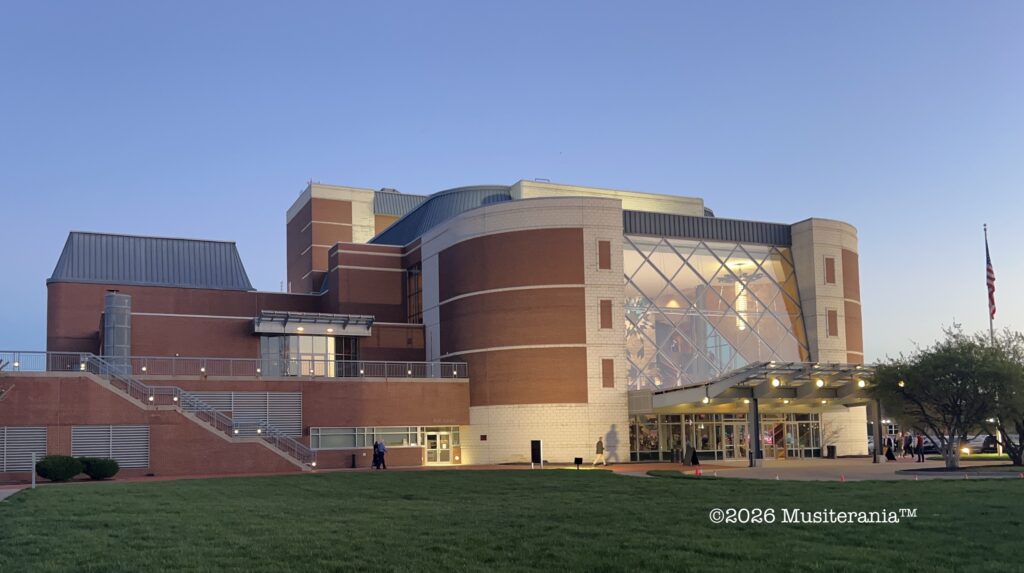
Review: A Schumann Symphony, a Harp Concerto, the Tannhauser Overture, and The Beethoven Choral Fantasy for Orchestra, Piano, Soloists, and Chorus make for a strong evening of symphonic music.
Concert of the Paducah Symphony Orchestra (46th Season, 2025-2026)
Saturday, April 18, 2026 7:30 - 9:30 p.m.
The Carson Center for the Performing Arts
Raffaele Livio Ponti, Artistic Director and Conductor
Kemal Gekic, Piano
Anna Maria Mendieta, harp
---
Symphony #2 in C Major Robert Shumann
- Sostenuto assai - Allegro, ma non troppo
- Scherzo: Allegro vivace
- Adagio espressivo
- Allegro molto vivace
Intermission
Tannhauser Overture Richard Wagner
---
Asturias: Harp Concerto Isaac Albeniz
arr: Anna Maria Mandieta & Vincet Russo
---
"Choral Fantasy" Ludwig van Beethoven
Fantasia for Piano, Soloists, Chorus, & Orchestra
-
The Chorus was combined from the following Ensembles:
- The Paducah Symphony Chorus:
- Dr. Bradley Almquist, Director
- The Paducah Symphony Youth Chorus:
- Ms. Samantha Veal, Director
- McCracken County High School Varsity Choir:
- Ms. Savannah Fallis, Director
- The Paducah Singers:
- Dr. Susan Davenport, Director
- Murray State University Treble Chorus,
- Dr. Bradley Almquist, Director
- Dyersburg State Community College Choir:
- Dr. Brianna Reilly, Director
- University of Tennessee at Martin Choir:
- Dr. Mark Statler, Director
- The Paducah Symphony Chorus:
One of the most rewarding aspects of the Paducah Symphony Orchestra is its integration of high school students. Last night, the vocal soloists were from McCracken County High School, and the chorus joined the symphony chorus for Beethoven's Choral Fantasy. They performed beautifully. At that age, I can hardly imagine a better opportunity than performing alongside a full symphony orchestra. The drive down included high winds and light rain as a cold front moved through Kentucky, leaving behind today's stunning weather. Later, I'll return to Bowling Green via the scenic 68/80 route from Cadiz.
Robert Schumann wrote a great deal of compelling music, though I am not entirely convinced by his symphonies. While they fulfill many expectations of a classical or early Romantic structure, they do not quite reach the expressive depth of Brahms or Beethoven. Still, they are enjoyable and serve well as opening repertoire-music that allows an orchestra to settle in. I was particularly drawn to the slow third movement, where several string textures stood out with striking effect. Wagner's Tannhäuser Overture remains a masterclass in thematic development and orchestral color. The performance was accurate and energetic, producing a full sound despite a modest ensemble size. The sweeping string passages were especially effective, supported by strong brass playing and confident winds in exposed moments that demand precision and focus. The Asturias Harp Concerto, featuring harpist Anna Maria Mendieta, unfolded as a single continuous movement. Dressed in a striking gown reminiscent of Carmen, Ms. Mendieta displayed both virtuosity and sensitivity-alternating between brilliant solo passages and rich orchestral textures. The piece carried a cinematic quality, evoking the feeling of a musical journey, almost like a soundtrack to a road film. Beethoven's Choral Fantasy was the highlight of the evening and the primary reason for my visit to Paducah. It is a fascinating work that gradually expands in scope without pause: Piano solo introduction
Orchestra enters
String quartet interlude
Wind and brass solos
Five vocal soloists join
Full chorus brings the work to its conclusion This evolving structure-each new layer adding depth-makes the piece unique in music history. One can easily imagine Beethoven himself at the piano, commanding the moment as only he could.
After the concert, I strolled downtown and went to the riverside until I finally drove to the 1895 Washington Hotel, a charming bed-and-breakfast here in town, and had a great rest. I just finished a breakfast croissant at Over/Under and am now enjoying coffee after a morning stroll through downtown Paducah, Kentucky. It is a perfect Sunday morning-ideal for walking along the river, taking photos, and reflecting on the wonderful concert I witnessed last night. I was able to write most of this post at Over/Under. During my walk this morning, I happened to meet Dr. Ching-Yi Lin, Concertmaster of the Paducah Symphony and Violin Professor at Western Kentucky University; her husband, Andrew Braddock, 1st Chair Violist and Viola Professor at WKU; and their family. It was good to see familiar faces on the street. I also reconnected with violinist and Bowling Green resident Julianna Waller-Martinez, whom I met after a previous concert. Their work teaching violin and supporting youth string programs at WKU and in Warren County is deeply appreciated. I attended the concert with my brother, Dr. Mark Simpson, and his wife, Julie, who drove from Martin, Tennessee, to meet me. We sat in the top balcony, first row-excellent seats despite a slightly obstructed view from lighting fixtures. The sound up there is great.
Musiterania's mission is to travel across America, visit great venues, review acoustical performances, and capture the atmosphere of cities and towns. The dedication of arts organizations throughout the country is both inspiring and essential. Experiencing musicians performing at their highest level-bringing great music to life in meaningful settings-is something truly worth preserving.

Review: “American” Creator’s Corp Classical Music on Display in Louisville
"American" Creator's Corps Classical Music on Display in Louisville
Program
Teddy Abrams, Conductor
ENTER[ic] PORTAL
- Chelsea Komschlies
- Creators Corps
Silicon Hymnal
- Mason Bates
II. Phat Reel
III. Air for Three
IV. Abide with Me
V. Finale
- Time for Three
- Nicolas "Nick" Kendall (violin, vocals)
Charles Yang (violin, vocals)
Ranaan Meyer (double bass, vocals)
- Nicolas "Nick" Kendall (violin, vocals)
- Aaron Copland
- Louisville Ballet
- Andrea Schermoly, choreographer
Date of Attendance: Friday, April 10, 2026, at 11:00 a.m.
The sold-out April 11 concert precipitated today's morning matinee, and it was well attended. The concert is a celebration of sorts of all things 'American' with the first two pieces from current living American composers and the "Godfather' of American orchestration, Aaron Copland. I had no familiarity with this new music and the Appalachian Spring I've known for years, but have never witnessed in a theater. I love hearing music for the first time, and the "World Premiere" of Enter[ic] Portal by the resident composer Chelsea Komschlies and the 5 Movement piece, Silicon Hymnal by Mason Bates, were all completely new to me.
It is a stretch for most folks to hear 'new music'. Why? Composers today are running like crazy away from old traditions to create new sounds and styles. So, whenever you mention 'modern' music to classical music fans, you often get a collective groan because it is associated with music that is impossible to grasp in one hearing, and most of the time, impossible to enjoy. It's as if composers want to slap you around with music that has as its highest merit to be "not beautiful". So programming 'modern' music is risky for orchestras and opera companies. The Louisville Symphony was wise to market the Appalachian Spring as the main attraction, but sliding in the first two pieces was very well done and well chosen. Above and beyond that, I think the audience actually "liked" it.
Teddy Abrams, the Louisville Orchestra's articulate and energetic Music Director, does a great job of presenting the program to the audience. Chelsea Komschlies is the Resident Composer for the Louisville Orchestra and is a full-time employee of the orchestra. The Louisville Orchestra has been known for recording new pieces in the past, and I feel it is vital to sponsor a composer and have them create music for the sake of creating music, for the orchestra, and into the world. As Musiterania is all about funding musicians, I am thrilled that the Louisville Orchestra supports it, which means people of the city of Louisville support it. I'll admit, being a Louisville native gives me a bit of pride in it myself.
The "Creator's Corp" was used to create a multimedia piece of original music by Chelsea Komschlies, combined with electronic musical elements and computer-generated video to hypnotize the audience. ENTER[ic] PORTAL reminded me somewhat of the psychedelic effects during the movie "2001: A Space Odyssey'' by Stanley Kubrick. Instead of a voyage into the depths of space, this voyage was all about traveling to the center of us, the "Gut". It is an exploration of the feelings we have during life's travels and experiences. The orchestration of this piece is absolutely mesmerizing. It is a piece that is quite easy to listen to while being very complex and intricate. There were some effects that I had never heard before from the orchestra, and the weaving of the electronic effects was so well done that it was difficult to recognize the separation. I have to say it is quite the 'glorious' celebration of what orchestras can do. Maestro Abrams doesn't just get them through the piece; he creates exciting moments and tender touches for music that nobody has ever played or heard before. It is quite the accomplishment. I'd love to have this as a recording as well as hear it again in concert. One time is not enough.
Silicon Hymnal by Mason Bates is a 5 movement piece that is melded together into what I perceived to be three separations. The piece features a 'concerto' type of presentation with the group "Time for Three" that stands in front of the podium and enthusiastically jams with the orchestra. Check out the program notes here! Aaron Grad's notes provide the details about the piece you will want to read. It says a lot about the Time for Three and the Louisville Orchestra that Mason Bates would entrust the first recording to be done this weekend.
Nick Kendall, violin and vocals; Charles Yang, violin, mandolin, and vocals; and Ranaan Meyer, double bass and vocals, make up the harmonious triad this piece was designed to incorporate. Their instruments were amplified, and they sang with mikes to balance the sound of the large orchestra behind them. Some of the orchestral effects came with an electronic component that fused the various elements. I will be looking forward to the recording of this piece that is being made from the Louisville performances. There is so much in the piece that capturing it in writing is impossible. The program notes provide a lot of education on it, much better than any description I could provide here after one listening. It is a pretty long piece and the length was broken up by the variety of sounds the trio produced, with the strumming of violins, the playing of the Mandolin by Charles Yang, and the singing they provided in the "Abide with me" hymn section of the piece that was miraculously interwoven into the structure of the movement. The Finale was indeed that. It raced to the end like one of the great Kentucky Derby races that Louisville is known for. The musicianship and the tight conducting of the orchestra made for an almost rock concert type of energy that brought the audience to its feet with ecstatic applause.
Time for Three performed a lengthy encore with some beautiful singing, especially by Charles Yang, and harmonized well with Nick Kendall and Ranaan Meyer. There is a strong sense of fusion between a Bluegrass "Americana" style of music, mixed with Jazz and Classical elements, that makes them captivating to listen to. Nick Kendall is the 'frontman' of the group and engages well with the audience. Ranaan Meyer's Bass solo led in the encore with passion and skill. I look forward to listening to more of their music.
The concert featuring Aaron Copland's Appalachian Spring Ballet with the Louisville Ballet has been something I've wanted to hear and see my entire life. For me, the primary attraction is the music and the sound of an orchestra playing purely acoustic music. So, I sat in the balcony to hear the music, and from there you have a full view of the stage to see the ballet. My experience with the Zürich Ballet, back when I was in the Zürich Opera Studio, taught me that ballet is best appreciated up close. I would love to see the Louisville Ballet up close because they look like a fine company of dancers.
The presentation of what I call "Real" music, music that is played by human beings, on instruments built by human hands, and is made to be listened to in a concert hall, is what I am trying to emphasize in my reviews. I understand that electronic music is a part of our musical landscape and that it can be used to create new types of musical experiences, but I am still in amazement at just how profound orchestral music played live is. I've listened to "App Spring" many times on stereos. Sure, it is good. But when you hear music live in concert, it is a completely different experience. The subtle sound of the strings as they create a sunrise and the melody of the clarinet as it introduces the day, only to be given to the flute at the end of it, are magical sounds. They are so ethereal and absolutely spellbinding. When you have real dancers performing with this music, it becomes a 'multimedia' kind of art on its own.
Story lines in Ballet have always been a curiosity to me. Appalachian Spring had two pairs of dancers and then the corps of the ballet. There was the obvious courtship of the girl and the boy who danced exquisitely throughout the piece. The man and the woman, apparently a Rivalist preacher and a frontier lady, were the aggressive counterpoles to the couple in love. It is worth noting that Appalachian Spring was not the original name of the piece, but was taken from the cycle of poems The Bridge by Hart Crane before the premiere by choreographer Martha Graham. The corps of the ballet danced beautifully together and provided support for the main characters. Andrea Schermoly organized a wonderful choreography on the front lip of the stage, which moved well within the confined area. The costumes were tastefully done and graceful.
Overall the concert was a huge success. The passive lighting affects throughout as well as during the ballet enhanced the performances and made for a colorful experience for all. A truly profound concert for today's audience.
In the end, what this program in Louisville affirms is something at the very heart of Musiterania: music is not a museum-it is alive. The great thing about music is that it is a re-creative art form that gives every piece a rebirth when it is performed. New music breathes new life through new creations, bold experimentation, and the timeless beauty of works that continue to speak across generations. From the daring sound worlds of today's composers to the enduring spirit of Copland, this concert reminded us that supporting musicians means supporting the full spectrum of artistic expression. When orchestras invest in creators, and audiences show up with open ears, something powerful happens-we don't just preserve music, we move it forward. And that is a journey worth taking, again and again.
Review: Classical Music Short Form: Epic “Distant Worlds” Final Fantasy Music Concert with the Nashville Symphony
Last week Bollywood, this week Gaming. Two concerts that don't necessarily fit the definite description of Musiterania's mission of purely acoustical music. However, I wanted to hear what I suspected would be 'acoustically enhanced' symphonic music. Both concerts were sound-enhanced with amplification, but I have to admit they were well done. It was difficult to tell sometimes.
My personal opinion is that orchestras don't need enhancement, but this is 'studio' music first and foremost. It is written to be recorded for film or video purposes. Several years ago I attended an Orchestra Kentucky concert featuring the music of John Williams and it was not enhanced and certainly didn't need to be. The clarity of a full orchestra playing this music is unsurpassable. But, people are so damaged in their hearing today that the feeling is you need to punch it up so it sounds like it does on recordings in the cinema or with headphones. The bottom line is, regardless of how you present it, the same notes have to be played. It is all about musicianship, artistry, and skill.
Before I get to the review, I want to discuss the topic of "Short Form Classical Music" that has become a topic of interest to me. Admittedly, I should write a complete article on the topic, but I wanted to mention it here as well.
One issue that classical music faces is the long duration of a lot of the repertoire. Many people just can't listen to something for 20 minutes without their minds drifting away or getting impatient for it to 'just be over with'. I started listening to Star Wars Soundtracks plus all of the John Williams soundtracks from other films. The thing that is great about them is that the longest pieces are 5:00 in length. I think composers should try to compose classical music this way. The Bollywood and Final Fantasy concerts have confirmed this idea for me. I love the long forms and am a huge fan of them because of their architecture and varied soundscapes. But, it seems to me that in today's world, there is definitely a place for pure classical music to be composed in the short form.
Performance Attended on April 1, 2026.
Nashville Symphony | Arnie Roth, conductor
Amanda Achen, vocalist
Nashville Symphony Chorus
Composer: Masayoshi Soken
Also music from:
- Composers:
- Nobuo Uematsu
- Masashi Hamauzu,
- Yoko Shimomura
- and others…
This program is performed by many orchestras the world over. The built-in fan base brings an audience that is new to the classical music genre and has great value in expanding the customer base for classical music.
Arnie Roth's conducting is absolutely clear and decisive, and the ability to keep on track with the multimedia video from the Final Fantasy series is no small task, especially with an orchestra that is essentially performing these pieces for the first time. I spoke with a couple of orchestra players after the concert, and they said they receive the music two weeks in advance to practice it themselves, then have two or so rehearsals before the concert. So, having a conductor familiar and experienced with the score is a must.
Amanda Achen, vocalist from the Final Fantasy recordings, is sublime. Her gorgeous soprano voice has that velvety, glowing warmth that reminds me of Karen Carpenter but is classically trained without being a "stuffy operatic singer." She sings with the mic and is a "stylist" in the jazz sense. I could listen to her all day, and the audience loved her.
Where do you go with this music in a review? There was no program list of titles, but they were introduced by the conductor. Most of the audience knew what he was referring to when he announced the pieces, but I had never heard any of this before the concert. I scribbled down some things on my reMarkable tablet, but it was dark, so I couldn't really see what I was writing. Now, admittedly, I could have done more research on this program ahead of time to become familiar with the whole thing, but I'm one to first just hear it for what it is. I prefer having no knowledge of it because I want to hear it for the first time live in concert-not listening for anything in particular, but listening for everything all of the time.
Now, for me, the experience is primarily music listening, but there was a large screen projection of video with animation from the series. I'll start with a figure that was quite enjoyable: Chocobo? From what I gathered, it appeared first as a "magical chick" of some kind and grew into the mighty chicken steed ridden by the heroes of the story. So, there is musical thematic material describing Chocobo.
Other titles I can read from my notes are "The Final Day," "Ascension Away," "My Star," and references to the different numbers in the series.
The music was excellently orchestrated. Most of the music is aggressive, but there are many different colors used throughout, with many obviously poignant moments composed in to feature the harp, the grand piano, flutes, and brass. Obviously, percussion plays a huge role in this music, and they were hustling all night long! Great fun! The Nashville Symphony Chorus was a smaller group that was fitted onto the back left side of the stage and was well miked for the performance. The epic effect of the chorus is the last thing you hear in the performance, giving us a feeling of a cry for humanity in the vast violence of the world portrayed by the videos.
"Art shows us who we can be."
I wrote these words down during the concert. The Arts are basically "the study of human nature." I have given theater the definition of "the laboratory for human nature," and cinema definitely falls in that category. I'm not sure what gaming teaches us. I don't game, so I am not one to comment about something I have no clue about. I believe that humans are fed by the sensory experiences they incur during a lifetime. The mind accepts everything it receives through the senses as true. We think about these impressions and give them meaning. We define our world, but our world is given to us 24/7, and that is a lot of input to define. So, often, we take it at face value.
With these games, it seems there is a lot of violence, a lot of killing, and a lot of fight-or-flight emotions being displayed. I'm not sure this is psychologically supportive material. But it makes you feel important, I guess, and it is easy to get sucked into the violence as being normal. Not sure this is great for our society...but hey...it sells.
There are moments when the video reveals a young man or woman in a state of thoughtful reflection. They desire to be good people, to do the right thing, and to stand for something virtuous. When we look in the mirror and plan our lives, do we realize that the world is watching us every day? We are creating our reality with our thoughts. What kind of world are we building inside? These are the thoughts that I had during the concert.
"Pretty Music"
This music is pretty. It is powerful. It is colorful. Most of all, it is short! I have a composer friend who sort of disdains "pretty music", I'm not sure why. That is also a topic for another day. But, I love the orchestral colors that great composers can create. You sort of have to hear with 'different ears.'
The concept of writing short pieces for orchestra is something I believe should be focused on today. A storyline gives us thematic material we can latch onto. However, musical melodies and sounds can impart meaningfulness without being definite. I do believe that themes are the key to writing great music. A theme is nothing but a musical idea that is created by a composer. Give them a catchy melody they will remember-that is the A and O of popular music songwriting, and so it can be for classical orchestral music. This music is aggressive and sweet, but it comes from a world without multimedia.
The day and trip
It was a beautiful day and I am very grateful for spring. I wanted to try a different route so I first went to the Opry Mills Mall and had dinner at the huge Bavarian Restaurant there. It was ...okay...in the past it was good. After walking the Sauerbraten meal off inside the mall I took the 20 minute drive to the parking structure at the Holiday Inn on Peabody Street, a nice couple of blocks away from Schirmerhorn. I took Briley Parkway east, 155, exit 8 onto Highway 70 that leads downtown. It is a 4-lane road going through a sort of industrial area. But, the drive is very low stress in comparison to the interstate spaghetti of I 24-40-65 around downtown. I recommend it, but I have not driven it when things are popping, so be aware that Nashville traffic can be horrid depending.
There are several things I'd love to do when I go to Nashville that I never seem to have time to do. First off, walk the streets, go the various museums, do some Honky Tonk hopping, go down to the waterfront, walk across the bridge, go to a restaurant for dinner, go to the symphony, then go out for a nightcap afterwards. Driving home after all that would be extremely tiring. So, I have to consider my energy when I go. There is a lot to experience in Nashville, and it is an energetic town.
Musiterania
Experiences like this remind us that music is constantly evolving, meeting audiences where they are while still carrying the timeless language of human expression. Whether through symphony, screen, or story, what matters most is the connection-the moment when sound, thought, and feeling align. At Musiterania, we believe every performance is an opportunity not just to listen, but to reflect on who we are and who we are becoming through the art we choose to embrace.

Theater Review: Words Flow Like Water: “The Miracle Worker” in Bowling Green, Kentucky by the Fountain Square Players.
The Miracle Worker
by William GibsonCast
Annie Sullivan - Anna Beth GillonHelen Keller - Elvie K. Krans Kate Keller - Brooke Vinson
Captain Keller - Jeremy Krans
James Keller - Asher Blake
Aunt Ev - Paige Logan
Viney - Linda Hill
Martha - Echo Dearbone
Percy - Mayeson Bailey
Anagnos - Shane Holinde
Beatrice - Nora Holinde
Sarah - Beatrice Krans
Lawrence - Anselm Krans
Alex - Clive Louis Krans
Alabama Doctor - Jonathan Ross
Crew
Director - Jeffrey Beard Assistant Directors - Estie Carlson, Annie Moore Set Design - Jeff MooreTechnical Director - Alan Betz Costumes - Clarissa Moore & cast Lighting & Sound -
Colton Turley, Tom Haire, Meg Price, Estie Carlson, Wendy Silva, Laura Sullivan Publicity - Linda Hill & cast Programs - Meg Price, Brooke Vinson Voice Talent - Tom Haire, Estie Carlson, Annie Moore Set Crew -
Alan Betz, Jeff Beard, Leda Berman, Mitchell Berman, Estie Carlson,
Anna Beth Gillon, Jeff Moore, Sarah Sexton
"Once I knew the depth where no hope was, and darkness lay on the face of all things.
Then love came and set my soul free.
Once, I knew only darkness and stillness.
Now I know hope and joy.
Once, I fretted and beat myself against the wall that shut me in.
Now I rejoice in the consciousness that I can think, act, and attain heaven.
My life was without past or future; death, the pessimist would say, 'a consummation devoutly to be wished.'
But a little word from the fingers of another fell into my hand that clutched at emptiness, and my heart leaped to the rapture of living.
Night fled before the day of thought, and love and joy and hope came up in a passion of obedience to knowledge.
Can anyone who escaped such captivity, who has felt the thrill and glory of freedom, be a pessimist?"
From "Optimism," a book by Helen Keller.
Tonight I'm writing a review about a 'Community Theater' production. It is a bit out of line with the Musiterania mission for reviewing acoustical music performances, but I make exceptions when warranted. This weekend I have a lot going on. So I stayed in town and decided to catch a production by The Fountain Square Players at the Capitol Theater. When I saw they were going to do "The Miracle Worker," I pretty much had to go see it. Helen Keller's and Annie Sullivan's story has to be one of the most compelling in all of human history. While writing my book "Boredom to Brilliance," I read up a lot on Helen Keller because I wondered how a woman who was Blind, Deaf, and couldn't speak, could become such an accomplished writer. I was curious how the play would handle the story, and I wondered who on earth you would get to play Helen at the age of 7 or 8. When you read about Helen Keller, you know the first word she 'understands' is "Water" and "Think". After that, the avalanche of inspiration was released, and she was able to become successful with the help of her teacher, Annie. Imagine not knowing a single word till you were 7 years old. She couldn't even express the word nothing. There was no way for her to communicate at all until her teacher finally came and opened up the world to her. It is a tall order enough to attempt such a piece, but having a great young actress like Elvie K. Krans, Helen Keller, makes it possible. She portrayed the young girl in all of her complexities. From tantrums to pain to making a mess of things, she was finally calm enough to learn. She played these nuances very well. But, it must be mentioned that the role has no text. She has no lines to learn. Let me tell you, there is nothing harder than being on stage and acting when you don't say anything. It is no small task to listen to lines and act like you don't hear them, or to see action and act like you don't see it. To express yourself vocally with only strange utterances, with no definition. It would be a tall order for anyone, no matter their age or experience. Well done, I'd say. Anna Beth Gillon played the distraught but finally successful teacher of Annie Sullivan with a full range of emotions. Anna was convincing in combining the toughness of being a teacher for a "spoiled brat" like Helen. Helen's handicaps had her family coddling her, and it caused her behavior to be completely untethered. The flashback traumas of her recent childhood were well presented as it became clear that the teacher was also just recently a child at the young age of 20. She remained with Helen her entire life, and I had always wondered why she did it. It turns out that the teacher often needs the student as much as the other way around. Jeremy Krans played Helen's father, Captain Keller, with a good balance between the stern southern style patriarch and the loving and concerned father. Brooke Vinson, Kate Keller, was the protective "Momma Bear" to her wounded daughter. Asher Blake, James Keller, was a sympathetic son and brother of Helen. The rest of the cast performed very well to round off the evening. Jeffrey Beard directed the show by giving room for humor in a story that has such a depth of seriousness. The use of 'make-believe' props was interesting and actually worked pretty well. One can understand the added benefit of not having to clean up Helen's mess after every scene. We would have been there all night if they had to have cleaned up all of the food Helen was slinging around. For me, the most important moments in Helen's life and indeed the key to the moment captured in this play, is the teacher going through hell to bring out the genius in a child that would have otherwise been completely lost in the world. It is a testament to the teaching profession as a whole because, in many ways, it is not much different than what Annie has to go through. You try and try, you want to quit, you want to pull your hair out, you want to strangle people...and then when you least expect it, the student 'gets it'. It has to be one of the most profound moments in life for both people. I was completely moved by the moments this evening. When she finally gets that it is "water' she is pumping from the well, it is a truly great moment for everyone. At the end of the day, no matter what level you attend, going to the theater always gives you a lot to reflect on. One of the things I love most about it is that it is real theater. Just a story about people. Real people who have real problems. There is so much hidden suffering in the world. We cannot know all of it but we can have patience with people who are fighting hidden battles we will never know about or have the common experience to understand. This is what calls us to be humans and good to each other. Musiterania... Community theater is where artistry meets authenticity-where stories are told not for prestige, but for passion. At Musiterania, we believe these stages are the heartbeat of the performing arts, cultivating talent, connection, and creativity at the most human level. To attend is not simply to watch a performance, but to invest in a community, to witness courage in expression, and to be reminded that great art does not require grandeur-only dedication and a willingness to share one's voice.

Review: Bold Bollywood Program with the Evansville Philharmonic 3 21 2026
Bollywood and Beyond: A Symphonic Celebration
Evansville Philharmonic
ROGER KALIA, CONDUCTORANURADHA "JUJU" PALAKURTHI, VOCALIST
ANISH PANDIT, VOCALIST
BOLLYWOOD DANCERS: Sushma Srinivasamurthy, Amrutha Mallesh, Deepa Bada & Kritika Agarwal, dancers
March 21, 2026: 7:00 p.m.
Victory Theater, Evansville, Indiana
Guest Artist Sponsors: Anonymous; Caroline Fairbanks
Program - Part I
- TikeKar & Chhabra (Arr. Chhabra) - Asato Ma
- Laxmikant-Pyarelal (Arr. Bhadkamkar & Franco) - Roz Shaam
- Burman (Arr. Bappa B. Lahiri) - Sholay Title Music
- Kalyanji-Anandji (Arr. Franco & Bhadkamkar) - Yeh Mera Dil
- Darbar (Arr. Chhabra) - Hum Dil De Chuke Sanam
- Prasad (Arr. Chhabra) - Srivalli
- Rahman (Arr. Chhabra) - Chaiyya Chaiyya
Intermission
Program - Part II
- Mohan (Arr. Chhabra) - Tum Jo Mil Gaye Ho
- Bappi Lahiri (Arr. Bappa B. Lahiri) - Raat Baki
- Singh (Arr. Bappa B. Lahiri) - Dil Toh Pagal Hai
- Kalyanji-Anandji (Arr. Bhadkamkar & Franco) - Chandan Sa Badan
- Vishal-Shekhar (Arr. Bappa B. Lahiri) - Dil Diyaan
- Rahman (Arr. Bappi Lahiri) - Jai Ho
- Rahman (Arr. Chhabra) - Tanha Tanha
- Burman (Arr. Bhadkamkar & Franco) - RD Medley
Bollywood & Beyond: A Night with the Evansville Philharmonic
Leaving from Bowling Green and driving to pick up my cousin in Henderson, Kentucky, going out for a quick bite before the concert, and then heading to Evansville got us there in plenty of time to park in the nearby garage, walk to the theater, and have a look around before the concert began.
A Perfect Day in Downtown Evansville
It was a perfect day, and there were a lot of people in town because there was a hockey game at the Ford Center directly across the street from the Victory Theatre. Main Street has been newly renovated into a quasi-walking zone with a curved brick street that allows parking but keeps an intimate feel.
There is a large new apartment building being constructed, and I can guess it is designed for young people who work in town to live there as well. I think more cities need to focus on downtown living habitats for people because it creates a positive energy.
One of the great advances in ticketing is the ability to put tickets on your telephone and have them scanned at the door. The whole process of parking, entering the building, and finding our seats went very smoothly.
Before the concert, there was a small group of girls dressed in Indian yellow and red dancing to Bollywood music. It lifted everyone's spirit and got them in a great mood for the concert.
Exploring Evansville Beyond the Concert
We drove back to Henderson after the concert. It is only about a 30-minute drive to my cousin's door, as it is just across the Ohio River. Staying the night and having breakfast the next morning was great, and after departing, I drove back over to see the Waterfront Park in Evansville.
I like to get a feel for the cities I do reviews for, so this extra trip was necessary for the project.
The Waterfront Park is a wonderful place to spend the day. Kids can romp or go to the elaborate jungle gym and play not far from the parking lot. The riverside sidewalk seems to go on forever. People were walking, jogging, and riding bikes.
The Evansville Art Museum is right at the parking lot as well. I didn't visit, but it looks like a great place to go. Next to it is an old train exhibit. The rest of downtown Evansville seems to be rejuvenating itself, and it is a very nice area to spend time, walk to a restaurant, and go to the symphony.
I definitely want to go back and spend more time discovering this city and hearing more music from the Evansville Phil!
Discovering Bollywood for the First Time
When I saw this program on the Evansville Philharmonic website, I knew I had to go.
Why?
It is something completely new to me and probably very interesting to my readers.
Bollywood. I know nothing about it. I don't know the films, and I don't know the music. I have heard this type of music before and would recognize it immediately, but I can't tell you one title, one composer, or a single performer.
In addition, I am completely ignorant about Indian culture and how Indians see the world. It was like being a foreigner in my own country for an evening. What a great thing that is!
Opening Piece: Asato Ma
TikeKar & Chhabra (Arr. Chhabra) - Asato Ma
Om Peace, Peace, PeaceLead me from the unreal to the real.
Lead me from darkness to light.
Lead me from death to immortality.
This was the first song of the concert, and I think it caused everyone in the audience to relax and be in the moment. It is a message that we need in today's world, and of course, everyone was grateful for the sur-titles, because I'm sure most of the people there were like me and hadn't a clue about the language. But we all understood "Om"!
My general association with Indian culture is that it is largely tied to the Hindu religion and philosophies, so I expect a spiritual element in the music.
The Performers
The two vocal performers were very easy to listen to.
Anuradha Palakurthi, also known as "Juju," has a pristine soprano voice and is perfect for this genre. It is a high soprano voice with a pure, delicate sound that handles the music's ornamentation very well. It reminds me of some of the singing you hear at a Chinese restaurant, but warmer.
She was able to create an atmosphere of joyful calm with her fluid presence and smooth voice.
Anish Pandit was the male vocalist for the evening. I gathered that he is from Evansville and plays in the orchestra. His tenor voice was well-produced and easy. His duets with Juju were wonderful and engaging.
There were dancers from Louisville who performed traditional dances with several pieces during the evening. Sushma Srinivasamurthy, Amrutha Mallesh, Deepa Bada, and Kritika Agarwal added a lot to the performance, and they have a very graceful way of expressing themselves.
Music Director Roger Kalia conducted with flair and enthusiasm. His black jacket with sparkling gold sequins added a bit of flash to his conducting. Even sitting in the balcony, the sparkle was very brilliant. His obvious excitement about performing music from his heritage was warmly welcomed by the audience. It was an absolute delight to attend this performance.
The Orchestra Sound
As Maestro Kalia pointed out, this was "Indian" or "Eastern" music being played on modern Western instruments of a typical orchestra. Bollywood music is recorded in a studio with a few strings, and the Maestro pointed out what was definitely true-that a full string orchestra on these parts gives the entire effect a huge boost in sound. It was glorious.
Now, I wasn't sure if this concert was going to be 100% acoustical, which is the main focus for my reviews. I was curious if they would perform all of this without amplification. They did use amplification, but it was done in good balance.
I would classify this concert as being from a "studio orchestra." What does that mean? It means that the orchestra is miked for recording and is not meant to be purely acoustical. But when done like this concert was, the effect of the power of Bollywood music provided a satisfying full sound, with rhythmic elements of various dance styles that remind one of hip-hop, jazz, and a big band effect. There is a lot of percussion and some very exposed trumpet parts. The music is lively, fun, entertaining, colorful, but also calming and peaceful. The orchestral arrangements were very well done as you could hear all of the elements in the orchestra very well.
Final Thoughts
It is already been almost a week since Saturday, and I can't possibly recall all of the performances of the evening other than to say that the joy and goodwill created during this evening was an inspiration.
There will definitely be more Bollywood orchestral concerts in the future because it is such a fun and touching evening to witness. Surprisingly, this genre of music isn't already more popular among orchestras in the United States, because I think it is a very powerful and lush orchestral sound that is produced.
Musiterania
At Musiterania, the goal is always to explore music beyond the familiar and bring readers into experiences that expand both musical understanding and cultural awareness. This evening with the Evansville Philharmonic did exactly that-opening a door into a vibrant musical world that is both deeply rooted in tradition and full of energy and life. Experiences like this remind us that music is a universal language, capable of connecting us in ways that go far beyond what we already know.

Paducah Symphony Concert Review: Mahler’s 1st “Titan” plus a Händel Concerto Grosso, and Haydn’s #13th Symphony. A concert of elegant variety.
The Carson Center for the Performing Arts Concerto grosso in B Minor, Op. 6 No. 12, HWV 330:
George Friedrich Handel
Soloists
Ching-Yi Lin, violinEmily Hanna Crane, violin
Paul Zmick, cello I. Largo
II. Allegro
III. Larghetto
IV Largo
V. Allegro. Largo
**Movement from a Bach Brandenburg Concerto with Members of the Youth Symphony**
Symphony No. 13 in D Major, Hob. 1/13:Franz Joseph Haydn I. Allegro molto
II. Adagio cantabile
II. Adagio cantabile
III. Menuet & Trio
IV. Finale Symphony No. 1 in D Major "Titan":
Gustav Mahler I. Langsam. Schleppend
II. Kräftig bewegt, doch nicht zu schnell
III. Feierlich und gemessen, ohne zu schleppen
IV. Stürmisch bewegt - Energisch
When one thinks of Kentucky, classical music, opera, and orchestras are not usually the first things that come to mind. Yet since the beginning of the year, I have been quite busy trying to keep up with what is happening across the state. It is even more of a challenge to attend one concert a week. Still, I can say with certainty: it is worth it.
This past weekend's visit to hear the Paducah Symphony at the Carson Center for the Performing Arts was well worth the 2½-hour trip. In fact, I realized that I did not take full advantage of everything the area has to offer, and that was a mistake. If you are planning a trip to hear a symphony in Paducah, I suggest arriving early. Stroll the streets of downtown, take time to view the murals along the River Wall, contemplate life along the banks of the Ohio River, and enjoy a meal at one of the excellent restaurants in town before the concert.
Afterward, enjoy a post-concert drink at one of the local establishments. If you are traveling from out of town, stay overnight at one of the downtown hotels-or take the easy 30-minute drive to Kentucky Dam Village Resort and wake up the next morning to a beautiful view of Kentucky Lake.
Part of fully enjoying a symphony concert is simply arriving rested and ready to listen. You want to be able to focus on the sounds you are about to hear, so avoid overeating or anything too "relaxing" before the performance.
The program itself was thoughtfully constructed. The opening Händel Concerto Grosso featured the full string orchestra, with the piano serving as the continuo, creating a lush, resonant sound for a Baroque work. I must admit that I am not particularly attached to strict "performance practice" in Baroque music. My feeling has always been that composers of that era would likely have welcomed the fuller sonorities that modern orchestras can produce.
Before the Haydn symphony, conductor Raffaele Livio Ponti invited members of the Youth Orchestra to join the ensemble, taking the inside chairs of each section to perform a movement from a Brandenburg Concerto by J. S. Bach. The audience clearly loved the idea, and I must admit it gave me goosebumps. It was a wonderful way to remind us that the future of this music is already on the stage.
Haydn's Symphony No. 13 served as a delightful close to the first half of the program, preparing the audience for what was to come after intermission.
Following the pause, the orchestra filled the stage for Mahler's Symphony No. 1, the famous "Titan." I will admit that the roughly hour-long duration gave me some concern at first. As it turned out, there was no reason to worry.
A concerto grosso is essentially a concerto featuring multiple soloists rather than a single one, and this performance presented three excellent virtuosi.
Dr. Ching-Yi Lin, violin, produced a tone that was round, vibrant, and beautifully projected into the hall. As Concertmaster, she carries the dual responsibility of representing the conductor to the orchestra and the orchestra to the conductor. This is accomplished not through words, but through musical leadership-and Dr. Lin demonstrated that leadership with both elegance and authority. In a concert hall, the violin takes on an added resonance, reaching the listener with warmth and sweetness. From such beautiful playing, one only wishes to hear more.
Dr. Emily Hanna Crane, violin, complemented Dr. Lin perfectly. Their musical lines moved in and out of the orchestral texture with ease and clarity.
Cellist Paul Zmick provided a rich foundation beneath the violins and was prominently featured in the second movement of the Haydn Symphony. Maestro Ponti referred to this movement as essentially a "concerto for cello," and one can understand why. I am not sure I have ever heard more beautiful writing for cello and orchestra in this context, and it was played gorgeously.
The overall sound of the Händel was simply magnificent. There is something uniquely satisfying about the sound of a string orchestra. It is not encountered often enough, and I found myself savoring every phrase like a fine wine for the ears-velvety, lush, and deeply expressive, even within the elegance of Baroque style.
Haydn's Symphony No. 13 is a delightful work. The thing about Haydn's music is that, compared to the entangled complexity of Baroque music and the rush of epic emotional Romantic music, it is seemingly simple and almost childlike. Haydn's music reflects the prevailing mood of the day by embodying a reasoned construction and common musical logic of the everyday public, hidden within a framework of logical structure.
As the "Father of the Symphony," his music is ever palatable and can be played in a "pedestrian" way if allowed to ease into that safe comfort zone. The players are charged with bringing it to life.
It is here that the Paducah Symphony created the right kind of energy for Haydn's 13th. Not too mild, not too wild, and certainly not uncommitted. The orchestra was as musically committed to this piece as it was to the Händel and the Mahler. The result was consummate professional playing of a classical symphony.
Gustav Mahler was never one of my favorite composers…until recently. I thought his music was interesting but a bit depressing. However, that was before I heard it played like it was meant to be heard-LIVE in a real concert hall with a good orchestra. It matters not what stereo you have; there is no way to duplicate the experience of this exquisite composition live. If you see Mahler on a symphonic program, do yourself a favor and GO.
Can you imagine writing your first symphony? I honestly can't. Can you imagine writing 10, or 20, or 30? Beethoven managed nine in his lifetime. Today, with all of our modern technologies, is anyone that prolific anymore? So to hear a composition of this magnitude, knowing it is the man's first ever, you have to ask yourself whether you would even have the initiative to complete it. It is an hour long! Talk about "too many notes!" But what notes!
What is in it for the audience? What does the composer "mean"? What is it all about? Titan?
Mahler's nickname "Titan" comes from Jean Paul's novel of the same name and reflects the idea of a heroic individual facing great inner and outer struggles, rather than referring to the giants of mythology. So the idea isn't that power is an overwhelming force, but rather that it is the result of a struggle to endure life's challenges.
This piece is full of controversial effects. The sounds of nature-bird calls or lions roaring-are set against a graceful Viennese waltz that reminds one of the Danube. There are the rumbles of Wagnerian dread next to the sounds of a sort of Jewish festival music. There are sweeping passages of glorious writing for strings and commanding detail for cellos and basses, set against crashing percussion and the full ranks of brass.
Exquisite solo sections in the winds seem to trade off like a playful game of tag. I get the impression that Mahler had a particular affinity for the solo flute because, in the pieces I have heard so far, there are some stunning flute solos. These are practically the most beautiful and pure essence of sound that exists.
At the end of the day, it was the horn section-here six of them-that was tasked with some very exposed passages at critical moments in the piece. The different mutings and positioning of the instruments produced effects that cause feelings to well up inside you that you never thought you had.
All of this comes together in an hour-long melodrama of music that strangely seemed to end far too soon. Magnificent.
When I am asked about attending a classical concert, I often wonder how to answer. The comments are usually along the lines of "I don't understand it," "I don't like it," or "It's just not my thing." I often find myself asking: What makes this music great?
Well, I think a good portion of it involves growing as listeners. We are not going to "get it" on the first try. It is not like popular music that is finished in three or four minutes and repeats the same ideas. It is not about dancing in the aisles or singing along with the tunes.
It is about allowing yourself to "mind meld" with the music without expecting anything, without waiting for anything, and without worrying about time. Don't judge it or think about whether you "like" it or not. That is a waste of time.
In a way, it is a kind of Zen exercise. You give your mind over to the sounds of the music and follow along beat for beat as best you can, without letting your thoughts drift off to other concerns in life. I find myself doing that sometimes, and I am trying to stop it. Suddenly, you realize it is the fourth movement and you hardly noticed when the first three passed.
What makes great composers great-Mahler, Beethoven, Mozart, Wagner, Haydn, and Händel?
They are great because they create music that entrances you into a soundscape, carefully planned to rise into an emotional truth so profound that you may find yourself tearing up without quite knowing why. It may not happen every time. It is something like going to the casino. You play and play and play, and then, in the moment you least expect it-Jackpot.
This music is a lot like that. If you ever experience it-and you really can only experience it live when you are fully present with the sound-you are hooked for life.
I believe in this great art form for many reasons. But going to a town like Paducah, witnessing a community's commitment to the arts in a magnificent building, and hearing an orchestra perform at this level lifts my soul-and it will lift yours as well.
Witnessing this in Nashville, Louisville, Lexington, and Cincinnati so far makes me believe that the desire for truth and for profound experiences with real people in real time will become increasingly popular.
The bottom line is this: all of these concerts have been very well done. I am excited about this project and about bringing insight into this world of music-a world that may become a destination for future pilgrims exploring the vast prairie of sound.
Musiterania Closing
At Musiterania, the purpose is simple: to explore and share the living landscape of classical music wherever it may be found-from the great musical capitals to the towns and cities quietly sustaining this tradition with dedication and pride. If you have the chance to attend a concert in your community, take it. You may discover, as I did in Paducah, that extraordinary musical experiences often appear where you least expect them.
Go on a visit with Musiterania to Paducah with the Gallery Slideshow Below!

Review: A Weekend in Kentucky: Three Music Performances from Kentucky Universities with a Visit to the Bluegrass
I hope that readers will seek out these performances not only for the music itself, but as a reason to travel, to discover new places, and to become more attuned to the communities in which they live-participating in a cultural life that reflects on music, theater, and the higher thought of the arts.
The weekend also included a stay at Shaker Village at Pleasant Hill near Harrodsburg and at the new Trail Hotel in Bardstown. Driving through the rolling hills and graceful countryside of the Bluegrass, with its stone walls and long fences, one is reminded of an earlier Kentucky-of a landscape that seems to carry the memory of the Commonwealth just beginning.
The End of the Week at the Top of the Hill
My weekend started with a surprising program with the Western Kentucky University Symphony. The promise of a full string sound of a Tchaikovsky symphony is always welcome.
Dr. Brian St. John, Conductor WKU SymphonyDr. Jessie Welsh, Piano Soloist
Finlandia, Opus 26 (1900) Jean Sibelius (1865-1957)
Concerto in D Minor for Piano and Orchestra (1934) Florence Price (1887-1953)Andantino
Adagio cantabile
Allegretto
Pause
Symphony No. 5 in E minor, Opus 64 (1888) Piotr Ilyich Tchaikovsky (1840-1893)Andante-Allegro con anima
Andante cantabile con alcuna licenza
Valse: Allegro moderato
Finale: Andante maestoso-Allegro vivace
The stately "Finlandia", Opus 26, by Jean Sibelius, opened the concert with its profound brass section opening and evolved into a full symphonic sound featuring the string section and French Horns filling the hall with distortionless sound.
The Concerto in D minor by Florence Price was performed by Dr. Jessie Welsh. It is a serious piece of music with the breadth and depth of the great masters. The piece demands not only detailed skill from the pianist but also the ability to produce an ample sound amidst a lushly textured orchestration. It certainly deserves to be on symphonic programs the world over. Kudos to the orchestra and Dr. Welsh for a beautiful performance.
Price's life story is not only a miracle but also a testament to how music can lift people out of their circumstances and into a completely different level of existence. I hope to feature American composers as Musiterania grows.
Tchaikovsky's 5th Symphony hardly needs any introduction. The first bars of the piece lay the groundwork for what is Tchaik's principal theme, the vast emptiness of the Russian landscape represented by the lush string sounds that characterise his music.
The WKU Symphony, conducted by Dr. Brian St. John, handled this masterpiece extremely well. That the orchestra can even approach such a demanding work reflects many years of string development in the Bowling Green and Warren County area, the result of WKU's long-standing commitment to music education. This is no small accomplishment, and it does not happen without the dedication of the professors on The Hill and the leadership of music educators in the public schools. The profound work of Dr. Ching-Yi Lin with the violins, Sarah Berry with the cellos, and Dr. Andrew Braddock with the violas becomes especially apparent when an ensemble takes on a string repertoire of this scale.
These performances are done once. They are 'rare' in this area, to say the least. That makes them valuable. You can listen to all of the recordings you want, it will never match a live sound. My job is to make people aware of these performances well in advance so as many people as possible can benefit from them.
A Little Piece in a Small Town with a Few People
When I contacted my long-time friend and colleague, Dr. Sherri Phelps, to say that I was coming to Lexington, she invited me to attend a performance of "The Old Maid and the Thief" at Asbury University. I had never been to Wilmore, Kentucky, just 20 minutes away from Pleasant Hill and on the road to Lexington.
I attended the final performance on Saturday, March 7, 2026. The production had two casts, as is normal for university productions. The goal of university productions is to give as many students performance opportunities as possible, doing repertoire within the capabilities of both the school and the students.
Gian Carlo Menotti, libretto and music, composed "The Old Maid and the Thief" for an NBC radio performance in 1939.
Production Team:
Dr. Marie-France Duclos: DirectorDr. Sherri Phelps: Assistant Director
Dr. Mary Ann Wilder, Head Vocal Coach
Celesta Letchworth, Pianist
Jonny Adkins, Media Tech
Jane Margaret A. Childress, Assistant for Music and Art Departments
Cast (Thursday and Saturday)
Erin Robinette - Miss ToddFaith Alford - Leatitia
Heidi Pym - Miss Pinkerton
Charles Madsen - Bob
Cast (Wednesday and Friday)
Gentry Osbourn - Miss ToddMikah Saub - Leatitia
Emma Lightner - Miss Pinkerton
Nathan Smith - Bob
As in most theater, this piece questions social norms. Under the cloak of propriety in towns large and small all across the world, there is another story going on. Sometimes the predisposition to being proper clashes with the desires of the flesh. Whether it be for money, for power, or for sex, people often think they can get away with something that they otherwise would criticize. The comedy unfolds when an "Old Maid" takes in a 'bum' who is just looking for a hot and a cot, but is assumed to be a burglar who has recently been stealing in town. In her desire for a man in the house, Miss Todd lets him stay in a guest room. Leatitia, the maid, is all for it, but Miss Pinkerton, the moral conscience of the piece, is kept in the dark. After an hour or so, the story is told, and the unlikely couple rides off into the sunset, leaving the "Old Maid" on the couch, without a man and a maid. The only thief in the story is "The Old Maid".
This is primarily a theater piece with music. There are a couple of musical arias, but mostly it is a parlando type of music. I applaud all involved for preparing the piece so well. The actors were in solid control of their lines as they were accompanied well on the piano without a conductor or prompter. The rhythmic complexity helps the piece move forward, but it is also very tricky to perform, and they made it look all quite natural.
Considering all of these students are younger than I was when I first started singing onstage, I was impressed by their musicality and vocal work. This is not a musical with mics. There is no leveling of the playing field by someone tweaking volumes. They all managed extremely well and portrayed their roles well while handling the vocal stress of singing.
The Set was simple but effective, and the action on stage was lively without being out of control. There were surtitles on the projection behind the stage, which probably helped some, but I was happy with the diction. The text goes by very quickly, and you have to stay attentive to catch it all. It was an enjoyable evening of live music done acoustically.
Standing in Lines at the Opera: "A Nation of Others"
The Online Program for "A Nation of Others" Click on this link for the full online program!
Moving from Asbury University's production to the University of Kentucky Opera Theater's production of "A Nation of Others" is like going from a high school gym to Rupp Arena. Yet, for all of the differences, there is one truth that rings throughout the world of vocal classical music and theater in general: "Everyone cooks with water." No matter where you go, or at what level you experience things, everyone is challenged by the same limitations of the human being. That is what makes this genre so special-the insecurity of weaknesses versus the challenge of performing anyway. Nobody is beyond it.
| Dr. Everett McCorvey Conductor |
Paul Moravec Composer |
| Sarah Ina Meyers Staging Director |
Mark Campbell Librettist |
| Tomasso | Dylon Crain | Pharel Silaban, coverCoryOn Brooks, cover |
| Connor | Brandon Whitish | William Middleton, cover |
| Mr. Nowak | Christopher Burchett | Will Jones, coverWill Darragh, cover |
| Mrs. Nowak | Emily Wicker | Calia Burdette, cover |
| Mirjana | Fairynne Rogers | Andrea Trusty, cover |
| Teo | Asher Fitzgerald | Asher Liang, cover |
| Karin | Kaylee Piatt | Andrea Trusty, cover |
| Anna | Hailey Wells | Elpida Zavitsanou, cover |
| Hanna | Ella Clark | Lucy Schapman, coverEmory Hampton, cover |
| Masha | Jessica Leigh | Kelli Evans, coverDestiny Cardell, cover |
| Aram | Max Taylor | Austin Morgan, cover |
| Constanza | Dejah Watts | Mariah Graves, cover |
| Jean | Darian Wright | Kaeden Worley, cover |
| Mikel | Jackson Cleland | |
| Ricardo | Will Jones | Will Darragh, cover |
| Marion | Bizhou Chang | Emily Hayes, cover |
| Francesca | Ashley Patak | Lydia Naberhaus, cover |
| Henrietta | Mariah Graves | Calia Burdette, cover |
| Rachel | Emily Hayes | Zetong Xu, cover |
| Officials CoryOn Brooks, Will Cordier, Jay McNamee, William Middleton III, Austin Morgan, Pharel Silaban | ||
| IMMIGRANT ENSEMBLE
Bizhou Chang, Kelli Evans, Jessica Leigh, Nichelle Noble, Ashley Patak, Fairynne Rogers, Lucy Schapman, Hailey Wells, Zetong Xu, Aubrey Young, Elpida Zanitsanou, Calia Burdette, Destiny Cardell, Jaime Chaudoin, Ella Clark, Mariah Graves, Emory Hampton, Emily Hayes, Lydia Naberhaus, Kaylee Piatt, Andrea Trusty, Dejah Watts, Emily Wicker, Jozi Woods, Brennan Bartley, Dylon Crain, Kaeden Worley, Darian Wright, Grayson Boehm, Chris Burchett, Will Darragh, Jackson Cleland, Will Jones, Che Lin, Brandon Whitish YOUTH ENSEMBLEAsher Liang, Cecilia Kaye, Juniper Steele, Mila Steele |
||
"A Nation of Others," composed by Paul Moravec and librettist Mark Campbell, is a piece about one day at the Ellis Island immigration station in New York Harbor.
Presented as a "World Premiere," "A Nation of Others" was originally composed as an "Oratorio" and premiered at Carnegie Hall on November 15, 2022, performed by the Oratorio Society of New York. This production makes a valid case to present it as a staged opera.
There is a lot to unpack here, and to cover the entirety of this performance would be quite the effort. As these are 'reviews' and not 'critiques' in the New York Times sense of the word, it is more about the experience than it is about getting all techy with taking apart a performance piece by piece, singer by singer. I could do that, but I don't want to here. However, like any performance you see from the Metropolitan Opera to the high school musical, it is always going to be a mixed bag of performers. I don't know if I have ever witnessed a truly uniform cast anywhere.
I visited Ellis Island years ago and was surprised by the story it told. The various destinies that played out there were as vast as entering the Emerald City in The Wizard of Oz to entering a prison camp in World War 2. For some, it went quickly and easily; for others, it was a misery. Let us not kid ourselves about how the United States has treated immigrants over the years. Most have been treated perfectly fine, and others like garbage. This story takes place on one day in 1922.
The entire 65-minute one-act takes place in the great reception hall on Ellis Island, and the entire ensemble is in a long winding line. As their part comes forward, the soloists step out of line and tell their story to the audience, then get back in line and continue moving forward.
I'm not, because I can't really go into detail about each part. It would take forever to do that, other than to say they all presented very well. I can say that the choral parts were absolutely beautiful, and the orchestra played well in their accompaniment of the stage. I was down front in the 3rd row on the very far right side, so my acoustic experience was a bit less than what I would have preferred. However, I heard everyone well, and it all seemed well balanced, even from that perspective. Dr. McCorvey was in firm control throughout the piece, and the staging moved well at all times.
The set was on multi levels and was dominated by the half-circle windows that are a likeness of the windows in the Ellis Island building. The lighting cues were all spot on and served to create a great atmosphere on stage.
This was my first visit to the Lexington Opera House. I really love this theater. It is a perfect venue for opera. The pit is deep and creates a sonorous sound. The theater has two balconies with several boxes that I would have loved to inhabit. I will definitely come here again. I have attended opera at UK's facility, and it is very nice, but the element of a true "Opera House" is just too good not to take advantage of. This is how opera was meant to be presented, in my opinion. Yes, it is old, smallish, and tight… but it is also cozy, intimate, and friendly. I can't wait to go back.
I was thrilled to see Lexington on a beautiful sunny day. I want to get to know the city better and to learn all it has to offer outside of basketball and horse racing. The city's architecture is a mix of old-town charm and bold modern skyscrapers. It is a walkable downtown, and I am looking forward to exploring it sometime in the future.
A Weekend in Kentucky
I rushed to Pleasant Hill to arrive before a storm approaching. Arriving at 1:30 p.m., my room was ready, and I could move in and enjoy the peace of the village in the off-season. It was almost like having the entire place all by myself. I went to the living area of the East Family House and relaxed, lying on the sofas and just listening to the rain pelt the windows. I could hear the wind through the barren tree skeletons. It made me think about what it was like to live here, day in and day out, as a Shaker in a community that shared everything and worked for each other-a village based on a faith that "put their hands to work and lifted their hearts to God." No duty was too small, as the God of all things blessed it.
I thought about the cliques between family houses, or the gossiping that went on about who was slipping in their Shaker faith. I wondered if there was jealousy, envy, or pride in their hearts.
Above all, I am impressed by their work and craftsmanship. Everything was built by their hands. Every stone, brick, and board was made right there. If you look at the Farm Deacon's Shop or the Old Stone Shop, you are forced to put this community into a historical perspective. Built in 1809 and 1811, they coincide with Abraham Lincoln's birth. Abraham Lincoln's childhood was spent scraping by in a little log cabin, while these Shakers were building towns with large mansions that could house many. They used no slave labor; in fact, they had members of different races in their numbers. The Shakers came to America for religious freedom and were free to build the society of their dreams. Even within their culture, they allowed freedoms, and no one was recruited or held against their will. There was no judgment in that way.
When the Shakers spoke about the society outside their little realm, they called it "The World." Whenever I visit a Shaker community, I seek the same "otherworldly" peace it offers. I go as often as I can because it feels like sanity there.
On Sunday, I took Highway 68 from Pleasant Hill to Lexington, passing through the Kentucky River canyon, by the rolling country horse farm estates, and eventually made it to the shining city of the Bluegrass. I had a great visit after the opera and then drove on, intending to make it back to Bowling Green.
However, I stopped for a brief rest in Bardstown in the parking lot of the old Holiday Inn, where I spent many days during my summer at The Stephen Foster Story, swimming. Some local business people have purchased the property and converted it into a very nice, if not luxurious, "Trail Hotel," and I couldn't resist the temptation to stay the night. The Trail Hotel is designed to cater to visitors to the famous Bourbon Trail, and it has completely transformed the property into a destination. I checked in, chilled for a bit, and then made my way to the bar, where I had a great conversation with the folks there about music, history, where everyone was from, and why they were there. People being people, enjoying each other's company, and broadening the horizons of everyone open to sharing their lives.
My little project of going to these live events and talking about great music, the magic of live music, and the paths that cross on these journeys is something I am thoroughly enjoying. It is a great reason to travel, making the journey even more adventurous and fulfilling. I hope you enjoy it.
Musiterania Closing
At Musiterania, the journey to the music is often as memorable as the performance itself. Whether in a grand opera house, a university concert hall, or along the quiet roads that lead through historic communities, live music invites us to see places-and one another-with fresh ears and open minds. Each performance becomes another reason to travel, to listen, and to discover the cultural life that surrounds us.

Review: WKU Symphonic Band and Wind Ensemble: From Ding to Ding: The colorful world of winds and percussion.
Symphonic Band & Wind Ensemble Concert
Sanctum and Shadows
Between sanctum and shadow turns the wheel of fortune.
Friday, February 27 2026 | 7:30 p.m.
Van Meter Hall
Hilltop Drive at WKU
Bowling Green, Kentucky
Music Department
Western Kentucky University
Potter College of Arts and Letters
Dr. Matthew Herman’s piece “Take Hold of Heaven” started and ended with the tinkling of a triangle. Like the entire, almost 2-hour-long concert, what happened between the bells was worth every minute invested in listening to some glorious sounds. The question is, how does one review all of it?
At the end of a gorgeous day in Bowling Green, a visit to “The Hill” is a nice thing to do and Van Meter Hall is somewhat of a “Walhalla of Music” for me, or a kind of “Parthanon” of creativity and thought. The facility is gathering a historic quality where the collective events held within its walls seem to become embedded within the hall itself. The vibe of such an iconic venue is unmistakable and makes an impression. It is the sort of building that deserves to stand the test of time. On top of that, it has amazing sound for acoustic music. So, if you have never been to an acoustic concert in Van Meter, the visit is well worth the trip.
In prior years, I have been able to go online to purchase a ticket, but this wasn’t available on WKU’s Showare site for tickets. I like to purchase tickets before I go, so I don’t have to stand in line. But, the $5 price and the relatively quick line to purchase made it tolerable. I highly suggest offering and advertising the online ticket sale to mitigate lines.
Symphonic Band (65 members)
Dr. Matthew McCurry, Director
Aaron Perrine: A Glimpse of the Eternal
David Holt, graduate conductor
Andrew Boysen, Jr.: Grant Them Eternal Rest
Dr. Matthew McCurry, Director
I. Introit
II. Kyrie
III. Dies Irae
IV. Sanctus
V. Agnus Dei
Carl Orff: Carmina Burana Suite (arr. John Krance)
Dr. Matthew McCurry, Director
I. O Fortuna, velut Luna
II. Fortune plango vulnera
III. Ecce gratum
IV. Tanz – Uf dem anger
V. Floret Silva
VI. Were diu werlt alle min
VII. Amor volat undique
VIII. Ego sum abbas
IX. In taberna quando sumus
X. In trutina
XI. Dulcissime
XII. Ave formosissima
XIII. Fortuna Imperatrix Mundi
Brief Intermission
Wind Ensemble (54 Members)
Dr. Gary Schallert, Conductor
Andrew Boysen, Jr.: Kirkpatrick Fanfare
Megan Withers, graduate conductor
Percy Grainger: Irish Tune from County Derry
Dr. Gary Schallert, Conductor
Nathaniel Daughtry: Black Rainbow
Dr. Gary Schallert, Conductor
Featuring the WKU Wind Ensemble Percussionists (Dr. Mark S. Berry, Studio)
Matthew Herman: Take Hold of Heaven
Dr. Gary Schallert, Conductor
John Williams: Adventures on Earth – E.T. (arr. Paul Lavender)
Dr. Gary Schallert, Conductor
For this review, I will not spend time on the Carmina Burana or Williams’s “Adventures on Earth” from the movie E.T. Truth be told, they were not as interesting as everything else on the program. While difficult and played well, the orchestrations seemed anticlimactic compared to the other pieces, and you probably know them already.
Aaron Perrine: A Glimpse of the Eternal
David Holt, graduate conductor
This piece reminds one of the title music for an epic film score. The sound of the Symphonic Band was huge but under control and made one wonder if a Symphonic Band could be an interesting departure from regular orchestras for film music. It was perfect for the beginning of this concert. David Holt conducted with clear musicality.
Andrew Boysen, Jr.: Grant Them Eternal Rest
Dr. Matthew McCurry, Director
This piece, in five movements, was an “Ohrenschmaus,” a “feast for the ears.” I particularly enjoyed the solo performances throughout. This is an excellent composition with brilliant orchestration. The soloists — flute, piano, clarinet, and euphonium, if I remember correctly — were beautifully written and performed. At times, it reminded me of the effect of the swell section of a pipe organ when it opens and closes the louvers. The sound wells up, and you are moved by the sheer beauty of it. This piece explores all kinds of orchestration complexities. I was impressed that the Symphonic Band could play such a difficult work so well at the university level.
After the Boysen, the Orff was rather plain. The piece does not quite work because the choral part is so integral to this composition that hearing it without the chorus did not carry the same weight. This is to take nothing away from the Band’s ability to play it or to detract from my enjoyment of it. Its thirteen movements rounded off the first half of the concert.
The Wind Ensemble played after a brief intermission to reset the stage. Although visibly fewer in number, the effect of their playing was by no means less impactful. I was not quite sure what the difference between a Wind Ensemble and a Symphonic Band was. The Wind Ensemble has basically one person per part, while a Symphonic Band has more players per part. The idea is to create the same effect as a string orchestra and to be able to play some of that repertoire without strings.
Andrew Boysen, Jr.: Kirkpatrick Fanfare
Megan Withers, graduate conductor
She directed with authority and conviction a piece that reminded me of the prairie. The crisp and optimistic tone opened the second half with a sense of excitement. This is a fine composer.
Percy Grainger: Irish Tune from County Derry
Dr. Gary Schallert, Conductor
“Oh Danny Boy” is the theme of this piece, and it is an absolutely gorgeous work of music. Warm and nostalgic, it weaves through deep brass sounds like a vast river flowing through the countryside.
Nathaniel Daughtry: Black Rainbow
Dr. Gary Schallert, Conductor
Featuring the WKU Wind Ensemble Percussionists (Dr. Mark S. Berry, Studio)
Evidently suggested by a senior percussionist — I am assuming Marisa Franklin — Dr. Schallert was wise in programming this piece. Percussion class was one of my favorite classes in college, and this work reminded me of the vast possibilities percussion brings to the table in music — not just as a keeper of the beat and rhythmic excitement, but especially because of the orchestral colors it provides as it walks us through the colors of the rainbow. This is a brilliant piece of music that I did not want to end.
Dr. Matthew Herman’s Take Hold of Heaven (2025) inspired the title of this post. It began and ended with the wispy tinkling of a triangle. The piece moves through several sections and displays wonderful contrasts, from a more “popular” theme to the ethereal use of mallets in the percussion. One listen is not enough for this piece.
This profound program should be repeated. I am a big fan of thoughtful concert programming, and when a title and subtitle are used like this, they force one to look for something deeper in the experience. The ensembles played wonderfully, and you are missing something by not attending these performances.
Musiterania exists to highlight performances that elevate communities, challenge performers, and remind audiences why live music matters. University ensembles such as these are not merely educational exercises — they are laboratories of artistic excellence and vision. When programming is intentional, and performance meets conviction, something lasting is created. Musiterania will continue to seek out and document these moments wherever they are occupied.
Theater Review: LIVE: Professional Theater Produced in Bowling Green Kentucky: Steel Magnolias: SKYPAC and Ramsey Theater Company
Stepping into a different area today as I review a live performance of a theater piece. My reasoning here is that it is important for me to do what I can to support this incredible company here in my hometown of Bowling Green, Kentucky, and a professional company deserves a fitting review. Part of Musiterania’s mission is an emphasis on LIVE performances. I’m concentrating on live, locally produced performances — not recordings, not live streams, and not videos on YouTube.
There were two performances of Steel Magnolias: the premiere was on Saturday, February 21, 2026, at 7:30 p.m., and today, Sunday, February 22, 2026, at 3:00 p.m., a matinee, which I think is a great thing to offer.
I have never watched the movie Steel Magnolias. I had heard of it. This is good, because in my mind it was a “World Premiere.” I had no idea what it was about or what the message was going to be. Also, this was originally written as a play and then adapted for the silver screen — not the other way around.
I’ll start by saying that I loved that it was about people speaking text in a theatrical piece. There was no leaning on special effects or hyped musical pieces to prop up the energy and hold the audience’s attention. There was no murder, sex, or lewd language used, and the characters weren’t stereotyped but portrayed human beings as they really are. There was no reliance on silly slapstick gags to get laughs; the light-hearted comedy was a result of the natural interaction between the characters. In today’s world of hype and overdone theater, this honesty was a breath of fresh air.
As the piece started, I began to ask myself the question, “What is this about?” It figured to be a comedy, but that is usually a device used to deliver serious thematic material as the piece progresses.
It is set in a beauty parlor somewhere in Louisiana, with a small brood of cackling women of a certain age, hosted by the flamboyant hairdresser and beautician, Truvy Jones (Ashlee Wilson Quinn), assisted by her newly hired help and born-again Christian, Annelle Dupuy-Desoto (Abby Luckett). M’Lynn Eatenton (Catherine Mary Stewart) and her daughter Shelby Eatenton-Latcherie (McKenna OGrodnik) provided the dramatic theme for the play. The two “plenty-to-add” customers of the salon, Ouiser Boudreaux (*Kirsti Carnahan) and Clairee Belcher (Abby Apple Boes), rounded out the delightful cast.
The play unfolds as naturally as a slow-developing disease becomes apparent. The ingénue, Shelby, faints during the dialogue created amid the preparation for her wedding day. It is revealed that she has diabetes. The piece proceeds naturally as Shelby gets pregnant, gives birth to a premature son, is forced to go on dialysis, and her mother donates one of her kidneys to “give Shelby life twice.” The operation is successful, but Shelby’s body rejects the kidney, and she passes away.
As I watched this play, I was forced to recall my brother's recent Liver transplant a couple of years ago. I remember him sitting in the wheelchair at 4:00 a.m. as his family and I wished him well on his operation and watched as they carted him back to the operating room. How does one handle that moment the right way? How should we act? What is it like for the patient to be put under, not being sure they'll wake up again? These are things that came to mind for me this evening, and the actors played it exactly right.
What does this tell us? That our lives are temporary? That our family and friends aren't just there in good times, but give us strength in hard times? People need each other, even with all of their faults and shortcomings. Life is messy. We are messy. But we can make it a good mess.
The authenticity of the drama lies in the nature of people to gloss over bad news and tragedy with humor and goodwill. My father was doing this all the time, often to the point of insensitivity. The piece is really genius in the fact that the dialogue isn’t overburdened with the theme of illness. It is used as the backdrop for conversations about each of the women. In the end, after all of the personality clashes and comedic situations, the fact remains that long-time friends and family who have been part of the fabric of life become an inseparable part of it and a welcome comfort during hard times.
McKenna OGrodnik’s Shelby was a lively, positive, and seemingly healthy young woman whom you liked from the beginning. This made losing her all the more tragic. Oddly enough, I found myself happy to see that she didn’t really die, but came out for the curtain call. Catherine Mary Stewart was an elegant woman who held herself together for her daughter. There was some tension between the two, as all mother-daughter relationships have, and I believed them.
Ashlee Wilson Quinn’s loud and humorous Truvy held the entire evening together; after all, she owned the joint. Abby Luckett was a convincing born-again Christian assistant, Annelle. I thought the unannounced pregnancy was possibly the result of her visit to the Christian retreat in the Ozarks, and I found it a slight tease on the “purity” of religion. *Kirsti Carnahan’s Ouiser owned the stage the moment she stepped on it and never gave it up. Her characterization was edgy and annoying, which is exactly how it was meant to be. Abby Apple Boes’ Clairee was pointed and well delivered. Her nonchalant attitude and sharp wit made for many light moments.
Tim Altmeyer’s direction was mature and well-balanced. The dialogue flowed in an almost subconscious stream of thought from one actor to the others, just as it would in a beauty salon. One of the most difficult things to direct is naturalism on stage. The characters were not forced or overdirected. I noticed no points of the common “The director told me to do this” moments. At the end of the day, if you can recognize each character clearly, believe in their interaction, and be pulled into the story of Shelby’s disease without mushing around in it, that is no small feat. There was no giving in to theatrical thrills to force emotion in the audience; he fell for no such tricks.
The set was beautifully executed, expansive, and filled the entire stage with a level of finish and cohesion one expects from a fully professional production. Designed, built, costumed, and staged entirely by the Ramsey Theater Company, this was not “community theater” in the casual sense, but a professional production mounted to national standards. Presented in SKYPAC’s nearly 1,800-seat hall — a venue equal in scale and technical capability to major regional houses — the performance demonstrated that Bowling Green is home to serious, professional theater. My congratulations to the entire SKYPAC and Ramsey Theater Company team for delivering work of this caliber.
*Appearing courtesy of Actors’ Equity Association, the Union of Professional Actors and Stage Managers in the United States.
About Musiterania
Musiterania is dedicated to supporting LIVE performance and the artists who bring it to life. By focusing on locally produced events and professional artistry at every level, Musiterania seeks to highlight excellence, integrity, and authenticity in the performing arts. When a production is reviewed by Musiterania, it represents a commitment to thoughtful engagement, respect for the craft, and the celebration of artists who shape our cultural landscape in real time.
Orchestra Concert Review: Louisville: “The Sounds of a New Nation”
Orchestra Concert Review
“The Sounds of a New Nation”
Louisville Orchestra — Whitney Hall, February 20, 2026
Teddy Abrams, Music Director
Program
William Billings: Chester †
William Schuman: New England Triptych — III. Chester †
Wolfgang Amadeus Mozart: Piano Concerto No. 9 in E-flat Major, K. 271
Jonathan Biss, piano
I. Allegro
II. Andantino
III. Rondo: Presto
Charles Ives: New England Holidays
I. Washington’s Birthday
II. Decoration Day
III. The Fourth of July
IV. Thanksgiving and Forefathers’ Day
† Not performed at this concert
This review will be rather long because I hope to convey the scope of what an audience member receives when attending a classical music concert in America today. There is so much to unpack and I could create multiple articles out of this, and certainly there are many topics worth diving deeper into, so please have patience and bear with me. I hope you will find this compelling.
Whitney Hall in the Kentucky Center for the Performing Arts in Louisville, Kentucky seats around 2,400. On Friday at 11:00 it was packed out for a concert I assumed would be sparsely attended. Granted, a large portion of the audience were school kids from local schools bussed to the concert for a field trip. The wonderful thing about having such a large number of young people in the audience is there is an automatic buzz that fills the air that is different from most classical music concerts. They behaved very well to their credit. I loved seeing them there and hope to see more and more young people at concerts. I believe that can happen.
Due to the nature of the audience the orchestra did not play William Billings’ Chester, or the William Schuman’s New England Triptych — III. Chester. The concert was performed without an intermission between the Mozart and the Ives, making it a pretty daunting sit. There was a brief pause for people to stand up and stretch while they rearranged the stage for the Ives. I was disappointed about missing the Billings and Schuman but I was very happy to be in this performance. I met William Schuman when I performed with the University of South Florida Symphony for a modern music festival while I was at Eastman back in the 80s. I was becoming known as a tenor who could handle singing complicated modern music. I didn’t realize they wouldn’t be performed or I probably would have opted for the Saturday evening concert.
Arriving early gave me ample time to relax a bit before the concert and to attend the pre-concert lecture at 10:00 a.m. hosted by Daniel Gilliam, Program Director of WOUL, the University of Louisville’s Public Radio Station, and Dr. Matilde Ann Butkas Ertz, Keyboardist and Musicologist at UL and Louisville’s Youth Performing Arts School.
I drove up from Bowling Green, Kentucky and made it to the parking garage at about 9:20 a.m. A weather front moved through this past night and it brought with it a blazing blue sky, crystal clear air, brilliant sunshine, and a strong, chilly breeze.
I'd like to mention that after the concert I visited the Muhammad Ali Museum next door to the KYPAC. Also, a highly recommended activity you can add to your symphonic experience.
“You can’t ask Artificial Intelligence to learn the notes for you.”
Dr. Matilde Ertz
Daniel Gilliam asked how teaching students was different now that technology devours their attention and AI feeds them information effortlessly. It would have been even more interesting had the students been in the hall for this. She answered that it is a different world but that musical training is something you can’t hand over to AI.
The discussion about Mozart’s having probably met Thomas Jefferson while in Paris was interesting and the idea to show what was being listened to in Europe at the time of the American Revolution was profound.
Some time was spent talking about the composer Billings being probably the first American composer, mostly vocal music in the technique of Shaped Note Singing. They mentioned that Billings promoted revolutionary themes in his music. Like I said, there is a lot to unpack here and this is all new ground for me.
Then they introduced Charles Ives by saying his compositions were entirely American, unique, and separated from the European traditions of the time. As a long time fan of Ives, I was compelled to come to this concert specifically because I had never heard an Ive piece live, other than the 3 Songs of War I performed years ago.
---
Mozart Piano Concerto No. 9 in Eb major. K 271 was performed with Jonathan Bliss at the piano and the Louisville Orchestra, Music Director Teddy Abrams. What can you say about a Mozart concerto played by accomplished musicians? It was essentially perfect in every way. I can’t find anything to criticize. I was thrilled that acoustic afforded us a clear and present sound from the piano. Sometimes it gets overpowered by the orchestra. Bliss played with absolute authority and sensitivity at every turn. With Moart it isn’t uncommon to sacrifice expression out of caution. Mozart’s music is unforgiving and demands perfection from performers. I’ve heard Mozart played with much more gusto and know it is possible, but you do risk going out of control. Bliss’ capabilities are world class no doubt.
Finally to the Ives “American Holidays” Symphony.
I didn’t listen to this before. I wanted my experience to be 100% new, spontaneous, and open. My impressions, about 24 hours after the concert, is that much of it was atmospheric in nature. Soundscapes pretty much dominated throughout. I didn’t take notes during the performance but now find that it is a good idea to do. It is difficult to remember the things you heard on a one time through listening. What you come away feeling at the end of the performance is essentially the impression you have about it. Having said that the Ives challenges the ear but not in a disagreeable way. Much modern music can be disturbing to listen to, but with this piece Ives makes it fascinating. There are traces of recognizable melodies throughout the piece that give listeners an “Aha” moment to keep their attention.
The fourth and final movement “Thanksgiving and Forefather’s Day” is a masterpiece of composition in my opinion. It is highly sophisticated and there is so much to learn from this piece and the entire symphony in general.
Pure Joy
I will comment on the effect this piece had on myself and the audience, but I am not going to tell you why. The reason for this is, I don’t want to spoil it for you. I want you to go into a symphony concert of this symphony totally uneducated. I want you to discover this for yourself, and trust me, you won’t be sorry you did.
Of all the symphony concerts I have been to in my life, I’m not sure that any of them come close to the sheer joy this piece affected on the audience. Not superficial joy, but a common subconscious joy that touches you to the core. The unexpected brilliance of the moment drove down to our very essence as humans. Even writing this, tears are streaming down my cheek at the effect of this piece on me. Looking into the eyes of people after this concert, people were happy, joyous, and all smiles. It was something like a revival, but deeper somehow than that. It was one of the most profound things I have ever witnessed.
“You are the luckiest audience members in the world today.” Teddy Abrams
So, if you are in Louisville, Kentucky you have one chance, tonight, February 21, 2026 at 7:30 p.m. to experience this. It is something you don’t want to miss, because it is so rare. As Music Director Teddy Abrams said before the piece, “You are the luckiest audience members in the world today.” That is not overstated. We were lucky, blessed, and lifted by this incredible piece of music. Go.
About Musiterania
Musiterania exists to engage serious music with clarity, honesty, and depth. We believe great performances deserve thoughtful reflection — not hype, not dismissal, but informed listening shaped by experience. Our mission is to support musicians and audiences alike by cultivating discernment, curiosity, and joy in the art of music.
If it is reviewed by Musiterania, it has been heard carefully.
© Musiterania 2026

French Horn Recital Review: Three Ladies, Two French Horns, and Piano at WKU | Musiterania™
Western Kentucky University Department of Music presents
Faculty & Guest Recital
Dr. Sarah Schouten, horn
with
Mira Choi, piano
Dr. Emily Britton, horn
Ivan Wilson Fine Arts Center – Room 189, Recital Hall
Western Kentucky University
Monday, February 16th, 2026
7:30 pm – 8:30 pm
Program
Sonata — Gina Gillie (b. 1981)
- Allegro moderato
- Melodie
- Rondo
Ages — Susan Mutter (b. 1962)
- Six
- Fifteen
- Thirty-four
- Sixty-six
- Ninety-two
Five Quirky Miniatures — Gina Gillie (b. 1981)
- March
- Habanera
- Waltz
- Disco
When attending anything “up on the Hill” at WKU, it is wise to plan your parking strategy in advance. Since the demolition of the Garrett Conference Center and the so-called “beautification” of Colonnade Drive, parking near Ivan Wilson Fine Arts Center has become something of an adventure sport. Yes, there are a few handicapped spaces near the doors — though reaching them can feel like navigating an obstacle course. Otherwise, you’ll likely park near the library or across from Cherry Hall and enjoy a scenic walk.
To be fair, walking on WKU’s campus is hardly a punishment. It’s immaculately maintained, offers sweeping views of the city below, and has a sort of resort-like atmosphere. When I was a student, this trek never bothered me — partly because we had better parking, and partly because I was in significantly better shape.
The lukewarm mid-February air made for a pleasant stroll. I always allow myself a few extra minutes just to take it in. Though spring is approaching, 7:30 p.m. is still firmly after dark.
Given the parking situation, the Monday evening time slot, and the fact that this was “just” a horn recital, the crowd was modest. Most attendees appeared to be WKU music students or Music Appreciation students fulfilling a concert requirement. I wasn’t quite sure what to expect. In fact, I’m not certain I’ve attended a full horn recital since my Eastman days.
There are instruments that require nerves of steel like the oboe, all of the strings, and possibly at the top of that list is the French Horn. I have no clue how anyone plays it. The narrow differences in overtones and the impossible miniscule adjustments of the embouchure, how a player manipulates their lips, that is required to play this instrument make it like walking a tight rope. I've witnessed countless 'cracks' during exposed sections of operas where it can really ruin the mood. The second Fiordiligi aria in Mozart's 'Così fan tutte' comes to mind or the exposed passages in Der fliegende Holländer by Wagner. I admire anyone who picks up this instrument, it is a ridiculously sensitive instrument to play.
I’m happy to report this recital was thoroughly enjoyable — one of the most pleasant evenings of music I’ve experienced in quite some time. Although these works were written for horn and piano, I frequently found myself imagining full orchestral textures behind them. Interestingly, the music avoided many of the dense, angular complexities often associated with late 20th-century writing. Instead, it was colorful, accessible, and engaging.
Sonata in three movements by Gina Gillie (b. 1981) is a strong, melodic work. The piano writing is intricate and substantial, while the horn part is demanding without ever becoming gratuitously difficult. The final movement, Rondo, had an entertaining Mexican flair, complete with the rhythmic vitality one might expect. It was spirited and full of character.
Ages by Susan Mutter (b. 1962) is a five-movement suite portraying men at different stages of life — from age six to ninety-two. It begins with a wistful, playful portrait of childhood. Fifteen carries a restless, daring energy — the impetuous spirit of youth pushing against the world. The tonal language had a subtle exoticism without feeling forced or artificial.
Thirty-Four (which struck me as more 9-to-5 than 32) felt pedantic and somewhat monotonous — perhaps intentionally so — evoking the steady grind of adult responsibility. Sixty-Six had a settled, reflective quality. It reminded me of the music underscoring the closing scenes of a documentary about a heroic life — nostalgic, dignified, and quietly epic. Ninety-Two opened with a ticking figure in the piano, gently interwoven with fragments of melody, suggesting time itself moving forward.
I loved this piece. It was originally written for trombone, but it translates beautifully to the horn — every bit as compelling and expressive.
The final work on the program was Gina Gillie’s Five Quirky Miniatures — though we heard four (unless I somehow missed one). There were originally composed for Horn, Tuba, and Piano, These were pure delight.
March felt almost cinematic — at moments I was reminded of a fully orchestrated Harry Potter score, complete with swirling runs and playful drama.
Habanera leaned into tango territory. You half-expected someone to stand up and start dancing in the aisle.
Waltz had a circus-like quality — slightly tipsy, delightfully off-kilter, as though the ringmaster had sampled a bit too much of the refreshments. It swayed and staggered with charm.
Disco reminded me a bit of an overture for a 70s musical and was a fitting conclusion with its playful personality.
Sarah Schouten played beautifully throughout the evening. Her programming choices were thoughtful and well-balanced. None of the works overstayed their welcome. In an era of fragile attention spans, this was a horn recital that held interest from start to finish — engaging without exhausting the listener.
The repertoire itself was refreshingly varied. This isn’t standard horn literature one simply pulls off the shelf like a Mozart concerto. Each piece inhabited a different stylistic and cultural space, creating a recital full of contrast and color.
Mira Choi was outstanding at the piano. She performed as though she had lived with this repertoire for years, which is particularly impressive given that much of it is not standard fare. Her playing was full and confident yet always collaborative. She never overpowered the horn; instead, she supported and shaped the sound with sensitivity and strength. It was refined accompaniment — the kind that elevates everything around it.
For the final work, Emily Britton joined on horn. The ensemble had clear rapport and musical unity. Their interplay felt natural and spirited, and the added color enriched the closing set beautifully.
All in all, this was a thoughtfully curated and beautifully executed recital — colorful, engaging, and refreshingly distinct. It deserved a larger audience. On such a pleasant February evening, more people should have made the climb up the Hill.
It was well worth the walk.

A New Direction for Musiterania
A New Direction for Musiterania
Hi there, everybody — Timothy here from Musiterania.com.
I’m recording this so I can turn it into a blog post, because sometimes the clearest ideas come when you just start talking.
Musiterania is taking a slightly new direction. Not a drastic one — more of a refinement. For now, I’m focusing primarily on classical music and acoustic music — music that isn’t plugged in. That’s the starting point. That’s the foundation I know best.
Over the past months, I’ve been to Cincinnati. Nashville Opera. The Louisville Orchestra. Paducah. And every one of these venues has reminded me of something important: the level of artistry happening across this country is extraordinary.
These halls, these orchestras, these opera companies — they deserve attention.
So one of my goals is to begin posting and organizing events more broadly — eventually nationwide — to help promote the cause of classical music across the United States, and ultimately around the world.
Making Concert Halls Destinations
On my last trip to Europe, I had planned to visit the great cathedrals of France. Unfortunately, I got sick, and that plan never materialized. But the idea stuck with me.
Those cathedrals are destinations.
And in a way, our modern concert halls are too.
Many of the new facilities in the United States are architecturally and acoustically compelling. They are cultural landmarks. Why not make them destinations in their own right? Why not spark people’s curiosity about attending live classical concerts — not just as an event, but as an experience?
I’d like to help position these venues as places worth traveling to. Worth planning around. Worth discovering.
And I want Musiterania to become a recognizable brand that champions musicians — especially classical musicians — while remaining open to other genres as the platform grows.
Classical music is what I know. It’s what I understand deeply. But I would love to expand and collaborate with others who can contribute coverage in other musical styles as the site develops.
Moving Forward
The goal now is simple:
Develop Musiterania thoughtfully.
Make it stronger.
Make it better known.
And contribute, in whatever way possible, to the cause of music.
That’s the direction.
And I’m excited about it.
— Timothy
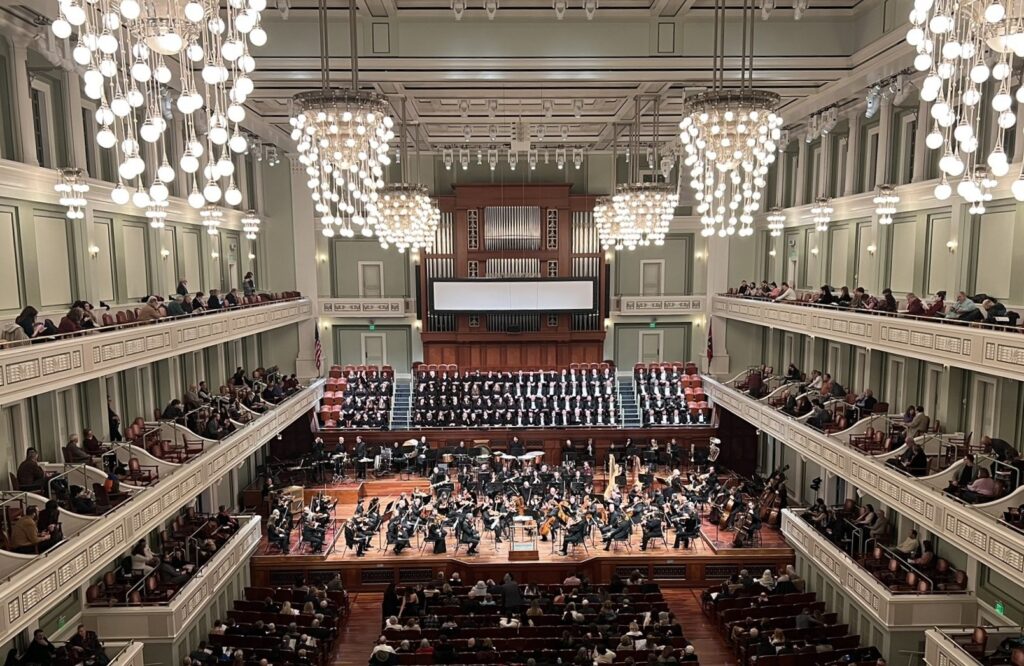
Review: The Nashville Symphony’s performance of Bernstein’s “Jeremiah” Symphony #1 and Leshnoff’s “The Sacrifice of Isaac”. A profound evening of classical music made in America.
Spano Conducts Bernstein featuring Leshnoff and the Nashville Symphony Chorus
Schermerhorn Symphony Center — Nashville, TN
- Friday, February 6, 2026 — 7:30 PM CST
- Saturday, February 7, 2026 — 7:30 PM CST
Program
Leonard Bernstein: Symphony No. 1 (“Jeremiah”)
Program Notes for "Jeremiah"
INTERMISSION
Jonathan Leshnoff: The Sacrifice of Isaac
Program Notes for "The Sacrifice of Isaac"
Performers
Conductor: Robert Spano
Chorus Director: Tucker Biddlecombe
- Soloists:
- Kelley O’Connor, mezzo-soprano
- Key’mon Murrah, countertenor
- Joshua Lovell, tenor
- Jarrett Ott, baritone
Composing works of this scale for such large forces is an undertaking beyond what mere mortals are usually capable of. Bernstein composed in the old-fashioned way, with paper and pencil. Today, composers can work with computers and immediately hear an approximation of what something might sound like. I don’t know whether Jonathan Leshnoff used the old-fashioned method or modern technology, but regardless, the result is no less stunning. In both pieces, the stage was filled with musicians, featuring ample strings and brass, along with the weight of percussion to round out the forces. It was an impressive sound—possibly the most expansive sound I have heard from the Nashville Symphony.
This concert was being recorded, and when a recording is involved there is an extra level of focus from everyone. I once participated in a recording of the rarely performed Handel opera Adina in a small town on the island of Rügen. The orchestra was a young ensemble from Belarus, and the conductor had rehearsed them only a few times. I didn’t know going in that the performance would be recorded, and when he announced that the recording would be used as a rehearsal playback, I became very nervous. The conductor said, “Recording is the best possible rehearsal.” He was right—everyone was completely locked in. To give some context, we performed in what had once been a horse stall, with a stage built inside the shell of the building. It was a sort of “royal” stall, so the space was quite large. I don’t think I ever took a picture of it. But I digress.
Robert Spano, conductor, led the world premiere of The Sacrifice of Isaac with the Atlanta Symphony in 2024 and was brought to Nashville to make this recording. In both the Bernstein and the Leshnoff, his conducting was very workmanlike—in the best sense of the word. His leadership was marked by the highest level of skill and focus, with no sense of grandstanding. This restraint lent itself to a deeply committed interpretation of the music. It was a joy both to watch and to listen to.
The Bernstein piece was very much in keeping with his temperament: multi-metered, rhythmically offbeat, and a bit corny in that cool, jazzy way. It is fun-loving but still carries the seriousness Bernstein is capable of. His music is idealistic, optimistic, and flamboyant—engaging and enjoyable to listen to. Some passages were gloriously loud in a way that only a full orchestra can achieve. The performance was sensational, particularly because of the massive string forces.
Kelley O’Connor’s mezzo-soprano voice was beautifully projected. The symphony unfolds in three movements: Prophecy, Profanation, and Lamentations. The Lamentations movement sets texts from the Book of Lamentations (1:1–3, 1:8, 4:14–15, and 5:20–21) and is sung in the original Hebrew. Surtitles were provided, which greatly aided understanding. For those interested, more information—including translations and background—is available on Wikipedia. Pieces like this do require some preparation to fully appreciate them, and I highly recommend doing so if you ever have the chance to hear it. It is not performed often enough and should be.
One of the great strengths of Nashville is its abundance of highly skilled session musicians who are accustomed to one-read recording sessions. Strong sight-reading abilities make rehearsals far more efficient and help guarantee a high level of execution in recordings. This professionalism is evident in Nashville’s performances, and the classical music scene is greatly enhanced by it. The ability to augment the orchestra with outside musicians of such a high caliber is something many metropolitan areas simply don’t have.
The Sacrifice of Isaac is a fascinating and very well-composed work. I recommend reviewing the libretto beforehand, as understanding the piece adds greatly to the listening experience. I look forward to the release of the recording and to getting to know the work more deeply.
All of the performances were well done. Countertenor Key’mon Murrah sang with one of the most beautiful countertenor voices I have heard—pure, radiant, and richly colored, carrying effortlessly through the hall. Baritone Nmon Ford’s voice was large and commanding, well suited to the character of the aged Abraham. Tenor Joshua Lovell had a pleasing sound, especially in the middle and lower ranges. The higher tessitura was full and radiant, though at times a bit edgy. The Nashville Symphony Chorus, under the direction of Tucker Biddlecombe, did not always balance against the orchestra at full force, but the sonorous passages were beautiful and some of the effects were gorgeous.
As a performer, I was always pushed hard on diction, and being understood was something I took seriously. I may not have been equally accomplished in every language I sang, but clarity was always at the forefront of my work. Diction is a sensitive topic in classical music, yet I believe being understood is half the performance—and not an easy half. The audience must hear and comprehend the words, grasp their meaning and context, and then absorb how the composer frames that text musically. Achieving clarity can sometimes detract from the perceived “beauty” of the sound, since it often requires breaking the vocal line. Being a tenor does seem to make clarity somewhat easier, at least based on recordings and performances I’ve heard.
Sitting at the back of the hall likely made the text harder to hear, as the sound tends to dissipate into the space. I’m not overly critical on this point, but I may sit closer next time to see if clarity improves. It’s unfortunate when text is lost, as composers invest great care in setting it. At the same time, they also bear responsibility for orchestration that allows vocal lines to be heard.
The evening was thoroughly enjoyable. For anyone wondering whether they should attend a Nashville Symphony concert, my answer is simple: GO. While popular programs have their appeal, the unamplified acoustic concerts are where the full beauty of this glorious music truly comes alive.

Review: Nothing like a snowy morning in Cincinnati! Got warm on the gorgeous sounds of Mahler in concert by the Cincinnati Symphony Orchestra


It is now Monday, February 9, 2026, and I am just now writing this review. What did I hear, what did I see, and what do I think about it?
In music, we are immediately separated from the past. The ringing of a bell happens in an instant, the bell resonates for a while, and then the sound disappears almost as quickly as it was made. Music is like a ghost that is there one second and gone the next, but somewhere in our subconscious, it always exists.
Program
Tabita Berglund conductor
Camilla Tilling soprano
Anna Thorvaldsdottir (b. 1977)
ARCHORA
Gustav Mahler (1860 – 1911)
Rückert-Lieder
Blicke mir nicht in die Lieder!
Ich atmet’ einen Linden Duft!
Um Mitternacht
Liebst du um Schönheit?
Ich bin der Welt abhanden gekommen
INTERMISSION
Gustav Mahler (1860 – 1911)
Symphony No. 4 in G Major in 4 Movements
Bedächtig; nicht eilen
In gemächlicher Bewegung; ohne Hast
Ruhevoll (Poco adagio)
Sehr behaglich
I attended this Cincinnati Symphony Orchestra concert on Friday morning, February 6, 2026, at 11:00 a.m.—an unusual hour, made more challenging by steady snowfall. For the intended daytime audience, the weather likely made attendance difficult, but those who made the effort were rewarded with a thoughtfully constructed and musically rich program.
The morning began with a pre-concert lecture, Fresh Ears, presented by CSO Associate Principal Timpanist Joe Bricker. His discussion of Anna Thorvaldsdottir’s ARCHORA was insightful and illuminating, offering a valuable framework for what we were about to hear. His close study of the work deepened my appreciation for its construction and intent.
Also featured pre-concert in the foyer were musicians from New Downbeat, a Cincinnati-based new music collective. I only caught fragments of their performance while attending the lecture, but what I heard was compelling, and the group appeared to be warmly received by those gathered in the foyer.
ARCHORA is described as a soundscape inspired by impressions of Iceland, and that description feels entirely apt. The piece unfolds through slow-moving layers of sound—fundamental tones enriched by harmonics and evolving textures. There are no traditional themes to follow; instead, the work asks the listener to inhabit a sonic environment. The pacing is deliberate, requiring extraordinary control and sensitivity from the orchestra. Conductor Tabita Berglund was precise and attentive in her gestures, and the orchestra responded with remarkable focus and restraint.
Hearing ARCHORA live is an experience that no recording can truly capture. The sound is massive yet delicate, subtle yet visceral. It resists easy description because it is felt more than remembered. The piece opens new sensory pathways and taps into something ancient and elemental—an inherited sonic memory, perhaps. It is the kind of work you want to encounter again, not tomorrow, but years from now, to see how it resonates differently over time.
The program continued with Mahler’s Rückert-Lieder, a set of five songs for soprano and orchestra, sung by Camilla Tilling. Her soprano is warm, rich, and beautifully centered, particularly radiant in the upper register. The dialogue between voice and orchestra was refined and musically sensitive, as one would expect in this repertoire. Surtitles were provided, which proved helpful; despite speaking German fluently, I found the text difficult to discern acoustically in the hall.
Singing Mahler in a large space with a full orchestra is a formidable challenge. The balance between artistic subtlety and textual clarity is delicate. While Tilling’s interpretive restraint was admirable, some of the declamatory force needed for clear communication was lost, particularly in softer dynamics and lower ranges. Her sound was consistently beautiful, but the effective projection of text in such a space requires exaggeration rather than subtlety. Having said that, I'm not even sure it can be sung where people could actually understand it. It rarely happens in classical music, something I am a bit of a pill about, admittedly. Still, the luminous quality of her higher passages was undeniable and deeply affecting.
Mahler’s Symphony No. 4 in G major was the primary reason I made the trip to Cincinnati. It is a work I have long admired, having first encountered it analytically in college and later hearing it live years ago in Stuttgart. Its apparent simplicity masks an extraordinary level of compositional sophistication, and hearing it again reinforced my admiration for its craftsmanship and expressive range.
Tabita Berglund, a Norwegian conductor clearly on a strong upward trajectory, led the performance with clarity, expressiveness, and confidence. Her gestures are communicative and grounded, and she draws focused, musical responses from the orchestra. The increasing presence of women on the podium is something to celebrate—not as a novelty, but as a normalization—and Berglund exemplifies why. She has nothing to prove; her authority comes naturally through her musicianship, and it was a pleasure to experience this performance under her direction.
This was my first visit to the Cincinnati Symphony Orchestra. The Hall itself is striking in its appearance. The outside is a red brick building, dating from 1787. The interior is generous with soaring spaces that allow for easy conversation and a place to stretch and breathe. They actually have escalators in this hall, as well as elevators, and they are a good idea because you have to cover quite a large space to get to your seat. Once inside the hall, the seats in the galleries are in steep rows, making for superb sight lines, but can be difficult if you are unfamiliar.
The seat I had was on the top gallery balcony, first row. Even though we were a bit far away from the orchestra, it felt really close. The sound of the orchestra in the hall is very close. You can really hear the violins so prominently, better than any hall that I have been to. For instance, Nashville's Schermerhorn seems to blend the sounds better, but the immediacy of this sound hall is very compelling because of the feeling of intimacy. It is so clear, clean, and transparent. A great place to hear music.
This is a glorious hall, a well-established institution, and a highly skilled orchestra. This is a first rate venue and you should go! You will not be disappointed.
In the hall: Where the real sound of purely acoustical music happens. Mahler the master of the live concert experience.
Since the beginning of electronic amplification, reproduction, and broadcasting of music, we have been slowly desensitized to the natural sounds of voices and instruments. Our ability to rewind, tweak, and otherwise manipulate sounds electronically has perverted the human ear to the point where we stop really listening altogether.
Just like the visual media has desensitized our eyesight, which blinds us to reality, the constant drone of junky 'Muzak' clouds our listening to the point of ignoring sounds altogether. We can't see the trees for the forest. We can't hear the birds for the flock. It becomes just all one cacophony.
I have a cousin who said to me once, "All music is noise." I had to admit to her that she wasn't wrong. I said, "Music is supposed to be music, and not noise, but today most people just make a lot of noise, and that includes the classical world as well." The time constraints placed on all musicians to produce something quickly make it difficult to produce something well.
Having lived in Germany for half of my life in the world of classical music, I was able to experience a lot of 'real' music from the performer's perspective. I was also able to hear a lot of real music from great halls. But it wasn't until I was starved for it that I began to truly appreciate the delicate qualities of live music performance.
Sometimes you don't fully appreciate something until it is lost. When I moved back to Bowling Green, Kentucky, to help my aging parents, I was able to hear live symphonic music on occasion. But going to the Nashville Symphony in the Schermerhorn Symphony Center has completely transformed my understanding and appreciation for this rare form of art. I am so grateful for that, but at the same time, I am faced with the reality that most people won't ever reach the place where I am, so they can fully enjoy the benefit of listening to real music in real space and in real time.
I was never a fan of Gustav Mahler's music. Why? Because I listened to recordings of it. I don't care how good your stereo equipment is, Mahler just can't be appreciated fully from a recording or broadcast. Mahler's music is great, really only in the concert hall.
I have heard quite a bit of music with the Nashville Symphony. Beethoven's 9th, Verdi Requiem, Daphnis and Chloe, The Rite of Spring, and much of the standard literature as well. I find sitting in the Balcony to be the best place to listen from, and also usually there are some seats that are open around me, which adds to my comfort. I have developed the ability to really listen carefully during a performance and enjoy the separation of the sounds as they are created. I recall a recent "New World Symphony" performance, which I know very well, and was so moved by the care and attention to detail that was performed in that historic piece. I have heard it many times on recordings, but live in Nashville was sublime. It is how music is supposed to be played and performed.
When going to a symphonic concert, or an opera, you can't, nor shouldn't, expect to be 'wowed', 'blown away or in awe. It isn't that immediate. The great composers somehow know how to create the effect of deep emotions welling up from the inside. It doesn't blast you in the face. It grows from within. The immediacy and temporary nature of it make it like trying to hold a snowflake in your hand. It is there one second and melted away the next. It is so fragile yet so profound. You've been touched, but can no longer identify who or what touched you. It is gone. You can't take it home with you.
One reason I am doing these previews and reviews is that I want to champion the live performance. I want to help people understand what it is they are going for and how to enjoy it. I believe it is a very important thing for society to cultivate because we all need to sit down, shut up, and just listen to something real for a while. I want this art form and its musicians to work into the future, and I would love to grow the demand for this kind of music.
This kind of music isn't meant for massive venues and be amplified over huge distances. I get the financial attraction for the organizations, but it doesn't really represent them that well. The true nature of this music is limited to halls of 2,000 or fewer. Eastman Theater has 3,500 seats in Rochester, and you need a large force to make that room work. So, the ratio from the cost of production to the paying ticket holder isn't very high. This is why donations or other forms of massive support are necessary. But, it is worth it.
This weekend I plan on hearing Mahler's 4th Symphony with the Cincinnati Symphony. We had to analyze the first movement in music theory class when I was in school. I am looking forward to hearing this glorious piece live for the first time.
Hope to see you there! Go!

Community, Compassion, and Redemption: Nashville Opera’s moving performance of Puccini’s opera “The Girl of the Golden West” in the newest Music Palace in Nashville. (Tonight: Friday, January 23, 2026 at 7:30 p.m. before the storm. Go! You don’t want to miss this.)
I’m writing this as fast as I can because I don’t want the inspiration to leave me. It’s 12:41 a.m. on Friday, January 23, 2026, and I’ve just returned from my one-hour drive from Nashville to Bowling Green, Kentucky. There’s so much to say about this evening, and I know I won’t get to all of it—but here goes.
I’ll keep the travel part brief. The drive down from Bowling Green was sunny and easy. I stopped at my favorite Thai place, Thai Phuket II (915 Rivergate Pkwy, Goodlettsville), and had Tom Yum Gung soup and Red Curry Chicken, level 3—both excellent. From there, I continued south on I-65 and took Briley Parkway West to avoid the downtown loop, which was completely jammed at 5:30 p.m. I parked in the garage next to the Fisher Center for the Performing Arts.
I have to start with the venue. I honestly don’t know what possessed Belmont University to build a structure like this unless they were planning to present opera. The Fisher Center for the Performing Arts is Nashville’s newest music palace, rivaled only by the Schermerhorn Symphony Center. Simply being inside either building is enough to elevate your day.
The Main Hall is breathtaking—soaring columns, marble floors, and a lofty ceiling. On either side are two expansive rooms with wood floors, high ceilings, and large windows that can apparently open into the Main Hall. One hosted a VIP donor function; the other featured a pre-opera lecture with John Hoomes.
Inside the auditorium, you find a classic horseshoe-shaped grand theater—a beautifully balanced blend of Greek Revival, a touch of Puritan restraint, and refined modernism. It’s elegant without excess and exactly right for opera. Live, unamplified music performed by real musicians and singers in a space like this delivers the authentic operatic experience—the kind you only fully appreciate in a true opera house.
The performance was La fanciulla del West by Giacomo Puccini, with a libretto by Guelfo Civinini and Carlo Zangarini, directed by John Hoomes and conducted by Dean Williamson with the Nashville Opera Orchestra.
I have tried to listen to recordings and watch videos of this opera, but have never been able to do so. If any opera needs to be witnessed live, it is The Girl of the Golden West.
The Performers:
I will start with the singers, who are what make opera the great art form it is.
Minnie, soprano Kara Shay Thomson, sang this very difficult and awkward role with confidence, a beautiful full sound with the necessary dramatic weight. She portrayed the mountain woman with strength and sensitivity. Dick Johnson, tenor Jon Burton, handled the role well throughout all ranges of the voice. Like Minnie, this role demands a lyric sound but with the necessary power and slancio to carry over the orchestra. I’m not sure I would have directed nor costumed him to be like all of the other miners on the stage, but would have preferred he stand out more in the style of a Puccini Tenor, as a slickly styled woman’s man of the world, flawed and passionate, who in spite of his character wins you over. Sheriff Jack Rance, baritone Kyle Albertson, delivered a convincing portrayal as the white hat law enforcer who wears all black, which accurately reveals his underlying lecherous character. Ashby and Jack Wallace, bass Harold Wilson, displays a profound sound which is immediately perceptible. His acting could be more animated, but he portrayed them well. Sonora, baritone Ryan Bede, was a convincing stage presence and has a beautiful voice.
The other roles were all sung and played well. Greg Sliskovich, Galen Fott, Noah Mond (MREA)*, and Louis Tiemann (MREA)* are the soloists named. Wowkle, mezzo Hailey Cohen (MREA)*, was convincing in her portrayal.
The Nashville Opera Orchestra, led by Conductor Dean Williamson, played seamlessly throughout the evening. The full sound of the orchestra was enhanced by the great acoustics of the hall and displayed a refined sensitivity to the stage. This is a very good set of musicians, and Maestro Williamson is completely devoted to the singers.
The Nashville Opera Chorus, in this case a purely men’s chorus, was a joy to listen to and watch. Chorusmaster Stephen Carey developed a great sound and accurate singing in a score that is highly parlando and rhythmically tricky. In the fight scenes, Fight Choreographer Eric Psto-Crosby makes the stage brawls as convincing as any I have seen.
Director John Hoomes found wonderful solutions to the challenges this score provides. He can put together a story onstage that is clear and emotionally engaging. His obvious enthusiasm for his work is carried through his actors.
The stage design was open, with minimal but effective set pieces. The most striking element in the production was the huge high-definition LED screen that served as the “drops” for the set. The Lighting and Video Designer Barry Steele created a brilliantly beautiful and effective backdrop for all of the scenes. The danger in such a striking delivery is that it would overpower what happened in front of it. But I found that it didn’t do that but helped elevate the performance to heights that may not have otherwise been possible. The snow effects, the saloon, the horses running through the forest, the rising sun at the end, all beautiful and moving. It’s a shame there are only two performances of this production. This would be fun to watch again.
The costumes, Jessica Mueller, and make-up, Brittany Rappise, were well done in the style of the Golden West.
I am genuinely excited about this new chapter for Nashville. Belmont University should do everything it can to continue making this venue available to Nashville Opera. For all intents and purposes, the Fisher Center is an opera house—one ideally sized, beautifully resonant, and capable of presenting the art form as it was meant to be experienced.
What happens in this hall matters. The natural acoustic sound of an orchestra, the human voice in its unamplified state, and the direct emotional exchange between stage and audience create a musical and theatrical experience that no amount of technical enhancement can replace. This is the essence of opera.
No matter where you go in the world, every opera company is, as they say, “cooking with water.” The art form is demanding, expensive, and unforgiving. You hear everything exactly as it is. There is no place to hide—and that is precisely its power. When it works, as it did here, it is thrilling.
This hall can support not only Puccini, but the deeper heart of the repertoire—Verdi beyond La traviata, works that require space, balance, and acoustic truth. Nashville should get behind this because this city already calls itself Music City. This is what that name can mean.
If opera is to reawaken here, this is how it happens—honestly, acoustically, and at the highest level. And judging by this Fanciulla del West, Nashville Opera is more than ready.
*(MREA) Mary Ragland Emerging Artist. Singers listed with this designation are part of a residency program for promising young opera professionals. Named after the company's founder and Metropolitan Opera singer, Mary Ragland


Preview: Nashville Opera’s “Girl of the Golden West” at the Fisher Center of the Performing Arts January 22 & 24 at 7:30 p.m.
Nashville Opera
John Hoomes: Director
Dean Williamson: Conductor
Nashville Opera Orchestra
Sung in Italian with English lyrics projected above the stage (Surtitle)
"La fanciulla del west" or "The Girl of the Golden West":
Giacomo Puccini: Composer
Guelfo Civinini & Carlo Zangarini: Libretto
"The Girl of the Golden West": Play by David Balasco
Fisher Center for the Performing Arts: Belmont University Campus
2020 Belmont Boulevard
Nashville, TN 37212
Free Parking:
South Garage
1521 Compton Avenue
Curb Garage
1520 Bernard Avenue
Roles:
Minnie: Kara Shay Thomson (Soprano)
Dick Johnson: Jonathan Burton (Tenor)
Sheriff Jack Rance: Kyle Albertson (Baritone)
Nick the Bartender: Gregory Sliskovich (Tenor)
Sonora: Ryan Bede (Baritone)
Harry: Louis Tiemann (UC: Dick Johnson)
Billy Jackrabbit/Jose Castro: Noah Mond (Ashby Cover)
Wowkle: Hailey Cohen (Mezzo Soprano)
Preview: Nashville Opera presents Giacomo Puccini’s La fanciulla del West (The Girl of the Golden West) at the Fisher Center for the Performing Arts on the Belmont University campus, January 22 and 24 at 7:30 p.m. Sung in Italian with English surtitles, this production brings Puccini’s sweeping Gold Rush opera to one of Nashville’s newest and most acoustically anticipated venues, under the direction of John Hoomes and conductor Dean Williamson, with the Nashville Opera Orchestra.
I am looking forward to this week's production of "The Girl of the Golden West" by the Nashville Opera. While I have never sung this opera, I have seen it at the New York City Opera and a concert performance with the Concertgebouw in Amsterdam with soprano Eva Maria Westbroek.
I don't know the music that well, other than the "Ch'ella mi creda" tenor aria, of course. My overall impression of this opera is that it isn't an easy sing. It seems awkward to me, and it is difficult to make it 'beautiful'. The dramatic nature of the piece makes it seem like everyone is just shouting at each other. This aligns with the Verismo style that is meant to represent 'real drama' onstage in everything from the singing, acting, to the set and costumes.
It came on the heels of Puccini's "Madama Butterfly," which was very successful and in keeping with the growing influence of America on the world stage. Capturing the romantic mystique of the Gold Rush and the American West, it is an opportunity for set and costume designers to have a new aesthetic.
I asked ChatGPT to come up with a bullet point synopsis of the opera and find it to be quite good.
- Title: La fanciulla del West (The Girl of the Golden West)
- Composer: Giacomo Puccini
- Setting: California during the Gold Rush
- Main Character:
- Minnie – Owner of the Polka saloon; compassionate, strong, and respected by the miners
- Love Interest:
- Dick Johnson – A mysterious stranger who is later revealed to be Ramerrez, an outlaw
- Conflict:
- Jack Rance, the local sheriff, desires Minnie and seeks to capture Johnson
- Johnson is wounded and hidden by Minnie, who nurses him back to health
- Dramatic Turning Point:
- Minnie challenges Rance to a poker game, wagering Johnson’s life
- She wins the game and secures Johnson’s freedom
- Climax:
- Johnson is later captured by the miners
- Minnie pleads for mercy, appealing to their shared humanity and dreams
- Resolution:
- The miners spare Johnson
- Minnie and Johnson leave the West together to begin a new life
- Themes:
- Love, redemption, mercy, and hope
- Civilization and humanity in a harsh frontier setting
The Opera is in 3 Acts:
Act 1: Inside the "Polka Saloon"
Act 2: In Minnie's Dwelling
Act 3: In the Great California Forest at dawn.
Essentially, the plot is that Minnie's business is "The Polka Saloon," and is frequented by the miners working to hit it big. Minnie falls in love with Johnson, who is really the bandit and outlaw Ramerrez. She tells him to leave and Sherrif Rance shoots him. Minnie nurses Johnson back to health and cheats at a card game to win Johnson's freedom. She wins, and they depart to start a new life, happily ever after.
There is a long scene before Johnson enters, and the plot really doesn't start before then, and I find it a bit confusing in the beginning to grasp what the opera is about, from a spectator's view. This is not unlike Madama Butterfly, where Pinkerton enters long after the beginning of the opera.
I am looking forward to this production and to the new Fisher Center. It looks fabulous and I hope it sounds great too. I think it is a definite improvement from the cavernous Jackson Theater at the TPAC, the Tennessee Peforming Arts Center downtown. An added bonus on the Belmont location is free parking! So, figure that in when calculating costs!
See you there!

Impressions: Colorful Keys Surrounded by the Age of Reason
Nashville, Tennessee: Friday, January 9, 2026: 7:30 p.m.
Schermerhorn Symphony Center
The Nashville Symphony
Gemma New, Conductor
Conrad Tao, Piano
PROGRAM:
- Beethoven's Egmont Overture
- John Coolidge Adams' Century Rolls: Piano Concerto in 3 Movements
- Intermission
- Mozart's "Jupiter" Symphony No. 41 in C Major (K: 551)
When writing these reviews, I’d like to make them as spontaneous as possible. By that, I mean I want them to be entertaining to read, because, you know, reviews can be kind of dry. So I’m writing this Saturday morning following the concert, and it’s early in the morning, so I’m a little rusty and just wondering exactly how I’m going to make this interesting.
First of all, one of the negatives for me about going to the Nashville Symphony—being from Bowling Green—is the drive to Nashville, along with the parking and all that sort of thing. But last night was a different experience because of several factors, the first being that it wasn’t a very popular evening to be in Nashville. I 65 is getting closer and closer to being completed and this helps the drive a lot. I experienced no rowdies on the road, which is very rare. It was absolutely gorgeous, warm weather, it wasn’t crowded at all, and it wasn’t crazy like it usually is. I mean, other than the fact that Broadway is just a couple of blocks away and you can hear the honky-tonks in the distance.
I parked in the Pinnacle parking lot across the street from the Schermerhorn Center, and that was easy to do using ParkWhiz. When you get there early, as I did, it’s pretty easy to find a parking place at that time of day in Nashville. I arrived around 5:30. The gate system at that parking lot isn’t very efficient, and it took a long time for cars to exit after the concert, but I just waited for a bit, and it was fine. The drive home was super easy with only a couple of drag races along the way.
So I went for a little walk around a couple of blocks, and then I found a place to eat. It’s called Farm Table, I think, and it’s really just around the corner from the Schermerhorn. It was pretty good. I had rigatoni, and it had some garlic in it—or a lot of garlic in it—so I was definitely tasting that and trying to be careful about who I talked to so as not to be offensive.
When I arrived at the Nashville Symphony, there was piano music coming from somewhere. At first, it was difficult to locate, but it turned out to be in one of the beautiful areas on either side of the auditorium. Two students were playing the piano, and the audience gathered around them was very polite and appreciative. As the crowd grew, people started moving around and coming in and out. Toward the end of that part of the evening, it was about twenty minutes past the hour when they finished, so it was time to head to our seats.
Beethoven’s Egmont Overture is about nine minutes long and is, in many ways, a typical Beethoven piece. Beethoven was an architect of music. His writing has a strong structural feel, and his orchestrations can be somewhat blocky, but they are always ingenious. I believe one of the main things Beethoven was always thinking about while composing was: How am I going to move people? How am I going to inspire them?
The Egmont Overture was written as incidental music for the play Egmont by Goethe, and the overture is essentially what remains of that score. I don’t believe much of the other music survives. In that sense, it functions much like a soundtrack—an overture or lead-in for a theatrical production or even a film. The thematic material is handled in a very traditional Beethovenian way, building gradually and becoming increasingly inspiring to listen to. It’s not his most complicated piece, and it’s certainly not one of his most graceful, but it is sturdy, solid, and enjoyable. And, of course, it’s Beethoven—so it’s a great way to start an evening.
The John Adams piece, Century Rolls, is in three movements: 1st Movement, Manny’s Gym, and Hail Bop. Manny’s Gym refers to Emanuel Ax. Interestingly, Ax soloed in a Mozart piano concerto with the Nashville Symphony last year, and in that performance, he played cadenzas composed by Beethoven.
The second movement, Manny’s Gym, is slower and extremely beautiful, filled with rich, colorful textures. It’s very contemplative. The first and third movements, like most concertos, are more lively and energetic, with greater rhythmic drive and color. When I first began listening, I wasn’t quite sure what to listen for or how to approach it. To be honest, there aren’t really distinct themes you can latch onto in the traditional sense. Instead, the piece is about flashes of color and sound, about showcasing the pianist, and about exploring the texture of piano and orchestra playing together—sometimes in dialogue, sometimes layered.
The orchestration includes a significant percussion presence: marimba, xylophone, vibraphone, celesta, harp, and the full symphony. That entire corner of the orchestra produced a wide array of sparkling, shimmering sounds, all played extremely well. The woodwinds, in particular, had many short, sharply articulated notes that required precise ensemble playing, and they were absolutely on point.
This is a piece where the best approach is simply to lean back and ask, What does this sound like? rather than trying to analyze or “understand” it in a traditional way. Let the sound wash over you. It’s an interesting work that I would highly recommend. And for music like this, especially, I truly believe in live performance—you need the space of the hall, real instruments, and real people making these sounds in real time to fully understand what it’s meant to be.
Mozart’s Jupiter Symphony is his 41st and final symphony. It is a very mature work, and what you immediately sense is that Mozart didn’t waste much time in composing it. The music is very straightforward, almost schematic in nature.
This is a piece I know, but not one I know particularly well, so I can’t really make detailed judgments about the performance in terms of what might have been missing or emphasized. What I can say is that in that hall, the definition of the different sections of the orchestra, the articulations, and the full score came through with great clarity. You really do hear all of the music being played.
In Mozart symphonies—and in Mozart’s music in general, and probably much of the orchestral literature—when the strings are all playing together in block textures, there can sometimes be an overlay effect where you lose some definition. I occasionally wonder whether there is a way to make that clearer, because that full sound can slightly blur the orchestra. That said, I don’t know enough about it to make a definitive judgment.
The overall effect of the evening, and of the Mozart symphony itself, is simply brilliance—because Mozart is brilliant. There’s a reason his music continues to be performed, and I think part of that reason is that orchestras don’t want to forget how to play Mozart. It’s similar to not wanting to forget how to play Bach. I once had a voice teacher who said that no matter what repertoire you’re singing, you should always sing Mozart and Bach—always keep that music in your voice—because it keeps you in shape.
When you hear a Mozart symphony, you’re not just hearing a work of art. You’re hearing an attitude: a kind of study, a test of skill, and a test of transparency that you might not encounter in other repertoire, simply because Mozart’s writing is so exposed and so clear.
The Conductor and Piano Soloist
(Added on 1/11/2026) I realized I didn't mention the conductor or the piano soloist in my review so I am adding it here.
What do I look for in a conductor? Someone who serves the music, the players, and the performance. I also look for someone who is clear and unassuming in their demeanor but leads with a quiet confidence. A certain amount of energy is necessary without being frenetic. Most importantly, someone who genuinely loves the music and it shows.
It is difficult to know all of these things from the back row of the auditorium and know nothing about the performers on a personal level. All I have to go by is what I see and hear in the performance. I am not impressed by resumes. But, there is a feeling you get when you attend a performance that are clues to a performer's disposition.
My take on Gemma New is that she is a person of good taste, a high sense of elegance, and a conductor who is there to help the orchestra play the music and bring out the score so that we can hear all of it. Her conducting is both clear and elegant, her demeanor passionate but not fanatical, and her ability to shape phrases and the 'arc' over an entire movement is all present. From where I was sitting, I thought her outfit, because I'm not sure what it was exactly, was the most elegant and tasteful I had ever seen. She seemed to have a good rapport with the musicians and was generous in her appreciation of them and the audience as well. The orchestra played with precision and reacted to her cues. The separation of sounds in the orchestrations was perceptible and appreciated. Probably the most important factor to me personally is that nothing got on my nerves, which often can happen when a conductor is egotistical and has the "follow me" type of attitude. She had none of that. To me, she's excellent.
The piano soloist Conrad Tao is a youthful and energetic artist. His style is trendy, and his ability is unquestionably at the highest level. His command of the Century Rolls concerto by John Adams was complete. That kind of musicianship and the ability to command his hands to do his bidding is something that has always amazed me in pianists. The music is his, not borrowed, not trying to be correct, but his to interpret. I couldn't hear what he said before he played his solo encore. I have a guess, but whatever it was was phenomenal. I will try and find out what it was.... At any rate, he is a compelling musician who is someone to remember.
With all of this, I realize that practically everyone who is performing today is a lot younger than I am. What I think of is how generations come and go. How everyone is on the conveyor belt of time. When I was just starting out I thought that the 'greats' in music would always be there, that they had control over the entire world of music. What I didn't take into account is that they were all on the same inevitable path I am on, and that if I just stayed in the game, stayed fit, and waited my turn, then I could be in their place. This is something young people need to remember. Do not compare yourself with anyone because nobody can compare to you. Be the best you can be, and don't worry about all of the other distractions. How does a girl from New Zealand get to conduct the Nashville Symphony? How does a son of Chinese immigrants, born in Urbana, Illinois, become such an accomplished pianist? There are many factors, but the main factor is that they worked hard and stayed focused. Well done!
Coda
In closing, I would say it was a very successful evening. It was elegant, peaceful, and sane—very much in the spirit of the Age of Reason and the Classical period. It fits perfectly with the building itself, with its Greek Revival architecture and columns. Being there simply makes you feel good. It pulls you out of a world that feels full of chaos right now and offers a welcome break—almost a haven for reason, enlightenment, and good feeling.
The last thing I want to mention is that I paid $20 for admission to this performance, which is honestly ridiculous—in the best possible way. Everything else you do in an evening costs more than the ticket to the concert. Now, not all symphony tickets are that inexpensive, and I sat in the cheap seats, as I usually do. But it’s worth it. It’s worth it to support musicians who work hard to play beautifully. It’s worth it to sit in that hall, to experience the space, and to share it with other people who are, frankly, sane.
For that price, there’s really no excuse.
Have a nice day.

Preview: Nashville Symphony Concert Program for January 9 & 10: Beethoven, Adams, and Mozart featuring Gemma New, Conductor, and Conrad Tao, Piano
This is the first in what I hope will be many future posts about classical music. I will create a preview and a review of concerts to promote and either review or critique the performances we visit. I am developing a definite structure for this project, so the content is even and easily understood. When I get this structure set, then others will be able to help me cover more concerts.
Organization: Nashville Symphony (Tix Link)
Venue: Schermerhorn Symphony Center (Maps Link)
When?
Friday: January 9, 2026, 7:30 p.m.
Saturday: January 10, 2026, 7:30 p.m.
Conductor: Gemma New
Guest Piano Soloist: Conrad Tao
Program:
Egmont Overture: Ludwig van Beethoven (Program Notes Link)
Century Rolls: John Adams (Program Notes Link)
"Jupiter" Symphony #41: Wolfgang Amadeus Mozart (Program Notes Link)
You can read Program Notes for this concert on the Nashville Symphony Website by clicking on the links next to the list above.
If you have never been to the Schermerhorn Symphony Center, then you have missed something. The staff is very friendly and welcoming, and you will have a great time! Get there early to park and walk around Nashville, have dinner, or just hang out in the Hall before the performance. The acoustics are wonderful, and the seating is comfortable.
This promises to be a great concert. You are hearing music of two of the pillars of classical music's greatest composers, Beethoven and Mozart. In addition, you have a chance to hear an American composer's work as well, with the Century Rolls piece for Piano and Orchestra.
I am looking forward to this concert and hope to see you there.

3 Performances Scheduled for January’s Live Reviews
2026 is here, and we want to get off to a good start. We will be previewing and reviewing three performances this month: Nashville Symphony's first concert of the new year on the 9th, WKU Music Department's "Prism Concert" on the 23rd, and rounding it out on the 24th with the Puccini tour de force "Girl of the Golden West"!
Visit the Events page to get more information about these great performances! We want to fill every seat!
I woke up this morning thinking about Musiterania's new direction of being primarily a "publication" where we concentrate on Classical and Operatic musicians. While these events are happening with companies or the university, the artists are independent, as they are on a quest to build their careers.
Bowling Green is pretty far from just about everywhere. I hope to widen the geographic scope as much as possible. Keeping an eye on upcoming performances locally, but also in Nashville, Louisville, Owensboro, Paducah, Cincinnati, Lexington, and Bloomington, will be a pretty good way to get moving.
I am excited about the possibilities.
More about this new direction to come! Stay tuned for the Previews and Reviews of this months performances!
NEW! Events Page on Musiterania
Musiterania™ now offers the ability to post your events on our calendar for free! We want to help you get the word out about your concert, recital, show, or workshop as long as it is related to music and musicians.
Any event that is listed that is outside of the Musiterania™ world will be linked to their site for ticket sales. Musiterania™ does not have an affiliate agreement with third-party ticket vendors. So that will be up to the event host.
Musiterania™ will be hosting events, live and online, and will share these on the Events calendar. Some may include ticket sales as well as free events. Just click on the link for more information about each event.
Musiterania™ wants to help local music entities be successful by using our website to enhance awareness of your events.
Right now Musiterania™ will be placing as many local events in south-central Kentucky as well as in extended areas when possible. It is the end of the school year so that resource will be slowing down, but there will be plenty of things going on in the summer!
Magnificent Concert with the Nashville Symphony: Mozart and Ravel at their Best!
Nashville, Tennesse, Schermerhorn Hall, January 11, 2025: 7:30 p.m.
Concert Program:
Preconcert Lecture: Giancarlo Guerrero
Mozart: Overture to the opera "Cosi fan tutte"
Mozart: Piano Concert No. 20 - Emanuel Ax, Pianist
Intermission
Ravel: Daphis et Chloe: Entire Ballet
The great thing about downtown Music City USA you feel like the music is all around you and while sometimes the crowds can be downright crushing, on this winter's night it was simply fun. Going to the world class The Schermerhorn Symphony Center is an event all its own but to witness an absolutely sublime evening of great music is something you don't want to miss.
We attended the pre-concert lecture by Giancarlo Guerrero who poured his heart and soul into is well prepared lecture on the music chosen for the concert. His description about overtures and Mozart overtures were entertaining but he missed a couple of points about it.
While I have to say that Cosi fan tutte is a 'comedy' when you have done it as many times as I have you realize that it isn't just a comedy and that the overture literally spells out "Co si fan tut te in bold letters with 5 massive power chords which are repeated at the end of the opera by the singers. Cosi fan tutte directly translated means "Like that do all women" Cosi (like that) fan (verb meaning to do or make) tutte (all feminine plural)( All women do it like this or all women are like that.)
If Mozart was anything he was a believer in the power of women. The female characters in his operas are strong willed women. The title Cosi fan tutte is often seen as calling out the fickle nature of women but the truth is that it empowers women by saying that women have the power to choose for themselves and they should use this power. This opera is a prime example of the comic ego of males versus the sovereignty of a woman's right to choose who they give their hearts to. This is a brilliant opera and much more than just a comedy. It is a testimony to the question of fidelity and choosing the right partner and sticking with them.
What we did learn was that Da Ponte, the librettist for Mozart's operas Cosi fan tutte, Le nozze di Figaro, and Don Giovanni, played a vital role in American musical history. I had never heard this before and was surprised to learn that he brought opera to New York and the United States as early as the 1830s.
Maestro Guerrero's discussion on the Mozart Piano Concerto No. 20 was no less fascinating. I was not aware that Beethoven often played this concerto and that later in life he composed cadenzas for them. Hearing Beethoven's cadenzas played by Emanuel Ax was very moving. Upon reflection of this I recall often thinking that some cadenzas in Mozart's piano concerto sound more advanced than I would have expected from Mozart. Upon listening to these cadenzas I couldn't help but imagine hearing Beethoven play these pieces. By all accounts, Beethoven's ability to improvise and his brilliant keyboard skills were unparalleled in his time.
The Maestro's discussion of Ravel's Daphis et Chole was equally as entertaining but the topic is very large and he told us to read the surtitles in order to know what the music was representing. This did change the experience as everyone was able to understand what they were hearing while they were hearting it.
Guerrero is an inspiration and a very energetic ambassador for the arts. I have enjoyed every concert at the Nashville Symphony and can only say...."Go to the symphony!"
The 'tricky' part of the overture to Cosi fan tutte is the interaction of the woodwinds. Passing the solo lines from instrument to instrument in this florid music as if played by one person is the real trick. I've heard orchestras struggle to get those virtuosic passages falling together without a break. The Nashville players did this masterfully and if you didn't know just how difficult that is you wouldn't appreciate just how skilled these musicians are. When you go from flute to clarinet to oboe each instrument has a different speaking ability, meaning it takes somewhat different timing for each player to adjust in their playing to get this to work. It's brilliant!
Emanuel Ax is one of the names in piano music that you have always heard. His skills are at this point in his storied career not only expressive and powerful, but also effortless. Mozart is one composer that challenges musicians the most. While being delicate and fine you must play with strength and confidence. This balance of grace and passion is what challenges musicians about Mozart and I would have to admit that I'm not sure how many piano concertos I've heard over the years. The play between the orchestra and piano displayed music making in a palpable way. The orchestra never overpowered the piano and the pianist was never seduced into being a showman but rather a thoughtful and inspired interpreter of that glorious music.
One of the things about Mozart's music is that people don't really understand just what they are hearing. When you go to a concert like this all you hear is Mozart. You don't have anything to compare it to so it is understandable for people to not recognize that if you put a different composer of lesser stature out there next to Mozart, you would immediately get why Mozart is considered in such high esteem...it is because his music is unassumingly divine. It seems so simple yet is so complex and beautifully melodic. If they are playing Mozart ... GO!
Daphnis et Chole by Maurice Ravel is a cornerstone in music. It is required in every Music Appreciation and Orchestration class. It is on every drop the needle quiz. So, while this piece is well known to me I had never heard it live and LIVE is where it belongs. I hope to see the piece in Ballet form someday. It must be something to behold.
What is so special about Daphnis et Chloe? Well it is impressionism at its height. It is an exploration of orchestral colors created by a composer. The Nashville Symphony played with a full contingent of musicians for this massive piece and the chorus effects were not only gorgeous but also chilling. The orgasmic singing at the end of the piece is probably what makes this piece controversial but brings the hours worth of music to its due climax. The fact that they sing no words is actually a relief because 99% of the time you can never understand what singers are saying anyway. With this piece it all about sound and so sound is what it gives in spades.
I'm going to have to alter my symphonic habits. I must start going on Thursdays and write before the run is over so that it inspires people to come hear it.
I had been looking forward to hearing this monumental piece for years and can only say that it is something you have to hear live to appreciate. There are no stereos or headphones that can represent the sound of a full symphonic orchestra in space and time. There is so much to say about this performance but no matter how much I write could I get to every detail that was done so masterfully. From the luscious ocean of string sounds to the brilliant and crushing brass eruptions to the sublime soaring sounds of the solo flute through the space of that hall everything was performed with passion and control so that the full splendor of the music could be revealed.
This was a truly profound evening. So if you missed it...get to the next one!
Reflections: “This is your theater. We perform for you, our dear public.” Taking ownership of the theater and the pride of what you’ve accomplished.
"This is your theater. We perform for you, our dear public."
Kleine Borgman, Intendant, Städtische Bühnen Osnabrück.
Certain messages resonate deeply, staying with us for a lifetime. One such quote has lingered in my mind for nearly 30 years. When I first encountered these words, I found them perplexing, as I had never viewed theater through that lens. However, after experiencing the performance of "Grease" at SKyPAC in Bowling Green, Kentucky, I'm beginning to grasp the profound significance of that quote.
Describing SKyPAC as a miracle feels like an understatement. During my years performing in theaters across Germany, from major cities to smaller towns, I was always struck by the sense of belonging that audiences felt toward their local theaters. It was always a dream of mine that something like that could be done in Bowling Green, but I never thought it was something people here knew to be interested in, because I certainly knew nothing of such institutions growing up. However, now in my hometown, where once there was no such organization, stands a modern theater that is becoming an integral part of our community’s identity.
I wonder if local residents fully appreciate the impact of this development. People are flocking to SKyPAC for a variety of productions, concerts, and events, and I commend everyone involved in creating this remarkable center for the arts. It is a monumental achievement.
My hope is, that the community and the surrounding region embrace this opportunity to cultivate a shared history and rich tradition, creating incredible memories together as both producers and audiences over the coming millennia. There may not be a definitive recipe for success in this endeavor, but it is a beautiful mess that culminates in performances that spark joy for an evening and leave lasting impressions on the soul.
The arts, particularly live performances, are not without their flaws. Sometimes things don’t go as planned, yet we cherish these moments because they reflect the genuine effort of artists striving to bring something special to life. This vulnerability is a rare gift in a world often dominated by façades.
So, I encourage you: visit your local theater. Enjoy it, support it, become part of it, and take ownership of it. It is "your" theater. It is worth every moment.
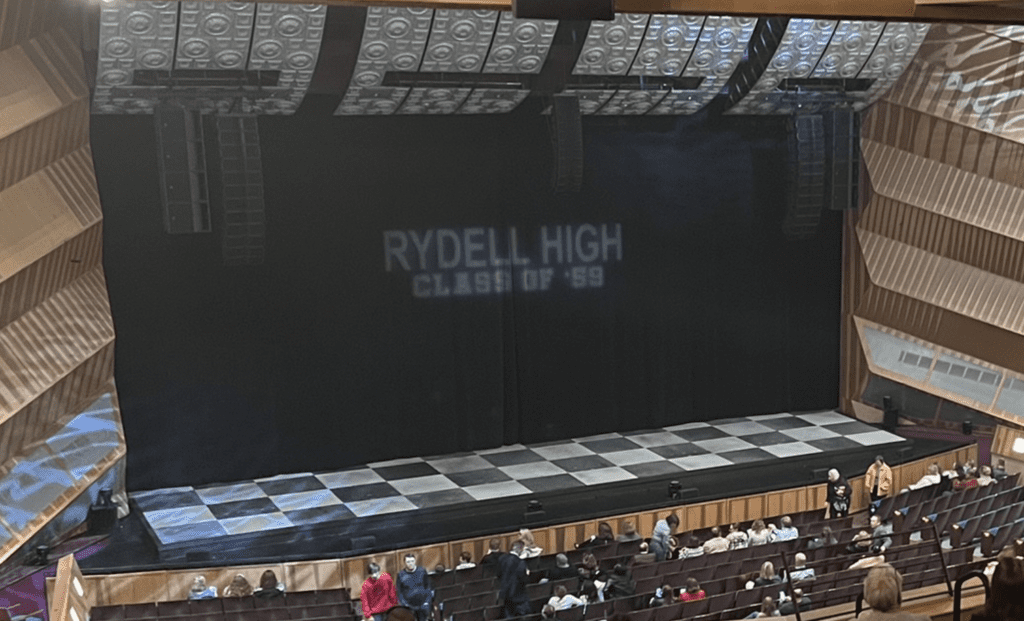
Ramsey Theater’s Production of “Grease” Makes the Grade at SKYPAC in 2024
November 23, 2024: Saturday: 7:30 p.m., Bowling Green, Kentucky, Southern Kentucky Performing Arts Center, Ramsey Theater Company: "Grease" https://www.theskypac.com/
This was my first attendance at a Ramsey Theater Company production and I was very curious to see and hear just what this is all about. "Grease" is a great show to cut your teeth on and it offers the audience a show with music that was a huge part of pop culture in the 70s. I have seen a lot of theater, from the best that Broadway has to offer to great productions by small companies in places you've never heard of. Admittedly, I am not an easy audience, but I am a fair audience...I think.
Having said that...I was overwhelmed by the quality of this production and the performance altogether. The SKYPAC is as good as any theater that I have been to and it has everything it needs to be a first-class venue. The quality of lights, sound, and the ample size of the theater give it a real big time feel. So, if you have never been to Broadway and have no intention of going now is your chance to see good productions right in your backyard. In fact, it could be argued that SKYPAC is bigger and better than many theaters on Broadway.
The good news is that I believe both evenings, Friday and Saturday nights, were both very well attended. I had to take a back row seat in the Mezzanine because everything else was sold. It does my heart a lot of good to see people going to the theater and having such a great time. I'm quite proud of my town having accomplished this monumental feat. Things will only get better and better.
Now, to the show.
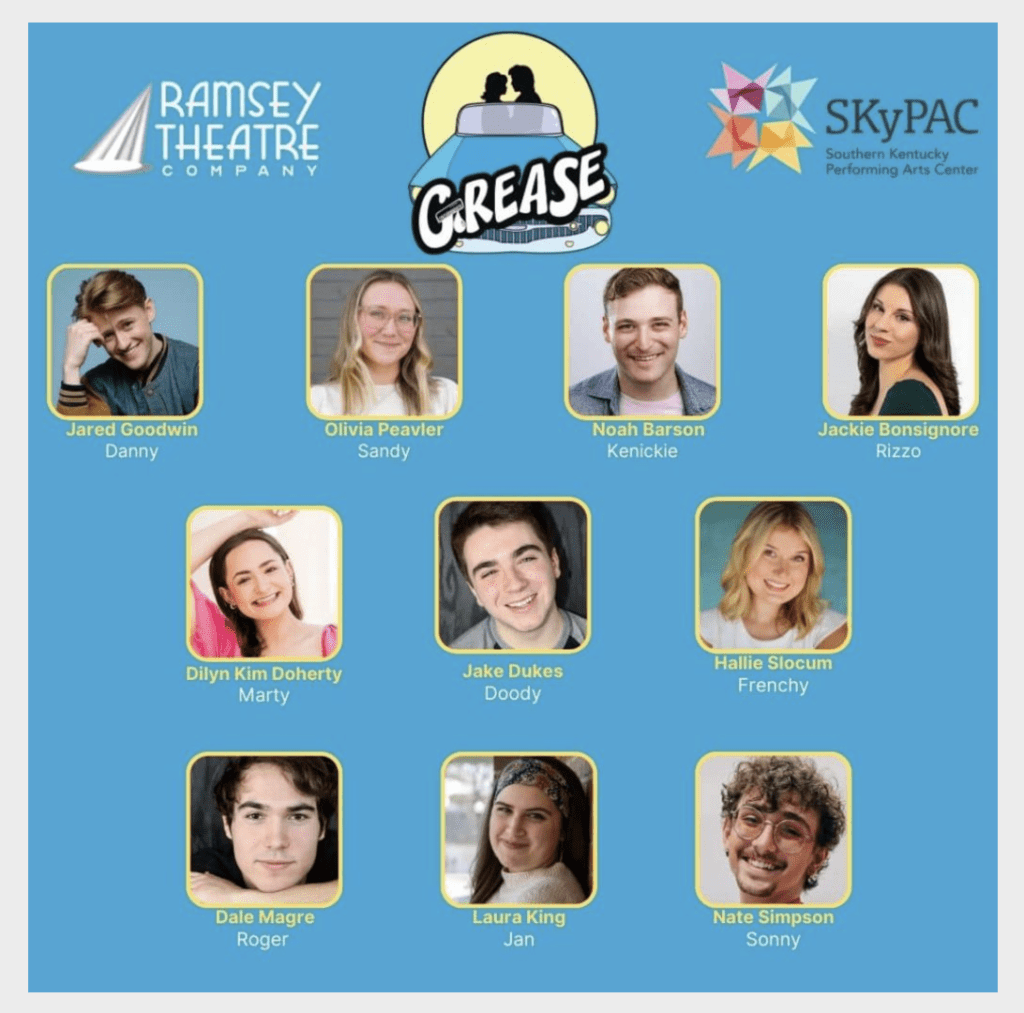
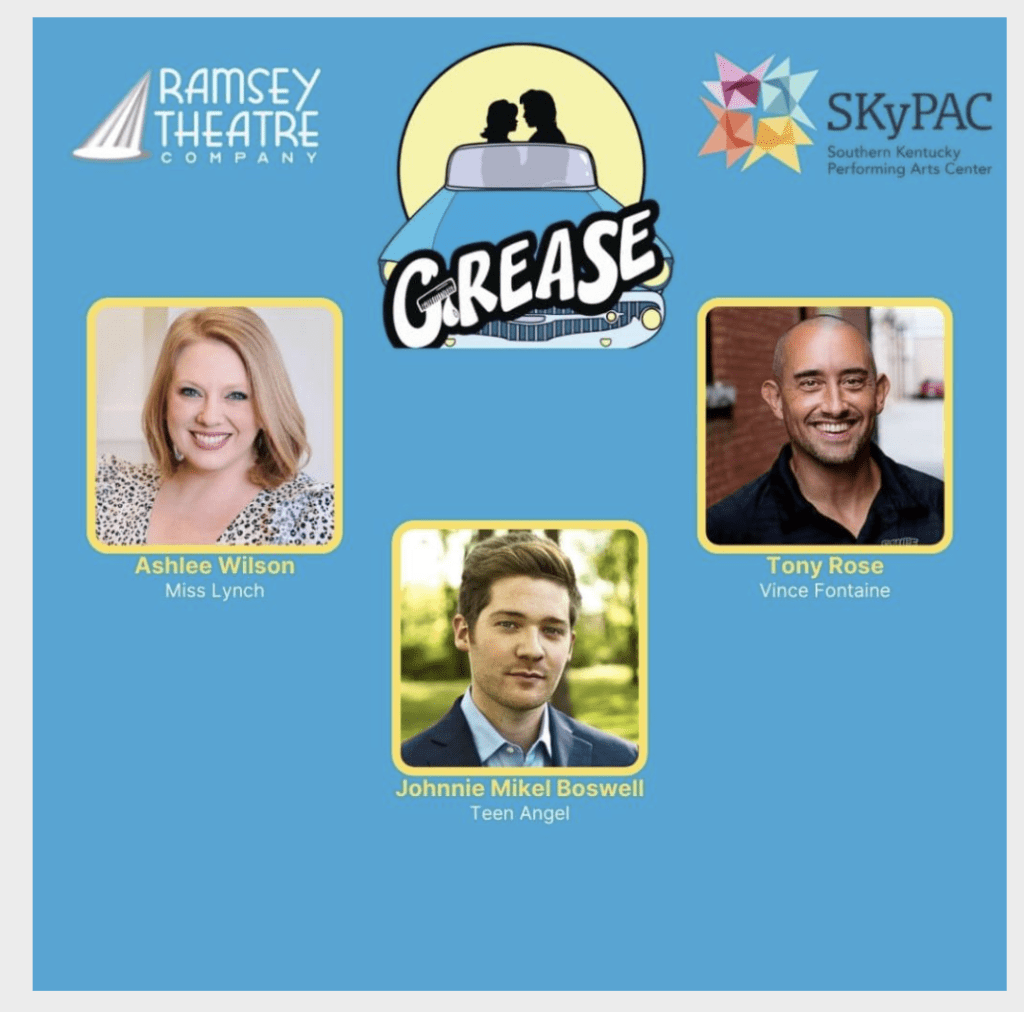
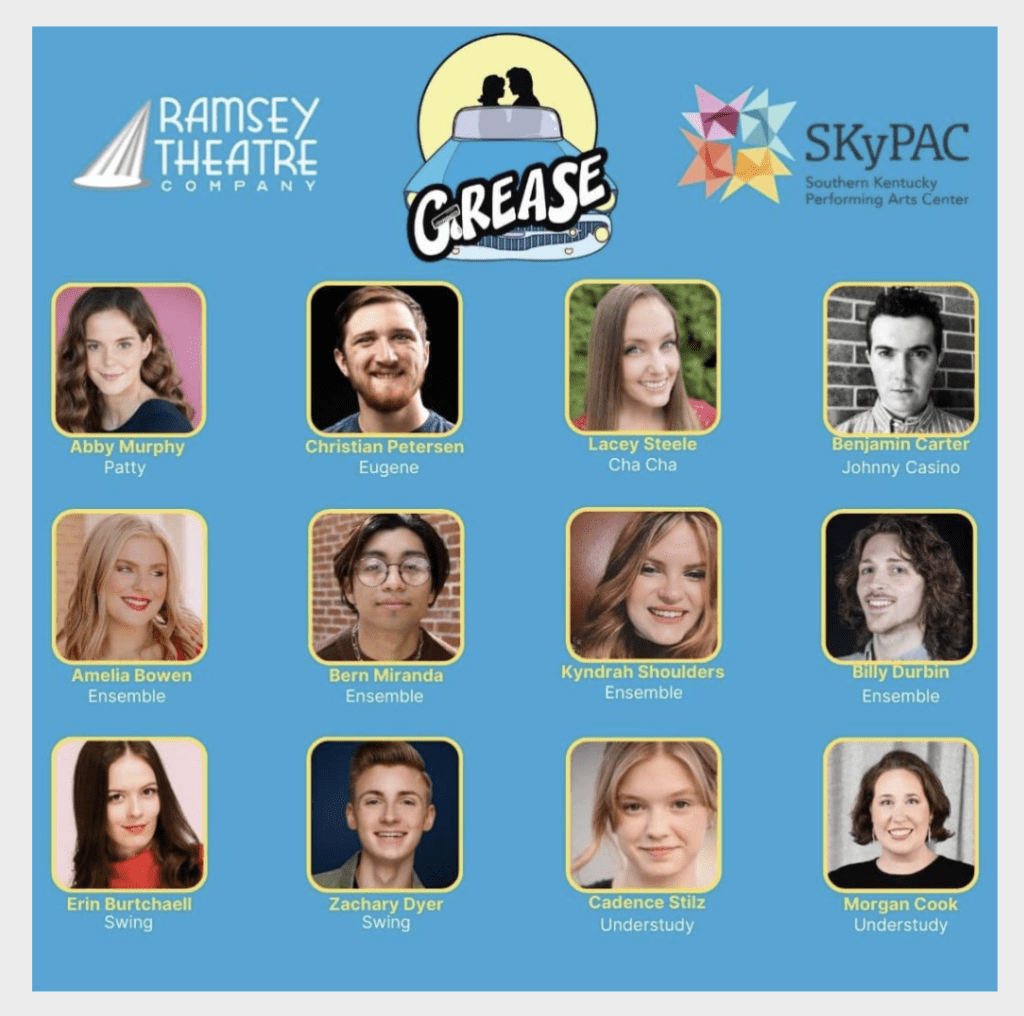
There was no program available and to give credit where credit is due I added these from SKYPAC's website for your reference.
Diane DiCroce, the newly hired Producing Artistic Director for the Ramsey Theater and BG OnStage, directed the show with obvious knowledge and skill for the genre. The show was excellently paced, the dialogues were crisp and the choreography was effective. The characters were clearly defined and staged in a very fluid manner. The show can be graphic for the southern Kentucky audience but it seemed well balanced to give the effect without 'going there' all the way. The set, costumes, and make-up were well done and carried even into the last row of the theater.
Sandy, Olivia Peavler, was well sung and acted performance. She delivered in every sense of the word and wasn't a shy performer in playing a "Shy girl." Danny, Jared Goodwin, met all of the demands of the role vocally and physically. Rizzo, Jackie Bonsignore, is dead on in every facet of her performance. From voice, to dancing, to speaking, her every manor displayed the character as well as it can be done. Kenickie, Noah Carson, was a good ole 'tough guy' to Rizzo's 'tough girl'.
The supporting cast around the quartet was very well chosen and filled their roles vocally as well as in their characters. It was a joy to watch them work so well together in the ensemble piece that Grease is. Dilly Kim Doherty, as Marty; Jake Dukes, Doody; Hallie Slouch, Frenchie; Dale Magee, Roger; Laura King, Jan; Nate Simpson, Sonny; Ashlee Wilson, Miss Lynch; Johnnie Mikel Boswell, Teen Angel; Tony Rose, Vince Fontaine.
Abby Murphy, Patty, having seen her perform several times in the past was a pleasant surprise as the proper nerd cheerleader. Christian Petersen, Eugene; Lacey Steele, Cha Cha; Benjamin Carter, Johnny Casino rounded out the named cast members and did them well.
Ensemble members: Amelia Bowen, Bern Miranda, Kyndrah Shoulders, Billy Durbin; Swings Erin Burtchaell, Zachary Dyer were solid additions to the cast. Cadence Stilz and Morgan Cook are listed as understudies.
The band was on a platform above the stage over the 'garage' doors which was an excellent idea. They were very good but I don't know who they are since there is no program for the evening. They didn't miss a beat.
In the opera Aida they have elephants. I guess in musicals its cars! "Grease Lightning" was definitely a hit and the floor of the stage was a checker board resembling black and white tiles of the classic days at the Ice Cream Parlor. The use of neon lighting and moving sets were both clever and effective.
The question is: "Can I evaluate this production as a professional production?"
The answer is a resounding 'yes'. That is a huge accomplishment, make no mistake about it. It is only a shame there are only 2 performances. It deserves more. Well done, everyone!
Visit https://www.theskypac.com/ to find out more about the upcoming Christmas season offerings and beyond!
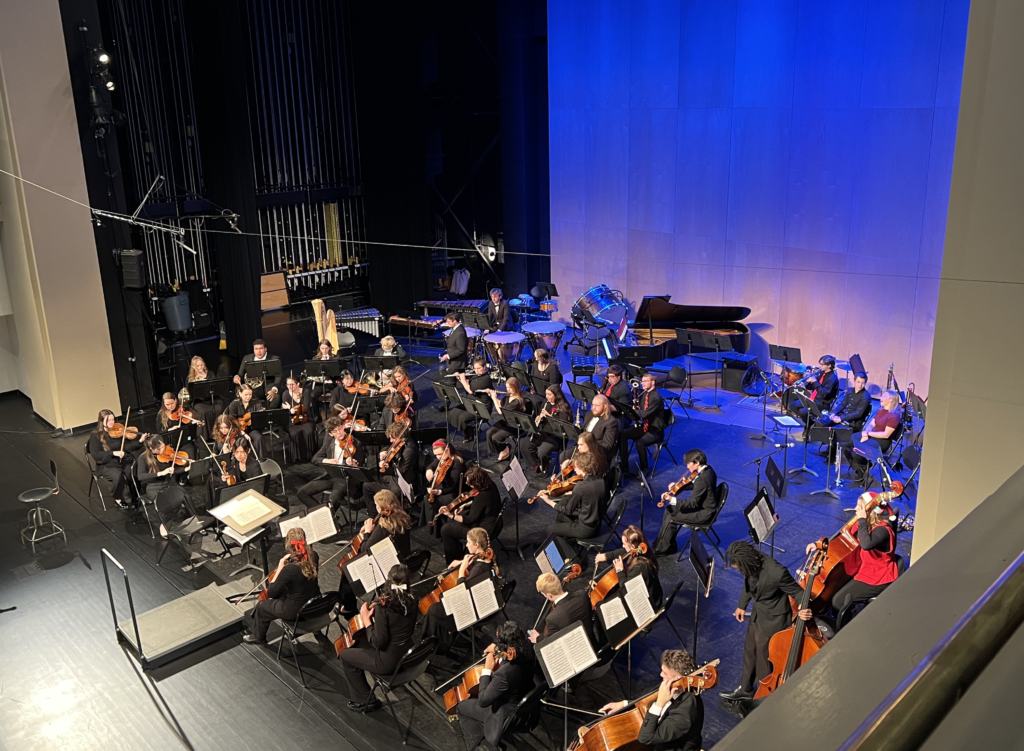
Review: Holidays on the Hill! Features the WKU Symphony and Jazz Band.
November 22, 2024, Friday at 7:30 P.M. CST: Van Meter Auditorium: Western Kentucky University, Bowling Green, Kentucky, USA.
Christmas came early to "The Hill" this year as the final full week of classes was done a week before Thanksgiving as opposed to a week after Thanksgiving, meaning that all of the students will be stressing out about Finals during the Thanksgiving Holiday weekend. It also means that all of the ensembles have to get their semester-ending concerts done before Thanksgiving break as well. So this was "Pre"-Holiday Concert.
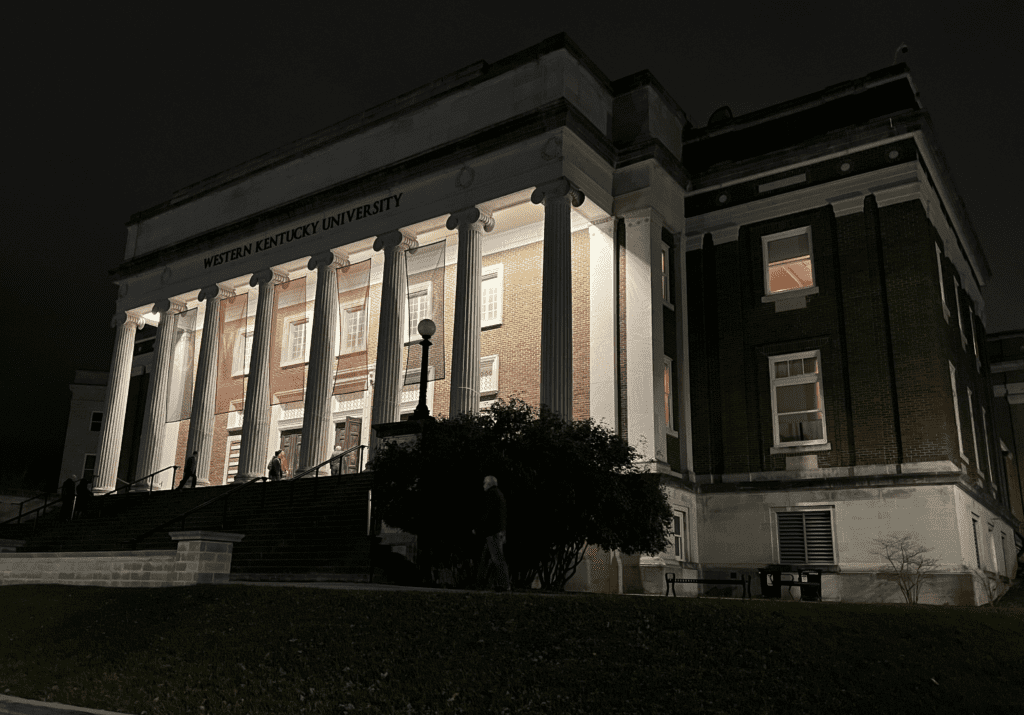
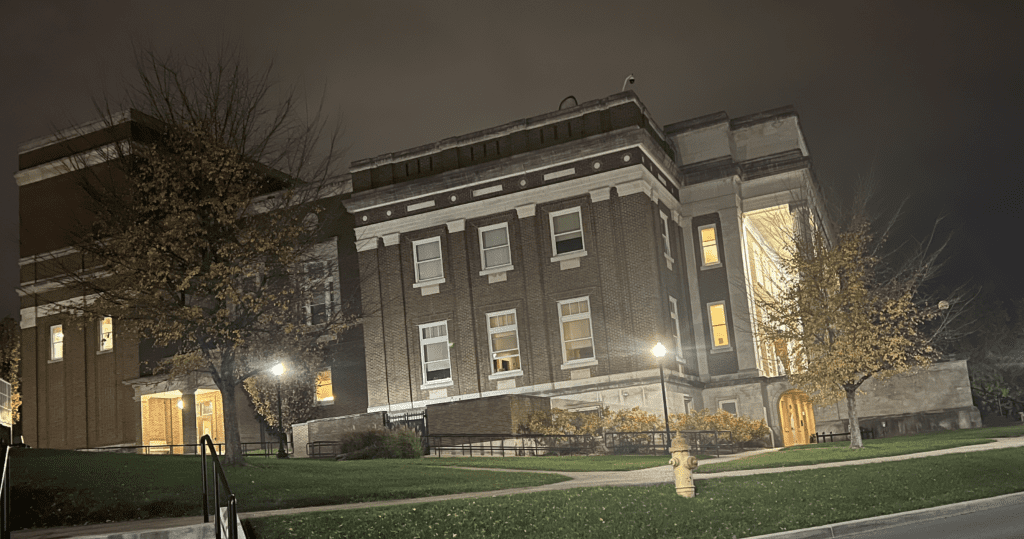
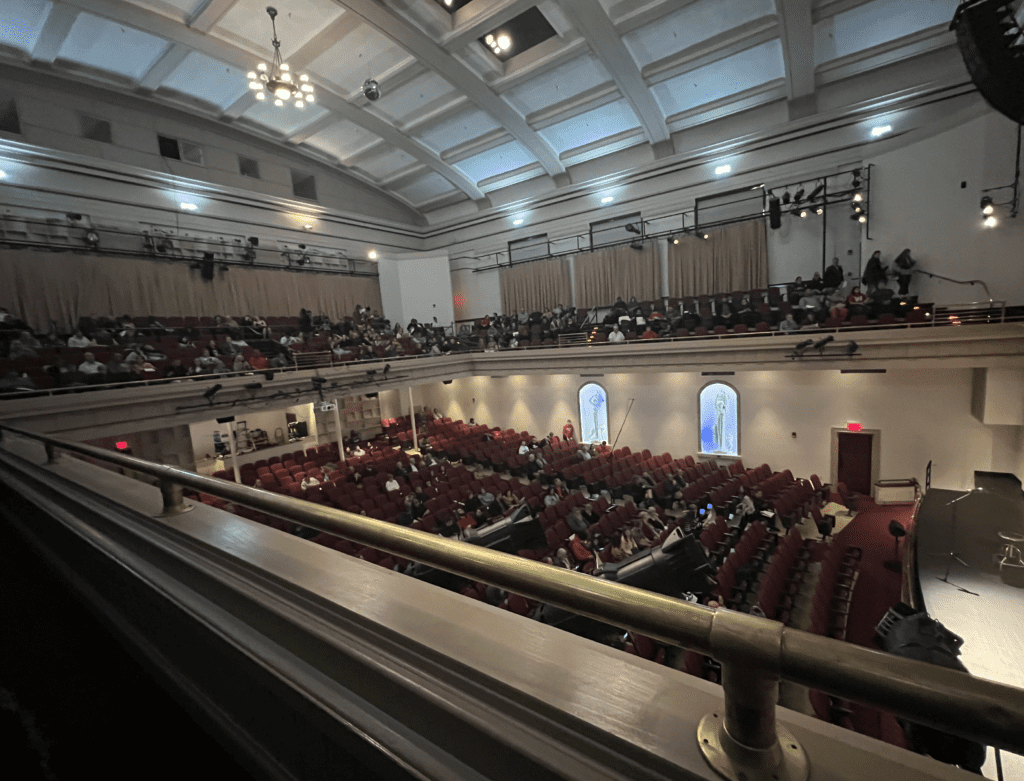
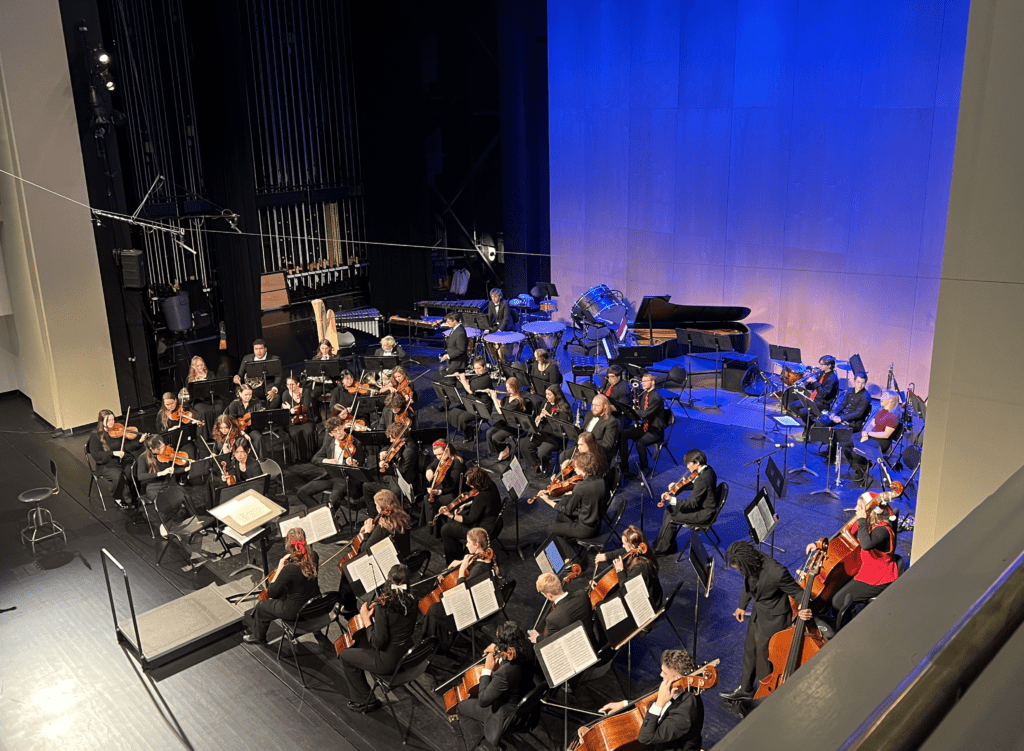
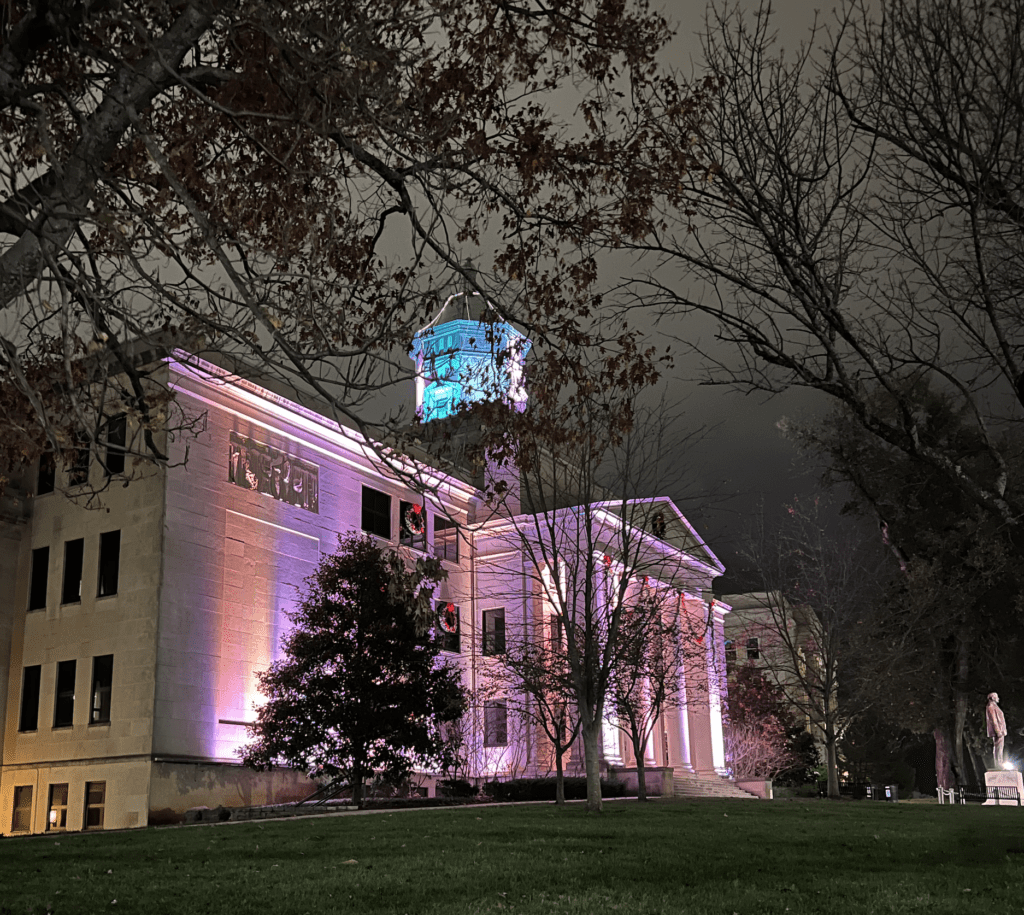
The orchestra was in front of the stage, where they usually are, and the Jazz Band was back in the back corner where the brass section usually sits. Both ensembles shared the stage during the concert and it worked out very well.
Beginning with the challenging first movement of Tchaikovsky's 1st Symphony: Called "Winter Dreams", and the Allegro tranquillo is entitled Daydreams on a Winter's Journey. The orchestra played nicely throughout and was very focused and engaged in their playing. The string sounds are lush with Tchaikovsky and despite having limited numbers the orchestra played well and full.
The Nutcracker for Jazz Band was a welcomed surprise and they played the three sections with enthusiasm. Dr. Sarah Herbert, Director has built quite a tradition at WKU and they play quite professionally.
The ensembles combined forces for Joy to the World in a delightful arrangement with Latin lilt to it. They loved playing it and it was well received by the audience.
Micah Buckham, trumpet, played his muted instrument with style and pizzaz on "The Christmas Song" with the Jazz Band and Jennifer Brennan-Hondorp singing the classic of years gone by. She has a nice, mellow voice for this and was a pleasant performer.
Dr. Paul Hondorp did the honors in singing "Santa Claus is Coming to Town". To me that is usually the last thing on the concert, but since Let it Snow is a duet I guess it makes sense this time. Dr. Hondorp sings nicely and has a good presence on stage.
I guess my favorite piece of the evening was the "Twelve Days of Christmas" Arrangement for the Symphony and Jazz Band. It is quite involved and keeps the percussion players running to their different instruments. I had never heard this arrangement and found it to be quite entertaining.
Jennifer Brennen-Hondorp wistfully sang "I'll be Home for Christmas" and was joined by husband Paul to take the whole thing home with Let it Snow! Let it Snow! Let it Snow!
There were some young students of Violinist Aleka Chau sitting behind me and they had made "We love you Ms. Chau!" posters and applauded her when she came onstage. I'd never seen that before at a concert and thought it was so joyous. What an impact she must be making on those kids. Congrats to her!
The air was crisp, cool, and breezy up on "The Hill" but it is always a beautiful evening to go there for a concert and come out and look over the city lights. I'll never tire of "The Hill" and Van Meter Hall which hold so many memories for me throughout my life.
The concert concluded a little over an hour after it started but everyone left in a cheerful mood.

“We’re making theater”: The Nashville Opera’s Production of Mozart’s Masterpiece “The Magic Flute”.
"Wir machen Theater!" or "We're making theater!" in English.
The Nashville Opera's recent production of Mozart's timeless classic "The Magic Flute" (Die Zauberflöte) is a testimony to this long-held German sentiment of what it is to 'make theater.' What does that mean and why is it important in this review?
Making theater means putting a show together with the simplest of means to create 'magic' onstage. The magic is moving the audience into the mental space of suspended disbelief where they see things at face value but are willing to buy into the premise to "play along" with the gag, for lack of a better way of putting it. It's "make-believe" in its highest form.
The production in Nashville used simple resources in its production of "The Magic Flute". No fancy, wow-evoking special effects. The use of theatrical drops to illustrate a setting, clearly defined costumes that immediately tell you who is who, and some flashing lights and recorded thunder to imply danger. Within this simple framework, they produced a show that is entertaining, poignant, and above all, enjoyable.
I must mention that the dialogues were in English and were amplified, while the singing was all in German and not amplified. The orchestra was also unamplified. I found the German diction to be surprisingly good and I could actually understand it. This includes the chorus who sang as if twice the number! So, kudos for that! Not all singers carried in that cavernous hall unamplified. Having said all of that I will say that in today's world of blown-up amplification, hearing real acoustical music is a welcomed relief from all the noise.
For the uninitiated, I offer the following description of The Magic Flute in terms of what it takes to produce such a thing. First, the Magic Flute has a huge cast for an opera. I always say that if you want to create a full ensemble of opera singers then you would simply cast The Magic Flute and you would cover every voice type that exists, except a counter tenor...but you could probably work one in somehow...it comes to 15 singers. Plus you have the chorus, the orchestra, and the extras. It is a lot of people. Throw in all of the folks backstage and you have a city of people working together to make such an evening possible. It is no small task. Add to these numbers the fact that these singers cannot be just any Joe off of the street but have to possess not only ample voices but also incredible skill to pull off such a piece of music. The Magic Flute is a tour de force of music, and it seems like a complete puff ball fairytale.
Now, with that in mind to consider the Nashville Opera's resources there are going to be limits on just how well they might be able to pull it off. Where to start???
Let's start with the soloists. In The Magic Flute the show is Papageno's to make. Papageno serves as the comic relief, the regular guy, the "audience member" onstage who has been allowed to comment on the goings ons so the audience feels included in the performance. Papageno is the only character to break the 4th wall of the stage and directly communicate with the audience. Everyone else is "in the story". It requires a decent voice, not necessarily beautiful, but the ability to sing the whole darn thing and to "Act" it is a must for any successful production. Without an effective Papageno...well...it's going to be a looong night. Jesus Vincente Murillo is a wonderful Papegeno and is on pointe the whole night. Some of his scenes were a tad upstaged by the surtitles, but it wasn't too distracting. He sang well and was an engaging performer.
The point of the story is about Tamino's journey from being a young Prince to an enlightened man. Tenor Joshua Sanders is more of a leggero tenor than the lyric tenor that is usually prescribed for the role. He presented Tamino well as the Prince and never tried to occupy the same theatrical place of Papageno, which is exactly what it should be. He sang the role with ease and his voice is pleasing to the ear. To become accepted among the fellowship of brotherhood he must undergo several trials. Holding your tounge, proving your commitment to a woman, showing humility, and enduring the flames and floods of life are all a part of becoming a true "Mensch". He is given a "Magic Flute" to aide him in his journey...not a sword, not a gun, and not a bow and arrow.
Pamina, sung by Jasmine Habersham, embodied the role with all the qualities you look for. She has a certain street-smart wisdom that gives her an advanced maturity over Papageno and Tamino. Her full lyric voice handles the deceptively difficult vocal lines with a beautiful full sound and soft edges. She plays the role with openness and honesty.
As is usually the case, The Queen of the Night makes the biggest splash. The thing is...you either can or you can't sing "The Queen of the Night", there is no 'try'. Rainelle Krause is a "Queen of the Night". I've seen a lot of Queens in my day and she is one of the best I've ever heard in the role. Dramatically she doesn't spare anything in the dialogues to save her voice. She has excellent coloratura, a balanced middle range, and a full high voice. The Fs are all there and in line with the rest of the voice. At the end of the "Hölle Rache" (Hellish revenge) aria of the second act her voice bloomed in the theater, which is what voices should do and so the slancio, that sound that only opera singers can produce, was experienced by those in attendance which was welcomed with thunderous applaus. No wonder she has been hired back for next year's Lucia.
Sarastro, sung by Matthew Anchel, possesses the rarest breed of singer, a true basso-profundo. He has all of the notes. His massive presence fits the all-knowing sage very well and combines the strength of a true leader with the understanding of a wise teacher.
The Three Ladies were well cast with Sabreena Cherrington, Sara Crigger, and Maria De Conzo. They all were very present vocally, harmonically, as well as dramatically varied. The Three Boys were also very engaging and well-sung. Emily Apuzzo Hopkins, Mary Katherine Stewart, and Ivy Calvert were the wise innocents who came in to help when most needed and were very light of foot. In the second act, their main job was to stop Pamina and Papageno from committing suicide.
The Speaker was well-represented by Andrew Payne. The Speaker isn't so much of a singing role as it is a parlando role but it carries a weight with it that he characterized well with his voice. Dee Donasco, Papagena, I found to have a very present voice and great demeanor onstage. The "Reveal" is always a highlight with the duet "Pa Pa Pa...." rewarding Papageno for all his troubles with a beautiful girl..." just like me."
Brian Russell played an engaging First Priest. Monastatos, Jordan Costa, was creatively solved in this production as an orange pot-bellied being with a long braided Fu Man Chu beard.
The orchestra was nicely played by the Nashville Opera Orchestra conducted by Dean Williamson. The singers were well accompanied by Williamson's conducting and the whole performance flowed effortlessly forward. I would have liked to hear more characterization in the playing, but realize that they probably have very limited rehearsal time to bring out such intricacies.
John Hoomes, the Director, made some choices with this production. That is what artists do. I must say that in the beginning, I was skeptical of the approach and the simplicity of the staging. However, it became clear that he went with the theater maxim "We're making theater" and everything became acceptable. That takes courage and belief in your actors to carry the show and not a lot of smoke and mirrors to dazzle the eye. The artistic license taken in the surtitles sometimes bordered on interfering with the real text, however, the fun-hearted spirit of the piece allows for it.
Clearly, singing opera in the original language is artistically preferred. However, I have to say that doing operas such as The Magic Flute would merit doing it in English. I did a lot of operas in the local language, German, and didn't like doing it, but upon reflection support the practice because having the audience understand it also helps!
In general, my feeling is that The Magic Flute is an intimate opera. Producing it in the vast hall that Jackson Auditorium is seems out of place. The orchestral sound wasn't as present as I would have liked, some voices didn't quite make it to the pit, and the distance from the stage prevented seeing their facial expressions. I appreciated the audience's involvement in the performance and the production was heartily applauded.
A wonderful evening in Nashville. I just wished they were having more performances of it. The world could use some sanity.
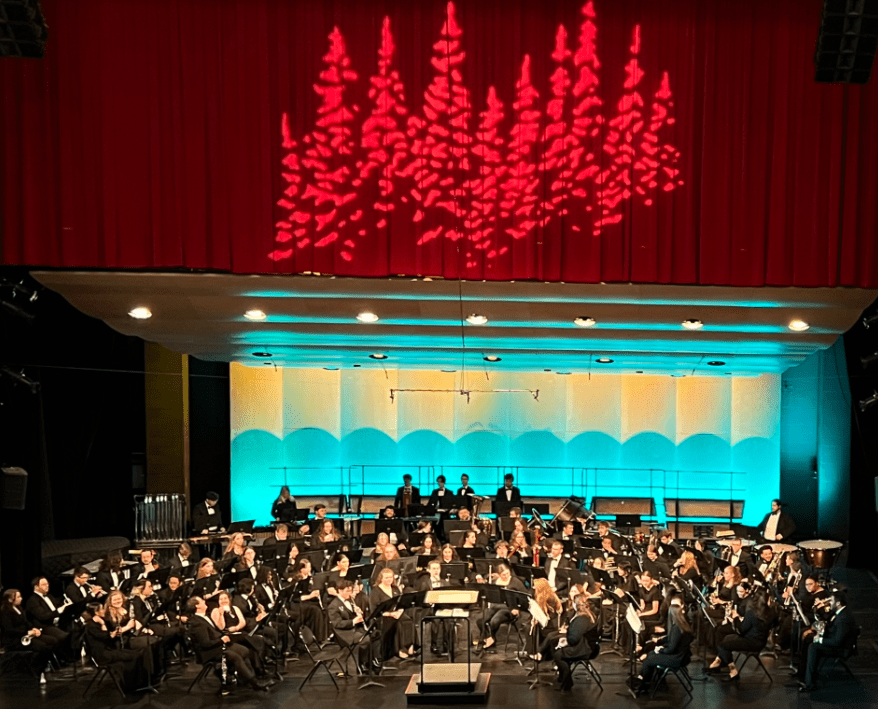
Concert Review: Holidays on ‘The Hill”: A concert of Christmas music by Western Kentucky University’s Symphony and Symphonic Band, and the Southern Kentucky Choral Society
December 2, 2023 -
The Music Department at Western Kentucky University presented the program entitled “Holiday on the Hill” featuring the WKU Symphonic Band, the WKU Symphony, and the Southern Kentucky Choral Society under the guidance of Dr. Brian St. John, the Baker Professor of Music, Music Director and Conductor of the WKU Symphony. The concert took place at the legendary Van Meter Hall on Friday, December 1, 2023, at 7:30 p.m.
The concert featured several Christmas favorites that are common during the Christmas orchestral concert season and the World Premiere of an original arrangement by Dr. Matthew Herman, professor of Theory and Composition at WKU entitled “On Christmas Day”.
The opening section of the concert featured the WKU Symphonic Band, Dr. Gary Shallert, Director and Conductor, as well as several graduate student conductors.
The first piece “A Christmas Festival” by Leroy Anderson (1908-1975) for Orchestra, arranged here for Symphonic Band, is a great opener for concerts during the holiday season and will now be a part of a useful repertoire for students as they continue on their music careers.
Introduced by light percussion and a flute soloist in the balcony, “Pat-A-Pan” by Bernard de la Monnoye, arranged for band by Robert Longfield from an arrangement by Chip Davis, is a delightfully rhythmic piece that is Boleroesque in the way that it moves from beginning to end incorporating different sections of the ensemble which maintains a constant beat throughout. It’s canon-like character unfolds beautifully and returns to the flute and percussion as it began. It was capably conducted by Nathaniel Nash, a graduate student in conducting.
Another Chip Davis piece arranged for Band by Robert Longfield is the richly orchestrated version of “Greensleeves”. Ms. Brenna Derby elegantly led the ensemble through this peaceful but majestic Christmas classic. It seems the piece is too short as you want such beautiful sounds to continue. The introduction of the piece provides a pleasant foundation for the piece to unfold. The phrases in the introduction seem familiar but they are new to me.
When “An Irving Berlin Christmas” is played it feels like we have left Kentucky for New York City. Jalen Allred, a graduate conductor, steered the players through the heavy traffic of this urban feel Christmas music. I’m not sure about the intro of the piece as it seems to get off to a rough start. This arrangement of Irving Berlin’s Christmas hit “White Christmas” seems rather clumsily arranged for band and comes to an abrupt end. Not sure this is the best arrangement of the band material.
After a short break to convert the stage for the WKU Orchestra, Aaron Price, graduate conductor, led the symphony in the classic “Sleigh Ride”, another arrangement by Anderson, which is often played at orchestral Christmas performances. This is certainly something the players will meet again in their future music careers. Of course the punch line is the trumpet “neighing” like a horse at the end of the piece.
Dr. Brian St. John admirably led the orchestra through Felix Mendelssohn’s famous Overture to “A Midsummer Night’s Dream”. A cornerstone of the classical repertoire, this piece is possibly one of the most difficult pieces to play in terms of the sheer delicacy of execution and “nowhere to hide” moments that challenge even the greatest orchestras. Explaining that the child prodigy composed the piece at the age of 17, everyone realizing that the orchestra as a whole doesn’t average much more than that helps accept that it isn’t meant for stodginess, but rather youthfulness. Although it is classified under incidental music, no different from film music, it stands alone as a piece that captures the senses and illuminates one’s imagination of the magic of Shakespeare’s masterpiece. It takes guts to play this piece and is not for the faint of heart!
Serge Prokofiev’s “Troika” from his Lieutenant Kije Suite is something you recognize somehow without knowing what it is. Aaron Price, another talented graduate conductor, commanded the orchestra well through this fantastic piece. Prokofiev’s orchestral mastery is apparent in this brief yet rich section of this historic composition. Prokofiev was commissioned to write film music for the film “Lieutenant Kijé” (1934) in the Soviet Union even though he had already been living in Paris and was known to be too experimental for the conservative Soviets. I have often said that a lot of music that is written for film will endure far past the lifetime of the film for which it was written. A delightful piece for sure, and Prokofiev just so happens to be one of my favorite composers.
Dr. St. John returned to the stage to conduct the lush string sounds of Peter I. Tchaikovsky’s classic “The Grand Pas de Deux” from his Nutcracker Ballet of 1892. Tchaikovsky is an “every concert” composer for young string players as they learn to master their instruments in the glorious orchestrations that this composer never fails to supply.
William Mason-Walker, a graduate conductor, led the symphony and Southern Kentucky Choral Society in Handel's famous “Hallelujah Chorus” from the “Messiah”. Dr. St. John gave everyone homework to go and research why people always stand to this piece. The reasons don’t matter and I’ve heard all of them, simply stretching my legs is enough reason for me! But if ever a piece deserved it then this one does.
To end the concert the WKU Symphony and Southern Kentucky Choral Society, excellently led by graduate conductor Demetrious Mason-Walker, performed a world premiere called “Christmas Day” by WKU Theory and Composition professor Dr. Matthew Herman. This arrangement of popular Christmas pieces is certainly a piece that deserves to be among the top Christmas Concert choices for orchestras around the world. It is well composed, is upbeat, has glowing orchestrations, and has some delicious acapella moments for women, men, and mixed choruses. The piece uses the gospel spiritual sound, which gives it a distinctly American sound that is rich in harmony and buoyant rhythmically. I hope to add it to my standards of Christmas music every year.
The audience was enthusiastic and in a good mood. They gave warm applause to all the pieces and were grateful to the participants for their hard work in putting on such a beautiful evening of music. At times the lighting cues were miscalculated which was distracting at times and the decent use of amplification was well-tempered and helped enhance the performance of the Choral Society, which sang and articulated nicely. The Southern Kentucky Choral Society is directed by Dr. Paul Hondorp, Director of Choral Activities at WKU.
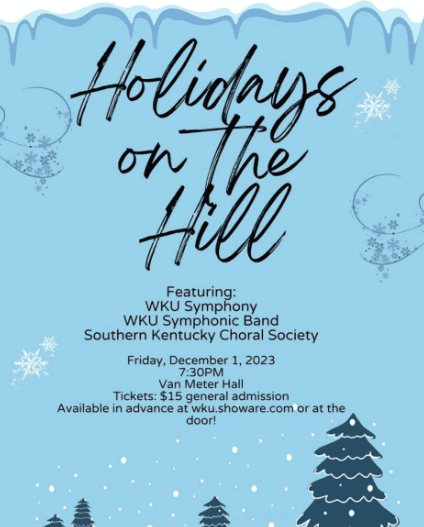
Filling in the Gap: Part of the Musiterania™ Mission
The realm of music is vast and the part that any individual plays in it varies greatly from person to person. It isn't uncommon for people to be skeptical when you share your idea of becoming a musician because it has always been a really rocky financial road. This is where Musiterania™ seeks to fill a gap in the careers of musicians.
Whether you are currently a musician, have been one all of your life, are considering becoming a musician, or practice music as a source of enjoyment or as a hobby, Musiterania™ is designed for you.
What is important is to be active in your music-making by working with others who share your passion.
Of course, there are many groups and organizations to be joined toward the goal of working with musicians of common interests, but they provide no infrastructure to make it monetarily profitable for you. While we don't love music because it can make us so much money we should still be interested in converting our passion into money if possible. Musiterania™ makes that possible without killing your joy of music.
The argument may be made that it is the struggle to earn a living in music that filters out the ranks of musicians to only those who 'make it' or are 'worthy' of it. However, in my view, participation in music is one of the best things a person can do, and there should be a viable path for those who simply love to make music to also build a living income with it.
In addition, Musiterania™ also encompasses all of the tributary occupations and fields of interest as well. For instance, if you are a huge fan of a certain rock group, and know a lot about it, then you can use your knowledge as a way to build your Musiterania™ affiliate commission income. You can help Musiterania™ build content by posting as a contributing member to the blog and with that attract new referrals.
Musiterania™ is to be used as your artistic home. What does that mean?
An "Artistic Home" is the place where you build your art. One day we hope to have physical locations where you can go and be a part of it in time and space. But, for now, Musiterania™ is to be used as your platform on which to build your career, or at least part of it...the part that lasts, and your income.
Filling in the gap is only part of the mission of Musiterania™ but it is one of the most important gaps there is. Plus, when you participate and help Musiterania™ grow over time, you can grow an income over time as well.
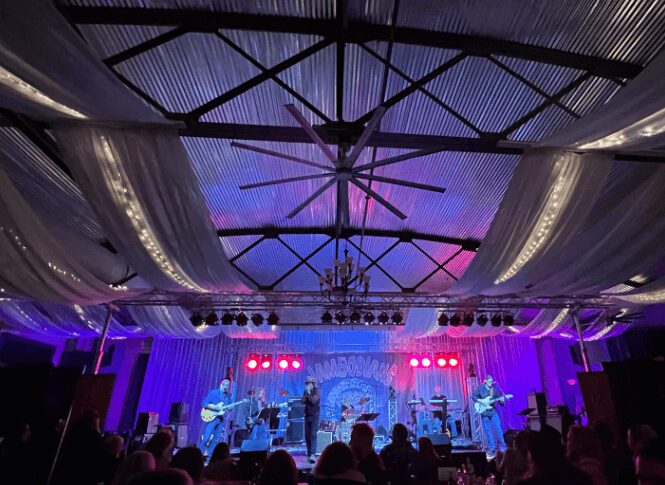
The New Year 2023 and the Need
This blog post is more like a letter to those who are interested in Musiterania™.
I launched this website several years ago while I was very involved in caring for my elderly parents. I wanted to get to work on the vision of this website while dealing with all of the issues surrounding my parent's care. I would get started, then something big would happen and completely knock me off course. This past year my brother was very ill but has now been treated for his disease with nothing short of a miracle.
During this past year, I have been questioning whether I should continue on this quest or drop it and work on other projects that don't require so many things to attend to.
For myself, it would be a lot less hassle to do this, to be honest. Building such a website, maintaining it, and taking care of all the things that may come up is a full-time job for sure. I'll admit it is much more difficult to do than I had ever imagined.
However, time and again I hear about the issues musicians are facing, not only the normal ones of just trying to make it in music, but the added disaster that the Covid pandemic piled on top of all of that.
The stories I hear are from friends, and acquaintances the world over. These are REAL people who have REAL situations in life that make being a musician really difficult. Everything from people having to do something else to make ends meet, to those who get ill either from Covid or any other disease, or musicians who are finding it difficult to do the things necessary (audition, perform, record, publish, promote) to move their careers forward.
In the realm of music, musicians are a part of things that pull at them, stretching them to their limits. There is no organization that is there to pour into musicians the things that can help them realize their vision. Maybe unions are helpful, and I hope they are, but they don't necessarily help pay the bills.
Therefore I have decided to resume working on this project now that the path forward has been cleared.
My motivation is to provide a safe place for musicians to be and to build their endeavors around. Musiterania™ is like a hub that is the center of the many different areas of a musician's endeavor comes together.
Musiterania™ will do its best to address the problems that musicians face with content pertinent to them. But, a large part of Musiterania™ is that the members also contribute their experience where we fuse all the experiences together into a spring of information available for members.
Creating this network on purpose to make a real difference in musicians' lives is something I feel is drastically needed in the world and is something that I can pour myself into.
Over the past years, there are some rather tragic stories that may not have played out had Musiterania™ been a part of their lives. There have also been missed opportunities to help someone become well-known through the platform of Musiterania™.
It is my job to provide this service and network so that musicians can build their existence into the future.
When I was a singer with the Eutiner Sommerspiele in Germany, I remember the Director of the opera company, Siegfried Grote, getting up on stage and saying ...:
"My heart beats for the singers."
I'll never forget that and it reminds me of how I really do feel about musicians. Not only am I a musician, but I also love being around musicians and I want to be able to provide the infrastructure that supports them.
Be patient with me as I grind through getting all systems going and finally am able to create the income-producing affiliate program that is at the center of Musiterania's mission. Again, I wouldn't go through all of this trouble if it didn't create a reliable residual monthly income for members.
The New Year 2023 brings with it the "Need" for Musiterania™ in the world of music. I am determined to fulfill that need.

How to Use A Calendar and Keep a Log of Your Musical Journey
This is a piece of "advice" I have for anyone in music, but especially for those who are building a career as an onstage performer or a private teacher. However, this "advice" would be good for anyone really who wants to have order in their lives and remember what they did in life.
No Job too Small
No Venue too insignificant Off the Beaten Track
No Audience to Small
It ALL Counts
Wherever you happen to be in your musical life I highly recommend starting today to plan your musical endeavors with a calendar and keep a journal of your activities in music. While online is a possibilitiy I recommend real pen and paper.
Now, if you are a teacher of music it is something you have to do to organize your lesson schedules and keep track of your income for tax purposes. So, this is one of those things you would usually do if you are professional about it. You would even keep a file, record, of each of your students progress.
But for those who are just starting out or trying to build a career for yourself planning with a calendar and keeping a log of your endeavors is of the utmost importance.
I don't say this because I did it, I say this because I should have done it. Planning and keeping track of your activities is part of being a professional musician. Not only is important to be able to show something for your work thus far, as in a CV, Curriculum Vitae, or a Resume, but it becomes increasingly important in being able to remember your past.
A Calendar is a tool you can use to plan your career. This is especially important if you are an independent musician who has no schedule given to them for the next year. You won't HAVE a schedule unless you MAKE a schedule and that is done with the almighty calendar.
So with a calendar you can plan your year. Lets say you want to earn $50,000 in gross revenue in the coming year. This becomes a lot easier if you create a plan to do that. If you give 5 concerts a month for 10 months and make $1,000 a performance then you get there. If it takes twice as many performances to get there, then do it. For someone starting out that may seem like a huge challenge but is it really. At $20 a ticket, you only need to sell 50 tickets per concert and usually the venue you are performing at will help you get to that number. You create a program, perfect that program and then organize 5 concerts a month in different places and do the tour. Each year you either create a new tour, and/or revisit those venues the every year, building your repertroire, your audience, and your resume. Always record your performance before you go on tour so you can give away your CDs with the price of admission.You can build your Email list and keep your audience informed of your activities using your auto-responder and/or social media, which many savy musicians already know how to do today.
Remember that mastery comes through repetition and by doing so many repetitions of this one program you become a master of it, it becomes easier. Rock bands always do it this way, classical musicians should also do this. Some rock bands have been playing more or less their top hits for 40 years now and still people are amazed.
The practice/performance log/journal is important because it shows you what you have done, who you did it for or with, and your take aways from those experiences. You also build the number of people you know and this is an important tool for your musical future.
"Well, they made it because they knew the right people!"
How many times have you heard this? I know I've heard it a million times from people who didn't "make it" in music. But what kind of an excuse is that? It is a truth if you put it into perspective.
Basically your job as a career musician is to become "known". In other words, if someone doesn't know you, how are they going to be able to hire you? So, what you are doing early in your career is making it possible for people to get to know you. You do this by scheduling your future, taking names, numbers, and addresses of the people you meet and find a way to "stay in touch."
As you move on in your career you will want to spread your wings and try to fly higher and so to do that you have to expose yourself to "more people" so they can get to know you. If you have a proven track record then that is proof that you are dependable. No, at 22 you probably haven't sung at the MET yet, but you have sung XYZ here and there to prove that you have experience. You usually can't make it to the MET unless you have a proven track record through however you can do it. But unless you keep record of that, nobody else is going to.
You are writing a novel called "My Life as a Musician". Keep track of everything you do, the people you meet, and the experiences you have and that novel will write itself. Trying to dig up that stuff from your memory is hard to do.
Having a consistent calendar method, and a journal to keep track of your work are very important tools to building a career in music.
Here are the types of papers you need to keep updating for your work so you will have them at hand when you need them. Don't worry if you don't yet have that much to put on them right now, just get a placeholder for each of these and fill keep updating them as time goes on.
- Keep up to date:
- Biography
- Resume
- CV
- Press Release
- Repertoire
- Venues/Dates
- Contacts
- List of willing references.
- Photos
- Accounting (Keeping track of money)
- How much you spend and on what
- How much you earn and from what
- Keep a folder for receipts
- I would place receipts on pieces of paper and label them and placing them in an accounting notebook, rather than having loose different sized receipts hanging around.
This is called the "Business Side" of the Arts, get good at it yourself or suffer.
Building Your Music “Business”
It was the mid 1970s when I first got the bug to become a musician. I was already in my teens and so the early development of learning an instrument had already past. I wanted to be a musician but wasn't very good at any instrument except my voice. So I became a "singer".
I had my role models which I saw as being bigger than life such as Barry Manilow, Billy Joel, the bands Kansas, Yes, Styx, Boston and the list goes on. I wanted to be there at that level and honestly had no clue how to do it. Maybe nobody does I guess.
But as chance would have it I got involved in Opera and classical music which is a completely different thing. I went from trying to write songs and learn to be a "Piano Man" and Keyboards player to focusing on learning operatic roles and poetry of songs in foreign languages.
So even though I realized that recording could be an important part of my career as a classical singer it wasn't anything like recording in the popular music genres where it is pretty much what you focus on doing besides getting gigs here and there.
The problem is that nobody around me was considering the importance of recording as a classical singer, because in classical music especially in the 80s was done by the very best in the business, not be young singers to build their name as an artist. That was wrong thinking.
The first two rules of building a music business around your talent is to perform as often as possible and make recordings for the purpose of publishing recordings for sale.
Building a business as a musician is much like building a CV, Curriculum Vitae, for an academic. You want to keep track of everything you do in your CV, or in the musician's case, a resume. You should have a place to keep track of what you have done from the beginning of your career. This can include solos for church, singing in All-State, doing competitions that you have done well in, people who you have studied with, and any place that you perform.
What this does is show your productivity. In the beginning it doesn't matter what you do because everyone begins somewhere and it is important that your resume gets added to at regular intervals.
Writers write articles, books, and create blog posts, builders build houses and buildings, so the medium for developing a profile artistically is doing recordings and creating a discography for your work and to make it findable online today.
To pull from my experience...my wife and I did quite a few recitals together and people really liked them. My idea was to have these performances ready to go and offer them to "producers" so we could do more recitals. Admittedly we didn't work hard enough at finding "gigs" for ourselves. But the one thing that could have enhanced this project would have been to get these recitals professionally recorded and have something to show for what we did. This way we could send the CDs as examples of the programs we were offering, plus also having the ability to earn some income from selling them. We never did that. We never gave our work the chance to be heard by recording companies or anyone for that matter.
So, being a really good musician is not enough to become a success in music. It doesn't do you much good unless folks know about you and can see you in the marketplace on a regular basis.
The other great thing about recording is that it forces you to work on your music in a very detailed way, making you better and better and getting really good at what you are doing.
Do not wait for someone else to make you great. The number one thing you can do to be in control of your musical destiny is to look at yourself as an artist in your own right.
You are Your Brand
Timothy Simpson
I spent my career thinking that the place I sang is what gave validity to my name. "Timothy Simpson" Leading Tenor at the Opera in Karlsruhe. You hear this all of the time in music. So and so is a "Metropolitan Opera" artist. Yes it helps your credibility to have worked in "higher places". But it shouldn't be how you define yourself as a musician.
This is advice I have given to several younger singers who have made a career with their music by being their own brand and I know several others who have done the same thing. Sometimes they may have had to alter their format in music, but that is less important than begin able to be a professional musician in your life and if you build it that way you can always continue to build on it.
I'm telling you this, being a musician isn't about being a rabbit but about being a turtle. It isn't how fast you get started but rather how long you run the race. Everything happens for a reason, but for sure if you stop because your career isn't going like you expect it to then there is no chance to become a respected artist at any level.
In music, like most professions, is about who you know, what you do, where you do it, and how you do it. Networking and getting to know people in the profession in all the different areas is very important. Building your own audience of people who like your music and you as an artist is vital. Fans are extremely important to your career. Take care of them and value them as much as a young bride does diamonds.
People ask if there are things I would do differently knowing what I know now I always say the same thing...become an "Artist" in your own right. Recording CDs, performing for various events, paid or unpaid, shaking hands and being kind to people regardless of what they can do for you are all ways to build your music business.
Here is the truth. Everyone is looking for someone to inspire them, to make them feel good, to believe in, and someone they can refer to in their conversations with others. Every audition is mediated by people who are looking for the answer to their casting challenges. The most important part of an audition isn't whether you get hired or not, it is whether they would want to hire you in the future. You are actually doing 2 auditions at once. One for the gig you are auditioning for and the second is to leave a positive impression with the mediators. Never forget that. You may never actually know what kind of impression you made, but do everything you can to put your best foot forward no matter what.
- How do you build a business with your music?
- Be prolific.
- Record everything.
- Build a resume.
- Grow your audience.
- Grow your network of people you know.
- Plan your career a year at a time.
One of the missions of Musiterania™ is to help you do all of these things using Musiterania™ as a basis for you that will be there before, during, and after your career.
When you are young you can't see the value of the people you meet along the way, but the older you get you begin to understand that that person you were sitting next to in choir became a musical star in Norway is something that you hold on to later in your life.
Musiterania™ is designed to be the home base for everything you do in your music "business" and wants to help you be financially stable over time as well.
Become an associate right now for free by registering on this website right here>>>>>Associates.
No matter what you do, Musiterania™ is here for you in a spirit of Coperor!
It’s now or never. When a musician decides to be a musician.
I remember when I made the confession of music in my life. It was years before anyone else really knew just how seriously I felt about it. I said one day to my mother, "I don't care what happens to me as long as I can be in music."
At that time I think my subconscious became focused on music and that it determined my life's path more than I realize. I made the statement before I could really play any instrument, know that I could actually sing in front of people, before I understood how music was constructed. I didn't know anything about music other than it called me.
"You don't have music. Music has you."
Professor Ruth Morris, WKU
Ruth Morris likely said this to many students at WKU. She was someone who had many such phrases. But it was true. Even though I had interests in other areas and had declared a major far apart from the artistic world music would never let go of me.
I think musicians are mostly like I was and to a large extent still am. They just want to do music. They don't do it for the money, they don't do it for the applause, they don't do it for the attention. They do it because they simply love doing it and not doing it is like not breathing.
As admirable as that may seem, it really isn't the right way to think about a career in music. Everything anyone does on any level can be a business. So, the mistake I always made was that I didn't ever really look at music as a way to build a business or that it could ever really support me or a family. I was happy just to get to do it, and would do it for any price.
The point I am making here is that once you make the decision to become a musician for your career then you also need to start mapping that out in business terms which is called..."making a living income and building a financial future with it."
Most musicians are independent. They have to make their own business. But, like me most musicians have little to no business acumen. This is not a good thing. Musicians should understand and know business and make plans to succeed financially no matter what level they are working.
There are many ways to earn as a musician. There are also many types of organizations that help musicians build security in their professions. Unions, theater companies, recording companies, educational institutions, and orchestras/bands offer a support to musicians. But, I dare say, most independent musicians don't belong to those institutions.
Most of the people employed in music aren't musicians. When you look at "Jobs" in music, most of them are for business people. Just as in any such organization, most of the money goes to the business side of the entity. A company will have the newest and best computer system but will have pianos that are rumpled heaps for the musicians to play on or rooms that are barely fit for human existence to work in.
Musicians work really hard at their art. But, most don't get paid for that work. Musiterania™ is being created to be one way that musicians can get paid and still have time to work on their music, have an organization that supports independent musicians, and builds a cooperation so that musicians can thrive.
You see, independent musicians all work for themselves, by themselves, with everyone else out there scrambling around to make it too. There is no coordination in it. It is a loose mess, a free for all. Musiterania™ is being created as a "home base" from which independent musicians can remain independent yet be able to work together to build an infrastructure in support of themselves.
Therefore, the principle driver of revenue in Musiterania™ will be through the Membership Affiliate program. I have long searched for a better way to be able to fund musicians, but this seems to be the most affordable, the most lucrative, and the most fair. The plan isn't to build a dependable income overnight, although you could, but to build it over time. The Membership can benefit independent musicians in a number of ways. But none of it makes any sense unless the Members can build a living income with it over time.
Yes, there are Go Fund Me, Pantheon, and any number of "give me money" programs out there, and musicians should raise revenue any way they can, but all of those are dependent on donors. Musiterania™ is a for profit business. It is built on mutual benefit and supporting each other within music, with other musicians.
My advisors are always asking me, "What does a membership give the members?" "Why should someone be a member?"
They are looking for "information products", "physical products", stuff that in the world of commerce that only recognizes a "Product for Money" value. While Musiterania™ is going to offer highly valuable "products" for sale on the website and for the membership to give musicians the best possible environment to thrive in, it isn't only about that. It is about the value of being a part of a larger organization that supports you in ways that aren't physical but make a real difference in the lives of musicians.
My vision for Musiterania™ is that one of the first things an 18+ year old does as a musician is join Musiterania™ because it will become a powerful asset to them for their life as a musician. There is no ambition to be the only thing a musician becomes a part of, or that it should take over their lives. But, to be one source of stability in their musical lives.
For those of you who know that deep down music is your destiny then I would like to offer you a place in Musiterania™ to accompany you throughout your musical life. Visit the "Associates" Tab, register for free, and start sharing your affiliate link with others.
Let's build a Music Paradise together.

The Audience Membership: The “Other Half” of the Musical Equation
Musiterania™ is being created as a way for musicians to build an income using the platform of the website. Future plans include a "chain" or "network" of local chapters with facilities so musicians have a place to work, practice, do workshops, and of course perform. It is a bold vision with a lot that can be added to it so the work will never be done.
However, when considering musicians there is a large area that often gets taken for granted and that is the "Audience". It is the Audience that pays for tickets, buys albums, purchases merchandise and travels long distances to experience the music they love. Musiterania™ wants to include the audience in a membership built especially for them.
The Maestro Membership is for musicians ... the new Musiterania™ FAN membership is for those who love music but aren't themselves musicians. The value here is that FANs can earn affiliate commissions through Musiterania™ as well by helping us promote memberships, concerts, events, and certain merchandise sales. We love our audiences, and we must appreciate that the fans that "make the Rock n Roll World go round"!
FANs often know more about musicians than the musicians know about themselves. FANs have been studying music their entire lives and some are quite expert in their knowledge in very defined areas. Musiterania™ wants to harness this powerful segment of Musicdom and let people create content for the website to make all of the memberships more and more valuable. FANs can produce blog articles, photographs, videos, and audio recordings, (depending on copyright laws), and share it with Musiteranians all over the world. By being a FAN member of Musiterania™ they can also build an automatic residual monthly income by referring new and long time members into the membership!
FANs are vitally important to musicians, it is the lifeblood of being a musician and without them music would literally "fall on deaf ears." Musiterania™ wants to make a welcomed place alongside musicians in this world of music we are creating! It will bring a lot of energy to Musiterania™, hopefully a lot of revenue, so we can build the facilities that musicians so vitally need to be and remain musicians for life.
Stay tuned for the opening of the "Musiterania™ FAN" Membership!
Residuals: The Artist’s Cash Machine
You've heard about residuals? You know, residuals, those little checks that come in long after the work is done?'
(Read on at the bottom for another way to residuals)
Record a song, it plays on radio stations, you get paid every time it plays and you don't even know it is playing, you just get the check. Or you publish a Record with all of the means out there today and every time it is played, somebody sends you a check.
If you are a Beatle, you are swimming in these checks. If you are Paul McCartney you are worth more than a billion bucks largely due to it.
The problem with it? Creating such a hit isn't such an easy thing to do, especially today.
Keep in mind, that there are a lot of people making money off of those songs other than the creators of it. In fact, the artist doesn't even get most of the money from it. On top of that, to be able to even have a hit at all predisposes the assumption that a company will sign you, promote your music, and give you a shot. Just getting through the front door is a really big deal.
But, having said that, the ticket to all of this is creating music yourself...no...it isn't even that, it is creating boatloads of music yourself. Become a song writing machine. Those who make the truly big bucks are those who wrote the songs, not necessarily the performers of them.
I started to try and write songs by myself when I was a teen. I wrote some okay stuff, but none of it was at that level of being actually good. Plus, I wasn't all that good an instrumentalist to where I could tinker a song into being. I was wanting to write progressive rock songs, which is way too complex if you are just getting started, besides, most prog rock songs are created in the studio at the time of recording and mixed together. So, I was doing it the hard way.
Write simple songs. Simple lyrics, simple tunes, simple harmonies. Write them often and you will get better. Whether any one of them gets to the top 100 is a big "if" and it may not come until you have written 400 songs already and performed for years at venues nice or sketchy.
What can you do in the mean time to earn residuals? That is a good question.
Musiterania™ is built for this purpose. The goal of Musiterania™ is to offer a way for musicians of all kinds to earn a steadily growing monthly residual income over time by helping us build the business of supporting musicians.
Musiterania's concept is to build a network of member chapters in cities and towns all over the country and world to help musicians become successful. What are you getting paid to do? You are getting paid to refer new members into Musiterania™. In the beginning that is all there is to it.
In order for Musiterania™ to be successful, this is the core of what has to happen. Musiterania™ is a platform first and foremost. It is a platform on which musicians can build an income. But that isn't all it will do into the future. Selling your music in the shop, promoting your concerts and the concerts of others by helping sell tickets to them to grow you income even more.
What my mission is as the founder and owner of Musiterania™ is to help musicians be musicians and make a dependable income by working with Musiterania™.
I'll tell you what I am tired of when it comes to musicians.
- Musicians being starving musicians.
- Musicians performing for free. (I am not saying you shouldn't, but I am saying you shouldn't always.)
- Musicians having no organization that is designed to actually help them earn an income while not being an "employee" or remaining independent.
- Musicians dedicating their lives to the art they love and coming out with nothing at the end.
- Musicians working their "Day Jobs", which starves them of their energy and passion for music.
- Musicians being dependent on benefactors, donations, and government programs for their income.
- Musicians being a non-profit entity, which in my view is basically the thing that keeps musicians dependent.
I am doing this because I have had a dream for a long time. The dream is to create a situation where participation in music pays off, and can pay off in a real way even if you aren't Jay-Z.
The goal with Musiterania™ isn't necessarily to make you rich fast, or rich at all, but rather as a secure and stable level of income to support you as a full time musician. Ideally, the network built from this can be a spring board for you into the "industry." and heaven knows every success story Musiterania™ will be greatly applauded!
That is why Musiterania™ is built "For musicians, By musicians." Musiterania™ is like an imaginary virtual world where the people can exist in a world built especially for musicians. Ideally, Musiterania™ will be able to move from the "virtual" realm, into the "real" realm by building facilities in towns and cities which have a membership large enough to build them. In these facilities you will be able to meet, practice, give lessons, perform, record and do workshops. Anything you want to use the facility for will be available to you, no matter where you go.
I have a big vision for Musiterania™ that includes ideas that you will want to be a part of and most importantly be proud to be a part of.
It all lives and dies with the Membership, the ability for YOU, the independent musician, to build "Residuals" based on the people you refer into the company. Your success is Musiterania™'s success.
Here is how you "Do It".
- Get Started: Register as a Member and Purchase the Monthly Maestro Membership that will automatically bill each month.
- Show others how to Get Started. (Make sure they use your affiliate code!)
- Earn a commission on each member you refer every month you and they remain a Maestro Member.
Musiterania™ is doing everything it can to make this as simple as possible.
Make no mistake. You are being paid for performing a very important service to the company. If I had to go out and sign up everyone myself, it couldn't be done, and you wouldn't earn any money. Musiterania™ is paying you to find new members for our community of musicians for the purpose of building a better life for musicians.
How many Maestro Members can you refer over 5 years? 10, 50, 100? More? By doing that and by people staying members, you will be able to earn a higher percentage residual than you would from any recording contract in existence, while still being able to do whatever you want to do in music.
The idea isn't to take up all of your time doing this, no, it is to set you free so you have time and some resources to fully commit to your music.
Here is the motto for our Residual Sales Strategy: "Get started today, help others get started tomorrow."
Steps to Membership.
- Go to the MEMBERS tab and register for free.
- Go to the Shop and Purchase the Maestro Membership.
- Set up your account in Musiterania™.
- Set up your merchant account so that you can be sent money.
That is it. Now show others.
Let's grow this and make being a musician one of the best things to do on earth!
(Disclaimer: There is no guarantee of income. Your income will be based on the number of referrals you make which can be affected by many conditions.)
The other thing I always want to remind Musicians of is that there are many ways to earn income as a musician and you should do as much as you can to do as well as you can and to keep as much as you can to build your financial security. The best way to stop musicians from becoming a starving musician is to not be one yourself! Musiterania™ is here to help.

Straight Line: Asking Questions and Allowing People to Make Their Own Decisions.
Does the term "Straight Line" ring a bell? Maybe not. Let me jog your memory. But to answer the first question, "Why is he talking about sales on a website about music?" Well, because if you want to earn income with your music, it is an important and vital topic.
The "Straight Line" method of sales is a term made famous by the controversial figure Jordan Belfort in the blockbuster movie with Leo DiCaprio called "The Wolf of Wall Street." For those of you who have watched it you will know it is not for everyone. However it got my attention because I decided to be open to the method he used to take regular guys and create mega sales for his company. Regardless of the fact that what they did was in many ways illegal, unethical, and just plain wrong, there is still something to be taken from it in terms of sales.
I purchased his book, "The Way of the Wolf", which outlines this technique. While there are many intricacies within this method, the basic premise for this sales method is to sell to people who want and need what it is you are selling. In other words, don't try to sell ice to Eskimos, they don't need ice, nor do they want more of it and will get angry if you dog them with it. Just consider the robocalls you get.
For Musiterania™ the "Straight Line" method can be a powerful way for people to build their Referral Affiliate income without doing things that are uncomfortable for you.
It is all about staying within the conversation surrounding the Membership and not drifting off into digressions, which while fun, is distracting and nothing gets done. This is extremely difficult for musicians, because musicians want to talk about music, not business. However, if there ever was a truth about being a musician it is that making and keeping money must be a priority to you or it will never come to you.
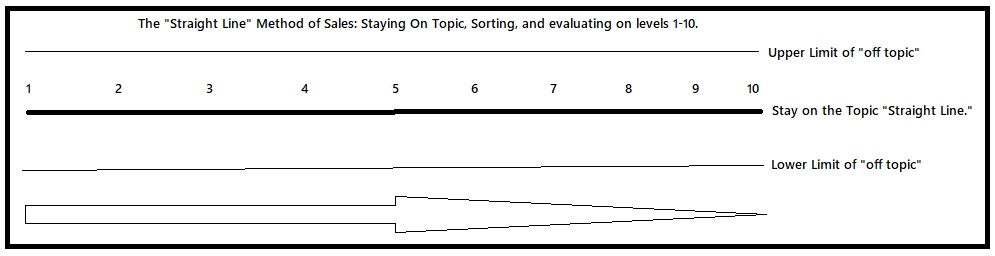
The main thing to always remember is that only a minority of people will be interested in becoming a part of Musiterania™ and that as an Independent Contractor as a Referral Affiliate of the Maestro Membership program your principle job is bringing Musiterania™ and Prospects together in an efficient and respectful way.
How do you do this? By "Asking Questions" to determine what they want, not what you want for them and much less of them.
Build rapport by asking questions about them. L I S T E N! Understanding where they are and asking for the level of interest as you go forward, on a scale of 1 to 10, not interested to very interested. Respect and accept their answers. The idea is to move them down the line towards a sale and if they don't meet the levels of interest be good with it, stop the process and leave the conversation on good terms. It isn't even necessary to talk about the program at all if you determine they aren't at all interested in the early stages.
I will develop a script for this to help you. Not that you should use a script, but it is a good idea to know what you want to say before you say it, edit it, so next time you don't repeat the same mistakes twice.
In building a community like Musiterania™ it is important that the good of the members are the center of the focus for the company that you are representing.
I am doing everything I can to make Musiterania™ a musician centered website so that musicians can remain musicians and can as easily as possible refer new members into the company so that they can grow their residual income without a lot of hassle.
Music is possibly the best content there is in the world. Music puts you in front of people. Music gives you a platform to share your thoughts, passions, and beliefs within a mode that is exciting, beautiful, sincere, and moving.
What kind of music do you do? How did you get started in music? What type of music do you listen to? What do you think you need to improve your musical existence? These are the type of questions you use to establish rapport in the early part of the process. The number one goal is to create a relationship of trust and interest that remains regardless of whether they decide to join or not.
Musiterania™ has created the Motto "Coperor" which means to cooperate, work with, mutually support, both within the organization and outside of it.
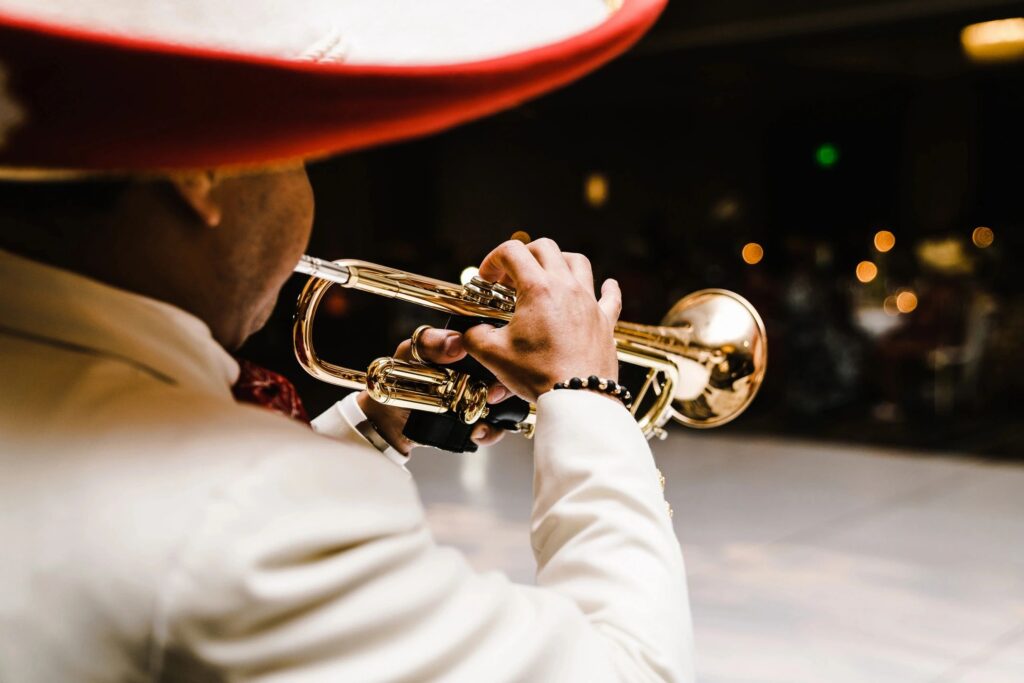
Musician’s Hell: All Work and No Pay make Jack a Dull Boy!
There are wealthy musicians. Yes, very wealthy. Paul McCartney, Beyonce, Mick Jagger, Elton John, and the list goes on and on. No doubt, there is a lot of money to make in the music industry. Most of it is made by the business side mind you, but it is possible to earn a good living as a musician.
However, these mega-successes are due to capturing a fad really and while it takes real talent, real work, and real business to do it, the main reason for their success is that they found a huge audience that became cult like fans in huge numbers. Do they deserve it? Of course. Can every musician achieve it? Unlikely.
What's more, aside from the incredible joy and inspiration that all of the great musicians of the past created in the world, what did it do for other musicians who have struggled over the years just to make ends meet? Probably more than I know about, but the fact that I don't know much about it, it probably means...not a whole lot. While I am sure they are very generous contributing to noble causes, something I definitely praise, I'm not sure, or am doubtful, that it does much for all of the other independent musicians out there. I'll give them the benefit of the doubt because I know they know how hard their success was to achieve. But, I want to create a way where musicians can still achieve their independent success but also make it possible to contribute to musicians who may not be able to create that kind of success.
The Coronavirus Pandemic has turned an already difficult occupation into an impossible one. While sports teams continue to play, the performing arts are shut down, taking with it untold numbers of incomes from great musicians and performers of the living performing arts, and with that the entire industry surrounding them. Restaurants, Bars, Hotels, Performance Venues, Instrument manufacturing, Agents, and so on.
The effect of this colossal destruction does some good because it reveals just how vital the live performing arts are to the economy as a whole. The world is losing hundreds of billions of dollars due to this shutdown. It is tragic.
But, really, it only reveals a truth about the plight that independent musicians suffer under 100% of the time. When an independent musician doesn't work as in perform, teach, and gigging, their income goes to a big fat ZERO.
What if an independent musician is in a car wreck, becomes ill, has to take care of a sick child or parent? What if life circumstances make it impossible for them to work? How is an independent musician to earn enough money to live on, much less thrive on?
You can buy insurance and be covered by Government programs, and you should take advantage of those securities offered by society, but nothing replaces real income from a reliable source to have peace of mind to live without having to jump through a thousand hoops to survive.
So while a working musician can make good money working as a musician, it is always in exchange for time and energy and even when they do make an income it is often like working for free, because the time spent doing the actual gig does not account the time it takes to prepare and manage it. Just like teaching a one hour class to a room full of college freshmen takes hours of preparation, especially in the beginning, so does doing anything else in music. That isn't really different for any other profession but somehow paying a musician $300 to play a wedding or funeral for an hour of music seems like too much to the lay person because a lot of people get paid only $10 an hour to flip hamburgers. Plus, out of that $300 comes all of the other expenses and time involved in preparation and nobody sees that.
Being an independent musician is at best a very unstable existence. You piece together your income like the patches of a quilt, run from one thing to the next, and it can all go away instantly at a time when you can use it the least.
Maybe this situation is what motivates independents to hustle to the point to get ahead. After all, much of the great and exciting music created in the world came from the unrewarded world of musical creativity where you put yourself at risk of poverty to create the art you are so compelled to follow.
With Musiterania™ I am working on solving this issue with independent musicians because I am one of those musicians who lost their livelihood in music for reasons not even I fully understand.
My goal is to find a way to get independent musicians paid on a consistent monthly basis as if they had a job.
I have looked at every possible way to achieve the paying of independent musicians fairly while helping them in their music careers, no matter what that is.
The best way that I can find to do this is to offer an affiliate program in Musiterania™ Membership program. Instead of hiring people to grow the membership, I have chosen to pay commissions to fellow independent musicians on an independent contractor basis for referring new members to Musiterania™. This way you are working for Musiterania™ but not as an employee but as a partner. Also Musiterania™ helps you promote you as a musician as well.
The symbiotic relationship combined with a cooperative effort to build a network of chapters of Musiteranians in cities and towns everywhere can provide support and social proof that Musiterania™ be a safe haven for independent musicians while not retarding their independence.
The central mantra for Musiterania™ is "Coperor". What does that mean?
It means that the company Musiterania™ isn't in competition with any other musical entity that exists, but rather seeks to bring them more prosperity.
By being associated with Musiterania™
any type of entity can join as a member,
be an independent affiliate
and earn commissions by helping our membership grow.
But, again, the specific focus is on individual musicians, and it is the needs of the independent musicians community that Musterania™ is built to serve.
During the time of the Coronavirus musicians are not earning income. Musiterania™ wants to fill the need for security for independent musicians because it is really difficult to earn income as a musician when you aren't allowed to perform.
Yes, virtual performing, and teaching are possible today, but it doesn't get anyone to security and stability like a program like Musiterania™ can make possible.
Yes, it will take some time to get to a living income with the Maestro Membership at Musiterania™, but when you get there how valuable will that be for the independent musician.
Musiterania™ is designing into the website ways to refer new members that make it a very simple process and we show you how to make everything official in very few steps.
The work of a Maestro Member in Musiterania™ lies in sharing the website with those they associate with. Once they arrive on Musiterania™ with their affiliate code securing that referral to them, it is Musiterania's job to bring them into the fold, secure payment, and payout to that referral affiliate the commission entitled to them for life through that referral relationship for as long as both remain members.
Musiterania™ wants its affiliates to earn as much as they can but not to become a professional affiliate but rather spend more and more time being a musician and doing what they were put on earth to do. So, being a referral affiliate is somewhat like a "day job" except you set your own schedule and your level of work. But, please, stay a musician.
Musiterania™ is built on the idea that being involved in music in any form is a great way to live life. Certainly the more people being involved in music the better it is in society and ultimately, a computer program or robot can't do what a musician can do because they have no soul, no thoughts, and no emotions to make music with.
Musiterania™ is dependent upon you for its growth and it wants you to depend on it for providing you with a consistent reliable income. Interdependence is a powerful way to build a company.
Join Musiterania™ today, help someone join tomorrow!

Tour with the Musiterania™ Network
One of the main ideas behind the creation of Musiterania™ is creating a network of local chapters of Musiteranians to offer members opportunities to perform in concerts and recitals, do workshops, and masterclasses.
Over time the number of chapters will grow as will the membership. As it grows the network to be created is at it's core a closed network, meaning, just for members. But, of course any performances or events can be opened up to the public for the cost of admission.
This makes it possible for venues to use Musiterania™ as a way to get folks into their business, build their clientele, sell more of their stuff, and get return business as well.
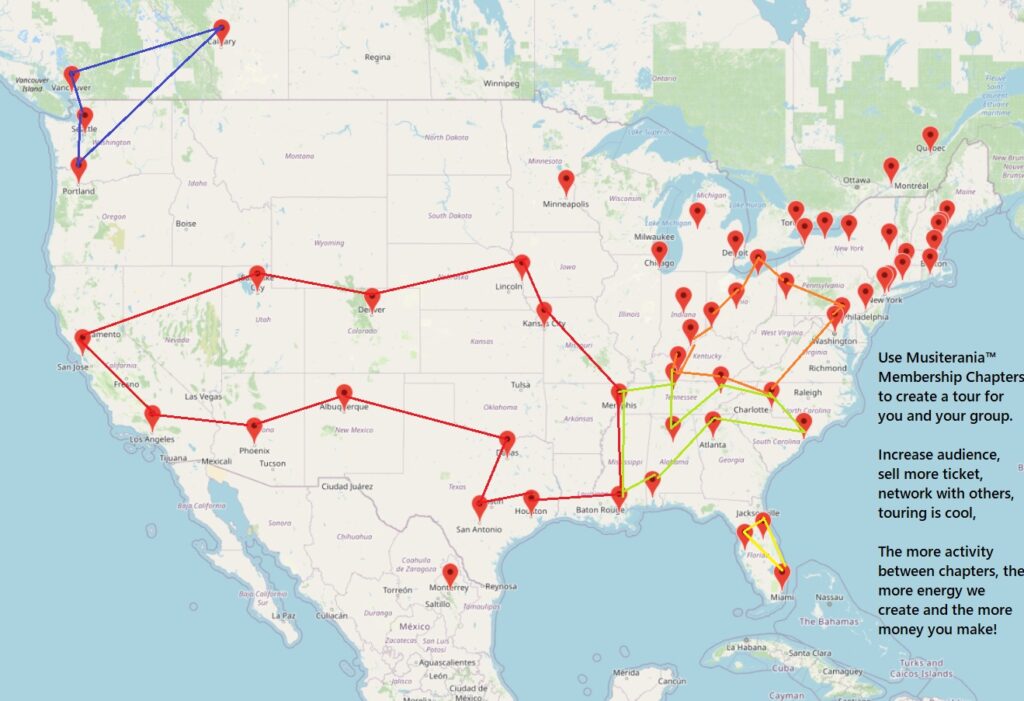
The map indicates what it could look like over time. Using the Affiliate based Ticketing system, it would make it possible for you to earn commissions sales of tickets of other musician's events, in other locations, and for different reasons.
It will also become possible to do larger venues, and create more income through commissions from the sale of tickets.
Lets say a Musiteranian creates a performance that sells 1,000 tickets at $30.00 per ticket, which is very reasonable, then the commission could be say 25% of the sale for referral affiliates, or $7.50 per sale, and if you refer 20 that would be $150 in commissions from that one concert! Refer 200 that would be a nice little $1500 payday, and all you did was tell a lot of people about a concert they would want to go see anyway!
The point here is that by being a Maestro Member of Musiterania™ you will be able to open up new doors of ways to monetize your involvement in music. Until now, there was no such cooperative system available for that.
One of my visions for Musiterania™ was that the people who pay to attend concerts can also help sell tickets to those concerts and not only pay for their tickets, but earn more by being an affiliate in the Maestro Membership program in Musiterania™.
Coperor! Cooperation, working together, and coordination of a group committed to the success of their fellow musicians.
Musiterania™ is looking for chapter leaders anywhere in the world. Create a Chapter for Musiterania™ build your chapter's membership and earn those commissions, and help your chapter grow by helping your members earn commissions as well, so their membership is paid for by their commissions, ensure a long life span for each membership.
Get started today, help others get started tomorrow.

The Challenge of the Referring New Members
Look...I get it. Believe me I do.
You are thinking to yourself that "there is no way I will ever be able to refer enough new members to Musiterania's Maestro Membership to create enough income to pay for my expenses."
The other thing you are thinking is, "I'm not a sales person and I don't want to "hit up" the people I know to ask them to join so I can make money."
Plus, you are thinking of a million reasons why it is difficult to refer new members into Musiterania™. I probably know them all.
That is why Musiterania™ wants to help you build your income as much as possible so the challenges that face people in referring new members are fewer and completely doable.
The job of an affiliate marketer is really only to bring eyes to an offer, in this case musicians eyes to Musiterania™. Once those eyes are on Musiterania™, it is our job to close the sale.
It is our job because the business relationship is really between the customer and the company. The customer pays the company, the company manages the process and is responsible for the quality of experience a customer has.
Now, just to be clear, if you are an affiliate marketer and you want to market multiple things, then yes there is more to do in building a list, staying in contact with your list, building a relationship with your list, sending your list valuable content, and to create business based on that.
If you want to do that fine and we welcome affiliate marketers who do that as their primary business. But that really isn't the idea behind Musiterania™ for it's affiliates, because at Musiterania™ we want to support your activity as a musician.
The "club", "network", or "culture" of Musiterania™ is based on building an "ensemble" atmosphere with fellow musicians you know and to help musicians you don't know get to know you if they don't already do.
Relationships are at the heart of Musiterania's affiliate program. It is about inviting a fellow musician to become a part of something that can help them in a real way.
But, lets stay clear about one thing too...being an affiliate with Musiterania™ means you are an independent contractor working with Musiterania™ on a purely commission compensation basis. Musiterania™ pays commissions to its affiliates because they do a real service for the company. Marketing.
The challenge of being a Referring Affiliate Maestro Member of Musiterania™ really is to get your mind to agree that what you are trying to do is a good thing to do and doesn't take up a lot of time and effort to be successful at it.
To do the act of referring new members to Musiterania™ really all you do is to hand someone your membership business card and say "I want to invite you to join Musiterania™. Here you can find all of the information you need to learn about it." You can add, "I'm happy to answer any questions you have but that really isn't my job, and if you are interested in being a member, you will not want that to be your job either. We are musicians and spend our time on our music, not on explaining things about Musiterania™."
The Directory, the Profile Pages, Musiterania™ events such as recitals, concerts, and workshops, are all ways that Musiterania™ can help you grow your referrals and your commissions on its own.
A lot of affiliate program companies don't do much in the way of promoting itself to the broad population, but Musiterania™ is going to do that so that the brand is trusted in the marketplace because people have seen it already somewhere. When it becomes something that people have seen and are curious about, it makes it easier for the referral affiliate to approach someone about it and it is more likely that people will look at it on their own, find you because you have something in common and can join through your affiliate code, before you even know them.
We are trying to make the process of referring new members as automatic as possible.
What is one way we do that? We offer a link right in these blog posts that can be shared where people can go and become a member right now. Simply click here and place your email address in the space provided and the name and/or affiliate number of the person who shared Musiterania™ with you. Go to your email inbox and get your password and log in!
That's it. To become a Maestro Member simply purchase the membership and follow the video tutorials to get your account up and running.

Coperor: The Spirit of Musiterania
I write this article to inspire the spirit of "Coperor" inside the realm of Music and especially Musiterania, because it is the lifeblood of it's existence.
Musiterania will become a source of structure and stability for the independent musician when everyone who sees it for what it is meant to be, a cooperation, not a competition.
This begins from the very first time someone comes in contact with Musiterania because unless "Coperor" is at the heart of the message then the message is getting lost.
If people come to Musiterania with an attitude of mistrust, skepticism, and fear instead of an attitude of contribution, belief, and enthusiasm, then Musiterania is not for them. I'm not saying to not question things, I am saying that a negative mindset and a selfish attitude will not be a good fit in Musiterania.
It is all about this really. Let's be honest. Asking someone to take a look at Musiterania is the job of an affiliate member of Musiterania. S-ICE Marketing LLC, the company that owns Musiterania, pays affiliates a commission based on the revenue from commissionable products, for now the Maestro Membership, they make possible. So yes, an affiliate is asking you to take a look at something that can make them money, which of course is the entire point of this company. If you have a negative feeling towards someone doing their job for this company, then you really will have a difficult time with Musiterania.
Joining Musiterania means to believe in the mission of Musiterania that we must approach it with a spirit of "Coperor", cooperation, combining, and working with. Cooperation is first a commitment to contribution, and in the case of the Affiliate program, it is a monetary contribution, not only to Musiterania's mission, to be an infrastructure of support for Independent Musicians, but also to contribute to a fellow Independent Musician in a meaningful way.
Music is a cooperation. It is contribution combined with benefit. Musicians must be good audience members as well as good performers. We support other musicians in their efforts because we all know how difficult it is and we want to give energy to their endeavors and we also appreciate it when others do the same for us.
One of the most pervasive attitudes in Western culture is that winning is all important. This creates an attitude of competition, of me against you. If I am going to be successful I must win, which means someone else has to lose. While competition to be the best elevates performance in some ways it also creates negative feelings in other ways.
In the dog eat dog world of music, competition is pervasive. This is true no matter what anyone says. With Musiterania the very idea of the concept is to have a place where this isn't the case and that Members are here for the right reasons: to give, to support, to share, and to invite.
I want to say to someone looking at Musiterania to be excited about the things it can do for you, and not what the Membership fee will cost you, because the bottom line is, you are contributing to three worthy causes...
1. Musiterania.com the company that makes it all possible.
2. An Independent Musician who is working on their music endeavor.
3. Your own mission as an Independent Musician.
I wrote in my book "Boredom to Brilliance" that a gift is not something we receive, but something we have that only has value when given to others.
As talented musicians we have been given the gift of musical talent. It is only a gift because it is what we have been given for the purpose of giving it to others. By giving it to others we can also receive other gifts in return, like applause, appreciation, admiration, friendships and also money. This is the "Coperor" spirit.
If I had one thing to say to Maestro Members of Musiterania, it is that your job as an Independent Contractor or "Affiliate", is to give fellow musicians the gift of Musiterania by inviting them to take a look at it and to be a positive ambassador for it as well.
If you are reading this and want to join Musiterania, simply go and register under the Member tab on this website above, and register for free. Then purchase the Maestro Membership and you are then qualified to help us promote the vision of "Coperor"!
When you register place the name of the person who invited you to look at Musiterania in the space provided. This will ensure that they receive the commissions produced by your membership. If you made it here on your own enter Musiterania as your referring Affiliate and then we can work together to find the right affiliate for you to have as your referring Affiliate.
Every member must have a referring Affiliate and that remains for as long as both are members.
You can choose a referral Affiliate by looking through the profile pages of present Members. Here are some criteria that you can use in choosing your referral Affiliate:
1. Location
2. Genre
3. Instrument
4. Style
5. General feel
You want to support them and they want to support you and behind it all is Musiterania, that wants to help everyone succeed in their music endeavors.

One Day at a Time
It has been about a year since this site first launched. From that point up until now there have been many challenges to progress. Life is often full of such distractions and it doesn't really help that it happens to everyone too, when it happens to you.
Since last year, my father's health had taken a nose dive starting right around Christmas. During the first 3 months he was struggling just to survive. Luckily, in March he went to see a different doctor and he made a plan to try and help my father get his condition better.
After multiple hospitalizations, four different procedures, and weeks of rehab and rest he is now about 75% better than he was a year ago.
The Coronavirus Pandemic and the added security concerns in relation to my father, and with all of the other things I had to attend to on his behalf, which were quite a few, I just couldn't find the time or strength to move forward on this project and just had to put it on hold until I could get back in front of it again.
In spite of all of that, people have been registering on the website all along while I was "away". All year long people have been registering before I was even aware of it, because I had done nothing to promote it, or hardly mentioned it to anyone.
I believe that once all of the wheels are on this bus, that we will be cruising down the highway on the road to something very special. I am so grateful to those people who have already registered. You can't know how much that has inspired me. I will do my best to earn your trust and your enthusiasm going forward.
Rebirth, New Name, and a New Start
So here I am, working really hard to get the systems in place and the website in good shape so I can finally open the doors and let folks get started with this program. I'll be the first to admit, there is a lot more to it than I had ever imagined.
In the coming weeks I will be using a new completely unique name for this website and the project as a whole which is actually much better and a lot more entertaining as the Solimusic name, as much as I liked it. There are multitudes of reasons not to use that name, and I guarantee you that the new name will be a lot of fun as well as effective.
I don't have a time frame quite yet to say exactly when the doors will open for business, but right now I am doing pre-launch activities to get warmed up to it.
Please visit the Daily Calls and the Weekly Webinar pages available at the bottom of the website so you can communicate with me if you like, or just listen in. These calls will be a resource to help you sponsor members, earn more commissions and be a part of what I believe will be an international movement of musicians, making the decision that we can support each other and support ourselves when we work together in a spirit of cooperation.
Right now registration is open and free. Encourage others to register for free under the members menu and make sure you ask them to put your name as their sponsor so when they do purchase a membership that you get credit for that referral.
My life's mission is to lead this company and its members to musical prosperity and become a permanent institution in the world of music.
This time, I won't let things get in the way of you becoming more secure, more confident, and feeling positive about the future with this program.
Everything I do, I do because of this...
I learned that a colleague of mine passed away recently in large part due to the stress of not being financially and socially secure. He was a fine musician, a really nice person, and had worked very hard to achieve the things he had achieved in his life. A masters in Music and History, plus the ability to build guitars.
When I think that this program could have been a home and a place to increase his influence in the world and build an income that could support him over time it saddens me greatly that I didn't at least make it possible for him.
He is not the only person suffering during this Pandemic as a musician or any other performing artist for that matter. I feel it is my duty to bring this program to life and to change the trajectory that the world of music has had in this past and most dreadful year, 2020.
I know not everyone is going to become a part of this. You should understand that too. It is for all musicians, but it is really for those who lock arms with this mission to create a more secure and independent existence for yourselves and musicians everywhere.
The motto is:
"Get started today, and help 2 people get started tomorrow!"
Just like this girl starting to learn to play the guitar, it feels too big for her, it is awkward, it is difficult to understand. We as musicians understand that possibly more than anyone. That is where I am with this mission, but I am not going to put the instrument down and quit, but I am going to proceed onward and get better at it, "One day at a time."

We love making music! Why not get paid for it?
When I was a teen, a group of guys would get together and hang out playing guitars, flutes, and singing some of the popular songs of the day. Whether it is in a living room, in front of a campfire, or on the beach, getting together and making music is one of life's greatest pastimes!
Soli Music is there to capture this passion and to help people who love making and listening to music also earn income while doing it. How? Through the Soli Music affiliate program!
Soli Music is offering members the opportunity to build income using the website as their own, and to help us promote it by sponsoring new members to Soli Music!
Making music is one of life's greatest pleasures, and musicians spend a lot of time doing music regardless of whether they are earning income from it or not. Honestly, most musicians would do it for free because they simply love doing it.
But, Soli Music is here to provide an income stream for anyone, whether they are an amateur, a professional, a student or an audience member.
When you join Soli Music, you will be asked to identify your Sponsor, either through a Member ID code, or by choosing from a list of members. You can also join Soli Music directly with the company, and the commissions assigned from that Sponsorship will go into a special fund earmarked as the Affiliate General Fund. This fund will be used to payout commissions once a year to qualifying Member Affiliates. The parameters for qualification have yet to be determined. Stay tuned.
However, Soli Music encourages all Members to sign up through a Sponsoring Member Affiliate, because Soli Music wants the members to profit directly from Sponsoring.
The Sponsor - Member relationship is an established for life. That means that the Sponsor will earn the commissions based on the Member's payments of Membership subscription and other commissionable offers through the website.
Soli Music does not want to facilitate changing sponsors since the point of the program is to build income over a lifetime. So, staying with your sponsor is a policy meant to also support you, because hopefully you will build your Sponsorships over time as well, and you will not want to lose commissions because of arbitrary desires to change sponsors.
Soli Music wants to ensure success for every member.
So if you love making music, listening to music, want to become a huge star, or just stay in your local community choir or orchestra, Soli Music is a place where you can monetize your music.
Join today, and help someone else join tomorrow! (Must be 18 or over to Join)

Introducing Musiterania
Now that the groundwork has been laid for the website, I will be adding content on a regular basis to build some SEO energy for the search engines. This video is simply an introduction to the new Soli Music Net's YouTube channel.
I will be using text, videos, and audios through E-mail newsletters, social media posts, and also here in the blog so that interested parties can easily access the information.
There is a lot to do, and honestly a lot I don't myself understand, but it will be steadily moving forward over the next month and a half in preparation for the launch date of November 1, 2019.
Please feel free to add any suggestions, questions, or comments in the box provided below in the comments section.
This is being built for musicians and by musicians so your input isn't only wished but also required. I am doing this for you, the independent musician. I welcome your help and energy.
July 4th at the Stephen Foster Story: Stephen Foster’s 200th Birthday and the United States 250th Birthday Celebration Performance
By Timothy Simpson |
The Hunchback of Notre Dame by the Ramsey Theater Company in Bowling Green, Kentucky
By Timothy Simpson |
Songbird: Orchestra Kentucky’s guest presents the music of Barbara Streisand
By Timothy Simpson |
Nashville Symphony with Renee Fleming and Rod Gilfry: An evening of great diction.
By Timothy Simpson |
Music and Mind: Renee Fleming presents new music medical breakthroughs.
By Timothy Simpson |