Western Kentucky University Department of Music presents
Faculty & Guest Recital
Dr. Sarah Schouten, horn
with
Mira Choi, piano
Dr. Emily Britton, horn
Ivan Wilson Fine Arts Center – Room 189, Recital Hall
Western Kentucky University
Monday, February 16th, 2026
7:30 pm – 8:30 pm
Program
Sonata — Gina Gillie (b. 1981)
- Allegro moderato
- Melodie
- Rondo
Ages — Susan Mutter (b. 1962)
- Six
- Fifteen
- Thirty-four
- Sixty-six
- Ninety-two
Five Quirky Miniatures — Gina Gillie (b. 1981)
- March
- Habanera
- Waltz
- Disco
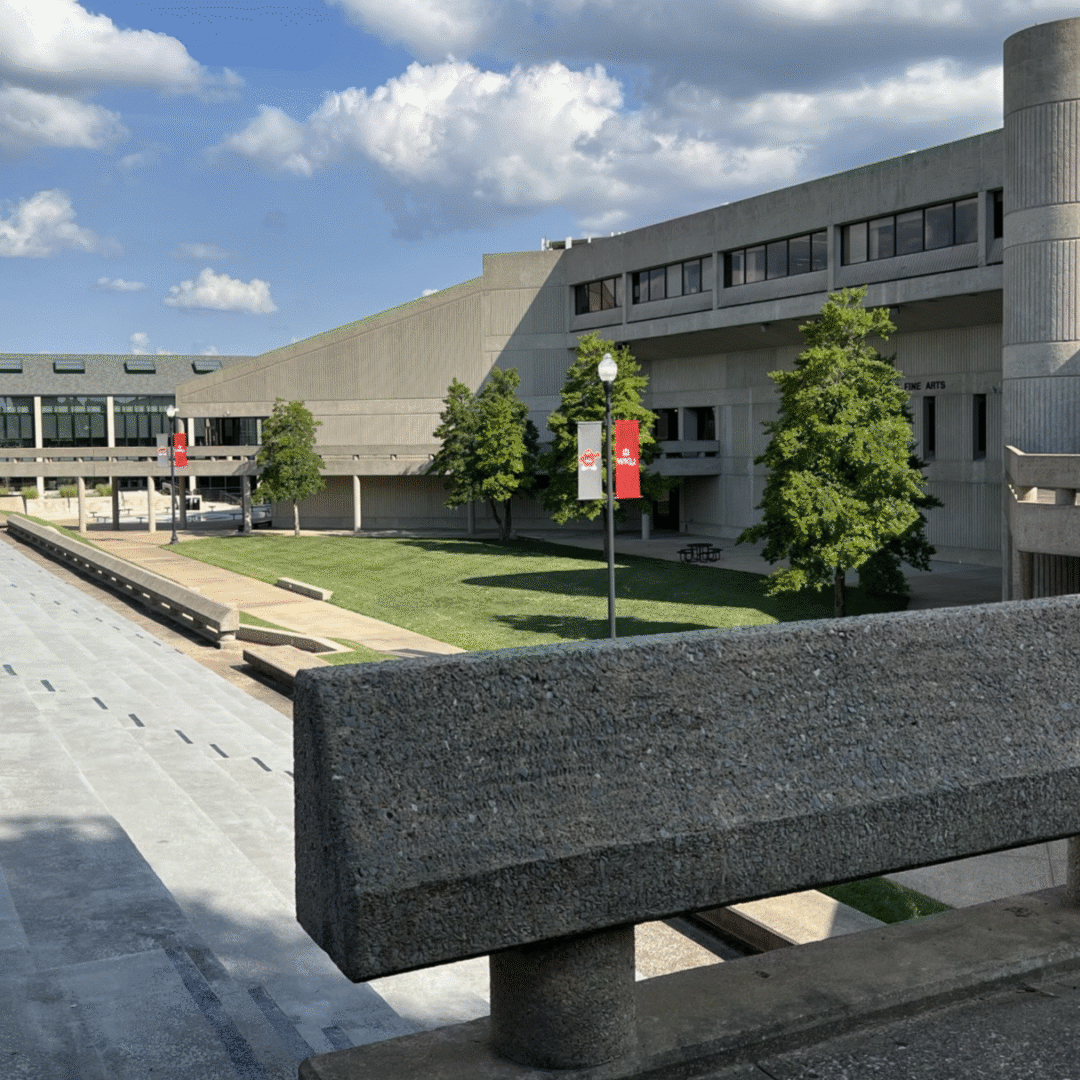
When attending anything “up on the Hill” at WKU, it is wise to plan your parking strategy in advance. Since the demolition of the Garrett Conference Center and the so-called “beautification” of Colonnade Drive, parking near Ivan Wilson Fine Arts Center has become something of an adventure sport. Yes, there are a few handicapped spaces near the doors — though reaching them can feel like navigating an obstacle course. Otherwise, you’ll likely park near the library or across from Cherry Hall and enjoy a scenic walk.
To be fair, walking on WKU’s campus is hardly a punishment. It’s immaculately maintained, offers sweeping views of the city below, and has a sort of resort-like atmosphere. When I was a student, this trek never bothered me — partly because we had better parking, and partly because I was in significantly better shape.
The lukewarm mid-February air made for a pleasant stroll. I always allow myself a few extra minutes just to take it in. Though spring is approaching, 7:30 p.m. is still firmly after dark.
Given the parking situation, the Monday evening time slot, and the fact that this was “just” a horn recital, the crowd was modest. Most attendees appeared to be WKU music students or Music Appreciation students fulfilling a concert requirement. I wasn’t quite sure what to expect. In fact, I’m not certain I’ve attended a full horn recital since my Eastman days.
There are instruments that require nerves of steel like the oboe, all of the strings, and possibly at the top of that list is the French Horn. I have no clue how anyone plays it. The narrow differences in overtones and the impossible miniscule adjustments of the embouchure, how a player manipulates their lips, that is required to play this instrument make it like walking a tight rope. I’ve witnessed countless ‘cracks’ during exposed sections of operas where it can really ruin the mood. The second Fiordiligi aria in Mozart’s ‘Così fan tutte’ comes to mind or the exposed passages in Der fliegende Holländer by Wagner. I admire anyone who picks up this instrument, it is a ridiculously sensitive instrument to play.
I’m happy to report this recital was thoroughly enjoyable — one of the most pleasant evenings of music I’ve experienced in quite some time. Although these works were written for horn and piano, I frequently found myself imagining full orchestral textures behind them. Interestingly, the music avoided many of the dense, angular complexities often associated with late 20th-century writing. Instead, it was colorful, accessible, and engaging.
Sonata in three movements by Gina Gillie (b. 1981) is a strong, melodic work. The piano writing is intricate and substantial, while the horn part is demanding without ever becoming gratuitously difficult. The final movement, Rondo, had an entertaining Mexican flair, complete with the rhythmic vitality one might expect. It was spirited and full of character.
Ages by Susan Mutter (b. 1962) is a five-movement suite portraying men at different stages of life — from age six to ninety-two. It begins with a wistful, playful portrait of childhood. Fifteen carries a restless, daring energy — the impetuous spirit of youth pushing against the world. The tonal language had a subtle exoticism without feeling forced or artificial.
Thirty-Four (which struck me as more 9-to-5 than 32) felt pedantic and somewhat monotonous — perhaps intentionally so — evoking the steady grind of adult responsibility. Sixty-Six had a settled, reflective quality. It reminded me of the music underscoring the closing scenes of a documentary about a heroic life — nostalgic, dignified, and quietly epic. Ninety-Two opened with a ticking figure in the piano, gently interwoven with fragments of melody, suggesting time itself moving forward.
I loved this piece. It was originally written for trombone, but it translates beautifully to the horn — every bit as compelling and expressive.
The final work on the program was Gina Gillie’s Five Quirky Miniatures — though we heard four (unless I somehow missed one). There were originally composed for Horn, Tuba, and Piano, These were pure delight.
March felt almost cinematic — at moments I was reminded of a fully orchestrated Harry Potter score, complete with swirling runs and playful drama.
Habanera leaned into tango territory. You half-expected someone to stand up and start dancing in the aisle.
Waltz had a circus-like quality — slightly tipsy, delightfully off-kilter, as though the ringmaster had sampled a bit too much of the refreshments. It swayed and staggered with charm.
Disco reminded me a bit of an overture for a 70s musical and was a fitting conclusion with its playful personality.
Sarah Schouten played beautifully throughout the evening. Her programming choices were thoughtful and well-balanced. None of the works overstayed their welcome. In an era of fragile attention spans, this was a horn recital that held interest from start to finish — engaging without exhausting the listener.
The repertoire itself was refreshingly varied. This isn’t standard horn literature one simply pulls off the shelf like a Mozart concerto. Each piece inhabited a different stylistic and cultural space, creating a recital full of contrast and color.
Mira Choi was outstanding at the piano. She performed as though she had lived with this repertoire for years, which is particularly impressive given that much of it is not standard fare. Her playing was full and confident yet always collaborative. She never overpowered the horn; instead, she supported and shaped the sound with sensitivity and strength. It was refined accompaniment — the kind that elevates everything around it.
For the final work, Emily Britton joined on horn. The ensemble had clear rapport and musical unity. Their interplay felt natural and spirited, and the added color enriched the closing set beautifully.
All in all, this was a thoughtfully curated and beautifully executed recital — colorful, engaging, and refreshingly distinct. It deserved a larger audience. On such a pleasant February evening, more people should have made the climb up the Hill.
It was well worth the walk.