

Review: WKU Orchestra and Choral Spring Concert: People make music possible.



Program:
- Montagues and Capulets from Romeo and Juliet Ballet (1935-1936)
- Sergei Prokofiev (1891-1953)
- Combined WKU Symphony and Bowling Green Youth Orchestra
- Dr. Brian St. John, Conductor
- Combined WKU Symphony and Bowling Green Youth Orchestra
- Sergei Prokofiev (1891-1953)
- La Mer (1903-1905)
- From Dawn to Noon on the Sea
- Play of the Waves
- Dialogue of the Wind and the Sea
- Claude Debussy (1863-1918)
- WKU Symphony
- Dr. Brian St. John, Conductor
Intermission
Dedicated in Memory of Sylvia Kersenbaum, former Piano Faculty member and international concert pianist, and David McKillup, WKU Bowling Green Community Chorus staff and member.
- Requiem, op. 48 (1900 Revision)
- Introit and Kyrie
- Offertorium
- Sanctus
- Pie Jesu
- Agnus Dei
- Libera me
- In paradisum
- Gabriel Fauré (1845-1924)
- WKU Choirs and Symphony
- Dr. Paul Hondorp, Conductor
- Soloists
- Kiris Ray, Soprano (Student at WKU)
- Dr. Jeremy Kelly, Baritone (Assistant Professor of Voice at WKU)
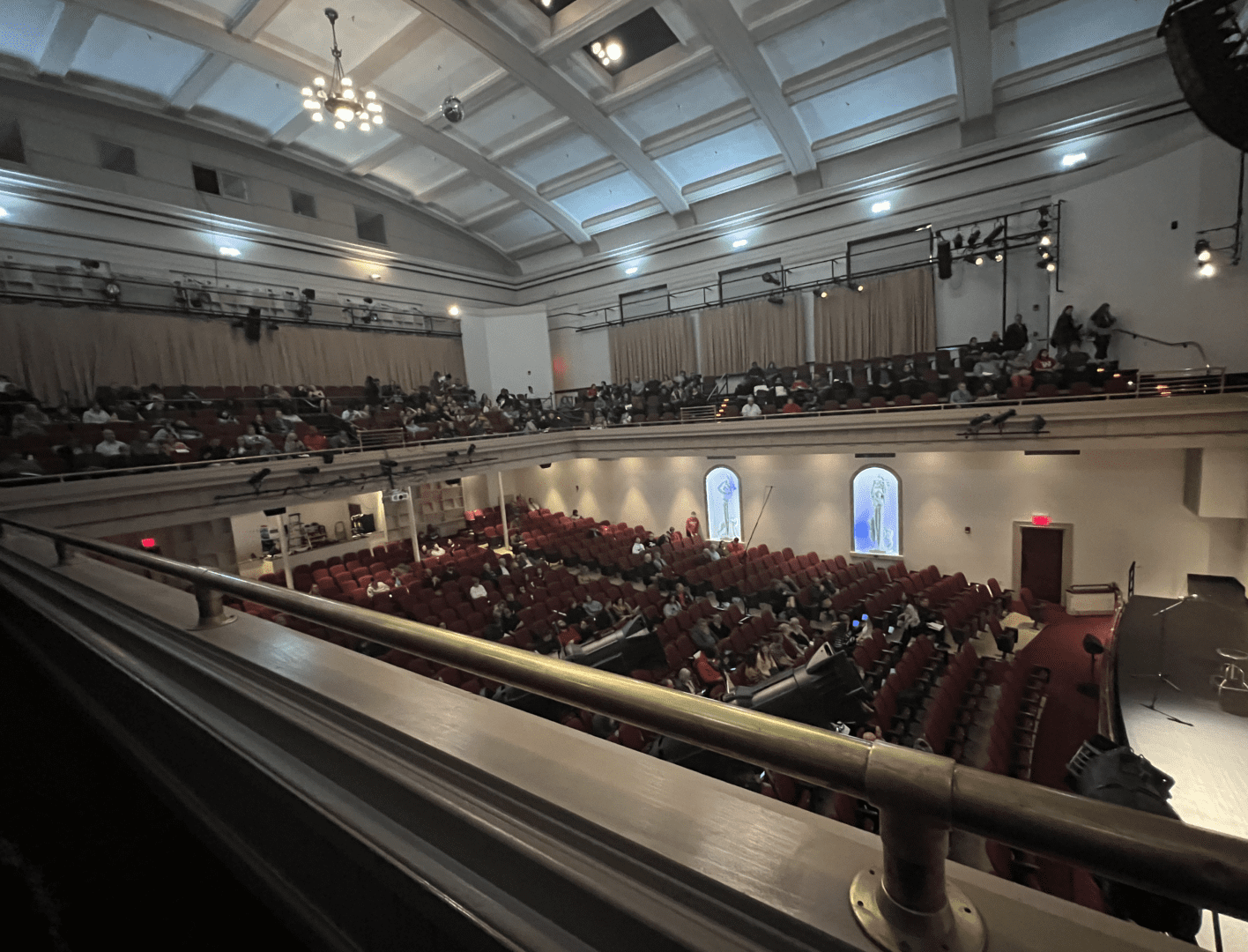
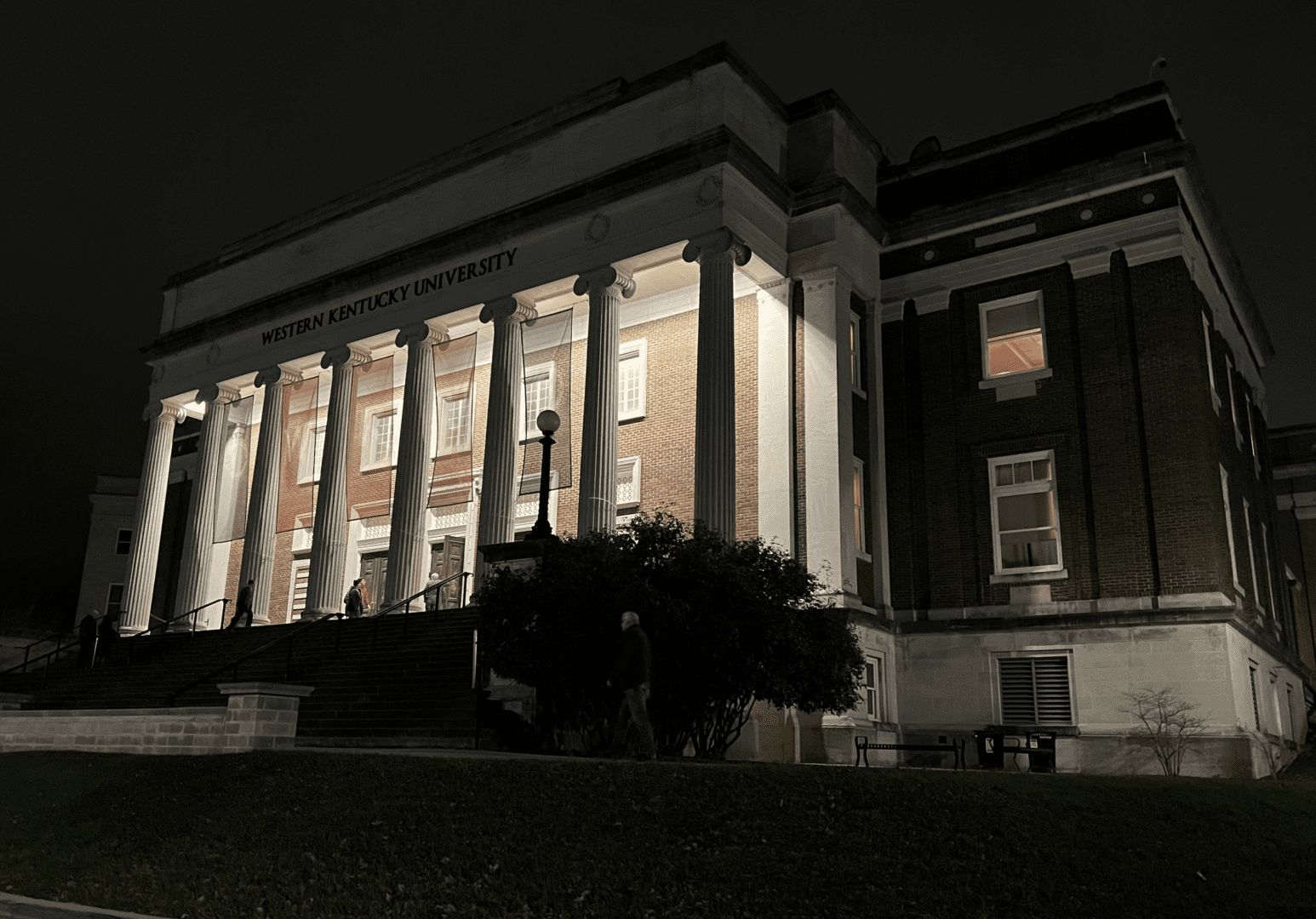
As I walked up "The Hill" on College Street towards Henry Hardin Cherry Hall on this pleasantly cool and breezy Friday evening, there were students in elegant evening attire walking around, the cars were chasing around in search of a parking spot, as I had been, and the recollections of the times I spent in some of the houses along that street during my college days, are always going through my mind. What used to be family houses are today student rentals, some in pretty good shape and some approaching "Animal House" status, reminiscent of that hilarious if off-color film with John Belushi. I had gotten there a bit late, so I was in a hurry to get up "The Hill", which isn't brilliant for someone approaching "Over the hill" status. I finally made it to Van Meter, walked in the tunnel under the stairs to the 'secret' handicapped entrance, where you can push the button, the door opens, and you can get on the elevator to the 2nd floor and the balcony. The ushers gave me a program and scanned the ticket I had printed out at home. The hall was already rather full when I arrived, because the chorus was already seated, so I grabbed a seat in the back row, which I don't mind doing.
The Bowling Green Youth Symphony joined the WKU Symphony for the Prokofiev "Montegut and Capulet" movement of the incredible ballet, a piece that is in the top 5 of my favorite all-time compositions. The orchestra filled the stage, and the large force gathered created the necessary power to produce the sounds that Prokofiev had composed. I had heard the Bowling Green Youth Symphony play the piece by itself on the previous Monday. It is a good selection to start a concert with because of its recognizable quality of the masculine dance. When I think of live classical music, one thing I'm reminded of is the saying "In live classical music, everything should be fortissimo (loud)...most of all the piano (quiet) parts", and to do that requires a full orchestra. The larger and fuller the orchestral sound, the quieter and more atmospheric they can play. It is a mysterious phenomenon.
The choice of La Mer by Debussy, is a real challenge for a college ensemble. Van Meter's acoustic is very alive, which is good, but it is a bit direct. This means there is nowhere to hide for the players. You hear everything. There are many soloistic parts and the students did a good job handling these exposed sections. The 'Lecture' by Dr. Brian St. John before playing La Mer was interesting to hear and was appreciated by the audience. It reminded me of the Bernstein videos where he uses orchestral excerpts to point out certain things about the piece. His comments were good because he instructed the audience how to listen and use their imagination to picture the sea during different times of day and weather. I think it was my first time hearing it live so I am grateful to have done so. It's true, you can't fully appreciate the orchestration and beauty of how such pieces sound in real space and time from a recording or on TV.
As a singer I have to begin my review of the Faure "Requiem" by bringing forward Soprano Kiris Ray, a student at WKU. There isn't a lot to sing for the soloists in this piece, but her performance is truly promising. She has a full lyric Soprano sound, bright, round, and above all "present" in the hall. She sang with ease and poise through all registers and was dressed in a beautiful, flowing gown.
It is always a pleasure to hear WKU Assistant Professor Jeremy Kelly sing. His Heroic Baritone voice is expressive and expansive. Above all, it is a beautiful sound and gives a welcomed strength to the sensitive passages for which Faure is famous.
Professor Dr. Paul Hondorp, Director of Choral Activities at WKU and the Southern Kentucky Choral Society, had his forces well prepared for the Requiem. Again, the sheer numbers aided in providing a gorgeous texture to Faure's elegant choral writing. The orchestra accompanied the choristers with sensitivity. Dr. Hondorp effectively leads with an elegant understatement.
Having heard and performed in a lot of 'church music' settings in European cathedrals during my career, I am reminded how pieces like this are accessible for ensembles like this one. The acoustic difference between a cathedral and a concert hall is vast. The cathedral mixes the sounds into a sort of ethereal soup unless you are very deliberate with it. In the concert hall, the details are much more exposed, and therefore more delicate. Great music, that is performable, moving, and beautiful, celebrating the "Requiem aeternam" (Rest in Eternity) optimistically promised by faith.
When you sing masses you learn Latin. Over time, you begin to find comfort in these otherwise never spoken words. You know the texts because you have done them so often, and even if you can't remember all of them, you recognize them, and it is like visiting an old friend. One movement I find particularly fitting for the current world situation that offers us hope through the shared frailty of the human condition.
- "Agnus Dei"
- The Lamb of God.
- "Qui tollis peccata mundi"
- Who takes away the sins of the world.
- "Miserere nobis"
- Have mercy on us.
- "Dona nobis pacem"
- Give us peace.
This is what going to great musical concerts offer us time to do. To think, to reflect, to listen, to enjoy, to associate, and to be part of the good things about being a human. Dr. Brian St. John said in his 'lecture' that along with the commonly stated attributes of students participating in music, that the ability to have the ability to wait while others get better, that the improvement of others improves us as well. I would add something to that which I learned from the legendary Vincent La Selva, Director of the New York Grand Opera, when he said in a community music class he taught at Julliard,
"When we learn, study, and play this music we are given the opportunity to have that genius inhabit our minds and our meager abilities are enhanced with the great minds of the past."
We may not ourselves create these great works of art, but we get to reproduce them every time as if it is being done for the first time.
To play an instrument well enough to perform these pieces it takes years of practice. Ideally, you should start at an early age, take lessons and practice for years, and play in ensembles as much as possible. It is parents willing to support their kids in this pursuit. But, my hat goes off to all of the Educators who give themselves to instructing the future musicians and audience members of the world. We need and love them. They are doing the most important work there is, taking care of our dearest resource, our children, and the future.
Musiterania
We are on a quest to form a musical world where musicians and audience members can come together and gain life perspectives from the vast classical music literature and other acoustic live music experiences in which we can take part. Lifting up the intrepid souls who journey into the world as musical ambassadors of peace and goodwill is an important part of Musiterania's mission.