Orchestra Concert Review
“The Sounds of a New Nation”
Louisville Orchestra — Whitney Hall, February 20, 2026
Teddy Abrams, Music Director
Program
William Billings: Chester †
William Schuman: New England Triptych — III. Chester †
Wolfgang Amadeus Mozart: Piano Concerto No. 9 in E-flat Major, K. 271
Jonathan Biss, piano
I. Allegro
II. Andantino
III. Rondo: Presto
Charles Ives: New England Holidays
I. Washington’s Birthday
II. Decoration Day
III. The Fourth of July
IV. Thanksgiving and Forefathers’ Day
† Not performed at this concert
This review will be rather long because I hope to convey the scope of what an audience member receives when attending a classical music concert in America today. There is so much to unpack and I could create multiple articles out of this, and certainly there are many topics worth diving deeper into, so please have patience and bear with me. I hope you will find this compelling.
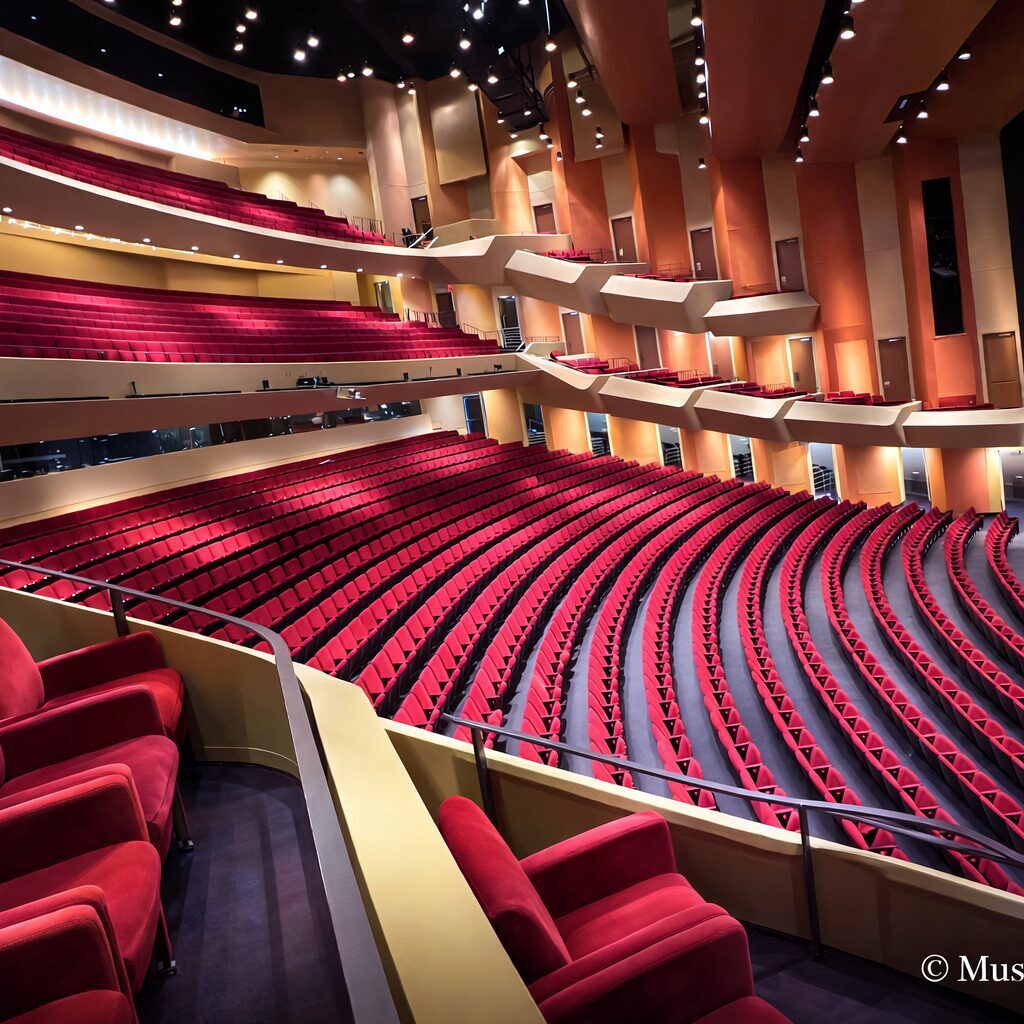
Whitney Hall in the Kentucky Center for the Performing Arts in Louisville, Kentucky seats around 2,400. On Friday at 11:00 it was packed out for a concert I assumed would be sparsely attended. Granted, a large portion of the audience were school kids from local schools bussed to the concert for a field trip. The wonderful thing about having such a large number of young people in the audience is there is an automatic buzz that fills the air that is different from most classical music concerts. They behaved very well to their credit. I loved seeing them there and hope to see more and more young people at concerts. I believe that can happen.

Due to the nature of the audience the orchestra did not play William Billings’ Chester, or the William Schuman’s New England Triptych — III. Chester. The concert was performed without an intermission between the Mozart and the Ives, making it a pretty daunting sit. There was a brief pause for people to stand up and stretch while they rearranged the stage for the Ives. I was disappointed about missing the Billings and Schuman but I was very happy to be in this performance. I met William Schuman when I performed with the University of South Florida Symphony for a modern music festival while I was at Eastman back in the 80s. I was becoming known as a tenor who could handle singing complicated modern music. I didn’t realize they wouldn’t be performed or I probably would have opted for the Saturday evening concert.
Arriving early gave me ample time to relax a bit before the concert and to attend the pre-concert lecture at 10:00 a.m. hosted by Daniel Gilliam, Program Director of WOUL, the University of Louisville’s Public Radio Station, and Dr. Matilde Ann Butkas Ertz, Keyboardist and Musicologist at UL and Louisville’s Youth Performing Arts School.
I drove up from Bowling Green, Kentucky and made it to the parking garage at about 9:20 a.m. A weather front moved through this past night and it brought with it a blazing blue sky, crystal clear air, brilliant sunshine, and a strong, chilly breeze.
I’d like to mention that after the concert I visited the Muhammad Ali Museum next door to the KYPAC. Also, a highly recommended activity you can add to your symphonic experience.
“You can’t ask Artificial Intelligence to learn the notes for you.”
Dr. Matilde Ertz
Daniel Gilliam asked how teaching students was different now that technology devours their attention and AI feeds them information effortlessly. It would have been even more interesting had the students been in the hall for this. She answered that it is a different world but that musical training is something you can’t hand over to AI.
The discussion about Mozart’s having probably met Thomas Jefferson while in Paris was interesting and the idea to show what was being listened to in Europe at the time of the American Revolution was profound.
Some time was spent talking about the composer Billings being probably the first American composer, mostly vocal music in the technique of Shaped Note Singing. They mentioned that Billings promoted revolutionary themes in his music. Like I said, there is a lot to unpack here and this is all new ground for me.
Then they introduced Charles Ives by saying his compositions were entirely American, unique, and separated from the European traditions of the time. As a long time fan of Ives, I was compelled to come to this concert specifically because I had never heard an Ive piece live, other than the 3 Songs of War I performed years ago.
—
Mozart Piano Concerto No. 9 in Eb major. K 271 was performed with Jonathan Bliss at the piano and the Louisville Orchestra, Music Director Teddy Abrams. What can you say about a Mozart concerto played by accomplished musicians? It was essentially perfect in every way. I can’t find anything to criticize. I was thrilled that acoustic afforded us a clear and present sound from the piano. Sometimes it gets overpowered by the orchestra. Bliss played with absolute authority and sensitivity at every turn. With Moart it isn’t uncommon to sacrifice expression out of caution. Mozart’s music is unforgiving and demands perfection from performers. I’ve heard Mozart played with much more gusto and know it is possible, but you do risk going out of control. Bliss’ capabilities are world class no doubt.
Finally to the Ives “American Holidays” Symphony.
I didn’t listen to this before. I wanted my experience to be 100% new, spontaneous, and open. My impressions, about 24 hours after the concert, is that much of it was atmospheric in nature. Soundscapes pretty much dominated throughout. I didn’t take notes during the performance but now find that it is a good idea to do. It is difficult to remember the things you heard on a one time through listening. What you come away feeling at the end of the performance is essentially the impression you have about it. Having said that the Ives challenges the ear but not in a disagreeable way. Much modern music can be disturbing to listen to, but with this piece Ives makes it fascinating. There are traces of recognizable melodies throughout the piece that give listeners an “Aha” moment to keep their attention.
The fourth and final movement “Thanksgiving and Forefather’s Day” is a masterpiece of composition in my opinion. It is highly sophisticated and there is so much to learn from this piece and the entire symphony in general.
Pure Joy
I will comment on the effect this piece had on myself and the audience, but I am not going to tell you why. The reason for this is, I don’t want to spoil it for you. I want you to go into a symphony concert of this symphony totally uneducated. I want you to discover this for yourself, and trust me, you won’t be sorry you did.
Of all the symphony concerts I have been to in my life, I’m not sure that any of them come close to the sheer joy this piece affected on the audience. Not superficial joy, but a common subconscious joy that touches you to the core. The unexpected brilliance of the moment drove down to our very essence as humans. Even writing this, tears are streaming down my cheek at the effect of this piece on me. Looking into the eyes of people after this concert, people were happy, joyous, and all smiles. It was something like a revival, but deeper somehow than that. It was one of the most profound things I have ever witnessed.
“You are the luckiest audience members in the world today.” Teddy Abrams
So, if you are in Louisville, Kentucky you have one chance, tonight, February 21, 2026 at 7:30 p.m. to experience this. It is something you don’t want to miss, because it is so rare. As Music Director Teddy Abrams said before the piece, “You are the luckiest audience members in the world today.” That is not overstated. We were lucky, blessed, and lifted by this incredible piece of music. Go.
About Musiterania
Musiterania exists to engage serious music with clarity, honesty, and depth. We believe great performances deserve thoughtful reflection — not hype, not dismissal, but informed listening shaped by experience. Our mission is to support musicians and audiences alike by cultivating discernment, curiosity, and joy in the art of music.
If it is reviewed by Musiterania, it has been heard carefully.
© Musiterania 2026